Showing posts with label Just for Fun. Show all posts

Monday, April 2, 2012

An amazing look at Japan's past -- Kendo combat circa 1897 captured on film

by Chris MaGee

Japan's cinematic history goes as far back as the genesis of motion picture technology. The first Lumiere Cinematograph (above) motion picture cameras were brought from Paris to Kyoto by sik dyestuffs importer/ exporter Katsutaro Inabata in 1897, but Inabata didn't just bring back this miraculous new technology with him to Japan. He also brought one of the Lumiere Brother's employees, François Girel, to Kyoto to act as cameraman and technician. Inabata and Girel would shoot the very first motion pictures in japanese history using these Cinematographs, and thanks to the eagle eye of one of our regular UK readers, Marc Evans, we can all witness one of these very first films. Marc shared this film (posted on Youtube) of a kendo practice in Kyoto circa 1897. It's absolutely fascinating stuff! Check it out!

Monday, March 26, 2012

Online Tributes to Akira Kurosawa for the 102nd Anniversary of his Birth

by Marc Saint-Cyr

March 23rd is a particularly noteworthy date for admirers of Japanese cinema, as it marks the birth of one of its most beloved figures: Akira Kurosawa. In the time since the master's centenary two years ago, the month of March has come to be recognized by some as "Kurosawa Month," used by many as a welcome opportunity to revisit and rediscover his incredible works. I myself took the opportunity this year to see his 1985 film "Ran" after a long break, and was once more enthralled by the vision and power that he wielded so ably, and in so many different ways, throughout his career. This year, among the more impressive online tributes to Kurosawa was a "Great Kurosawa-thon" of posts by the tumblr blog This Must Be The Place which assembled posters, stills, quotations and even gifs(!) that take visitors on a journey through his career and some of the events and ideas that helped shape it. Along with getting highlighted by MUBI's Notebook, the post series inspired Flavorwire to take a closer look at the paintings that Kurosawa often composed (particularly in the stunning late, color-saturated phase of his career) as references for his onscreen compositions.

How did other Kurosawa devotees celebrate the great one's legacy? Any films watched or pieces written (or spotted beyond the sites listed above)?

Thursday, March 8, 2012

Takeshi Kitano asked to helm an adult film?

by Chris MaGee

Let's do a rundown here... Takeshi Kitano has made yakuza films ("Sonatine", "Brother"), Cop films "Hana-bi"), kids films ("Kikujiro"), comedies ("Getting Any?") and straight drama ("A Scene at the Sea"). One thing he hasn't made is a sex film. No, we're not campaigning for a Takeshi Kitano sex tape (dear god, no!), but we are just saying he's never made a specifically erotic film. Maybe soon he'll get his chance.

According to The Tokyo Reporter Kitano was publicly asked by gravure idol-turned-AV actress Minako Komukai to direct her in a film. The 26-year-old adult star, most recently in the news for her 2010 drug conviction, was on hand at 21st Tokyo Sports Film Awards this past weekend to receive the 12th Beat Takeshi Entertainment Award. It was while receiving the trophy that Komukai, who had announced last year that she would be retiring from the adult industry, planted a kiss on Kitano's cheek and said I’ve said that my career in AV is finished, but if Takeshi will agree to direct I will gladly perform once more.” How did Kitano respond? “Whether as an actor or director I will welcome it.” Okay that's not a yes, and it's not a no... We can only let our minds drift into the gutter a little and imagine what a Kitano/ Komukai production would look like.

Monday, December 19, 2011

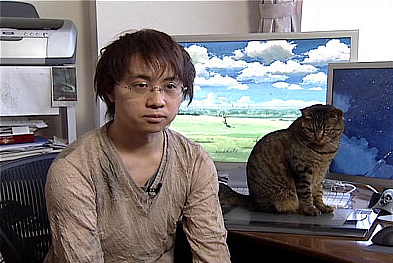
Makoto Shinkai creates a 30-second commercial for the Taisei Corporation

by Chris MaGee

Animator Makoto Shinkai made more than a few headlines this past year with his latest feature length film "Children Who Chase Lost Voices from Deep Below". This magical tale of a girl on a quest to find a lost love and the source of mysterious radio broadcasts propelled the already popular 38-year-old anime master to even more acclaim. What happens when you go from cult director to mainstream sensation? The big corporate boys come knocking.

Shinkai, whose other films include "Voices from a Distant Star" and "5 Centimetres Per Second", was commissioned to create a commercial for the multinational construction company Taisei Corporation. The result is below, and regardless if it's a 90-minute film or a 30-second commercial the result is equally as stunning. Check it out!

Monday, September 26, 2011

A photograph for Japanese film lovers

by Chris MaGee

Just this afternoon our own Bob Turnbull sent the above photo around to all of us here at the J-Film Pow-Wow. Don't recognize these gentleman all grouped together? Well, take a closer look because what we have in this photo are some of the legends of Japanese film all in one spot circa 1936 at the founding ceremony of the Japan Film Directors Society.

Here's a list of who's in the picture:

Front row, from left: Teinosuke Kinugasa, Yoshinobu Ikeda, Sadao Yamanaka, Mansaku Itami, Heinosuke Gosho, Minoru Murata, Shigeyoshi Suzuki, Kenji Mizoguchi

Second row, from left: Tomotaka Tasaka, Yasujiro Shimazu, Hiroshi Shimizu, Yutaka Abe,
Kiyohiko Ushihara, Kajiro Yamamoto, Yasujiro Ozu, Tomu Uchida

Third row, from left: Mikio Naruse, Kintaro Inoue

Wow! Thanks to Vermillion and One Nights via MUBI... and Bob of course... for this amazing pic.

Friday, September 16, 2011

A peek at some rare 8mm footage from the original "Ultraman" TV series

by Chris MaGee

There are more than a few of us here at the J-Film Pow-Wow who are fans of "Ultraman", specifically the original 1966 TV series. Are the battles between Ultraman and a plethora of evil monsters dated and campy? Sure they are, but that's p[art of their charm. Plus, it's hard not to have your inner child rejoice in seeing these titans go at each other, smashing miniature cities as they go.

Recently a real find made its way on to Youtube -- a selection of rare 8mm film footage shot by Tsuburaya Productions during the making of the original 1966 series. The footage is accompanied by Japanese narration about the making of the show. Enjoy it now before it gets yanked!

Wednesday, August 31, 2011

The world of Hayao Miyazaki recreated in Lego

by Chris MaGee

We love Hayao Miyazaki here at the J-Film Pow-Wow, and I personally have very fond memories of playing with Lego as a child. (It really is a thousand toys in one!) So if you take the wondrous visions of such films as "My Neighbor Totoro", "Nausicaa of the Valley of the Wind" and "Spirited Away" and you combine them with someone with a bucket of Lego and a pair of deft hands you get this Filcker gallery. Created by someone with the user name Miyazakitopia we see the full cast of favorite Miyazaki characters ingeniously rendered in Lego. Make sure to check them out!

Thanks to our friend Cathy Munroe Hotes at Nishikata Film Review for pointing this out.

Sunday, July 17, 2011

The life-size RX-78-2 Gundam is back in a commercial for Nissin Cup Noodles (???)

by Chris MaGee

Remember that life-size RX-78-2 Gundam that had everyone flocking to Odaiba back in 2009? (If your memory is a bit rusty check it out here.) Do you ever wonder, what did they do with it after it got taken down? I mean, it's not like someone can just chuck it in the backyard and use it as a garden gnome, right? For all of you who were a little curious as to the fate of the 59 foot tall steel and fiber glass recreation of the giant robot from Mitsuteru Yokoyama's "Mobile Suit Gundam" Anime News Network has the answer.

After its summer in Odaiba the giant Gundam went to Shizuoka City, the "model capital of Japan", where it stood until this past March. Now the Gundam is being featured in a commercial for Nissin Cup Noodles. You can check out the commercial, which premiered on Japanese TV this past week, below... but we wonder if in post-earthquake, post-tsunami Japan if "Boil Japan" isn't a rather unfortunate tag line. What do you think?

Thursday, June 30, 2011

Film-maker Kenji Murakami focuses on the end of life with photo series "Mourning"

by Chris MaGee

One of the most interesting film-makers in Japan's indie scene has got to be Kenji Murakami. The 41-year-old documentarian and cinematic explorer has not only introduced audiences to such underground heroes as film-makers Kenji Onishi and Fumiki Watanabe (in his films "Ms. Ougi" and "Interview with Fumiki Watanabe, The Great Filmmaker", but he has also shared his own personal obsessions with topics as diverse as 8mm film (Fujica Single Date) and artificial sex dolls (Love Doll! I Wanna Hold You).

This past week Midnight Eye's Facebook Fan Page posted this link to Murakami's personal blog, and an astonishing photo series simply titled "Mourning". The 34 photos in the series chronicle a Japanese funeral. It may not be a film, but these images capture one of the pivotal moments in anyone's life (or death) in the same intimate and focused way as in Murakami's documentaries and experimental works. Definitely something you should all check out.

Saturday, June 18, 2011

The Japanese Red Cross opens otaku-friendly blood donation clinic in Akihabara

by Chris MaGee

I remember wandering around and marvelling at the otaku glory that is Akihabara last November. Maids handing out flyers, a million and one manga and anime stores, retail shrines set up to J-pop and gravure idols and video game parlours assaulted my senses from all directions. After meeting a film-maker friend I found my senses needed a bit of a break, so we thought we'd grab a quick coffee and chat. It turns out that we ended up at a "Mobile Suit Gundam"-themed café to rest ourselves in. Not really the break from all things otaku that we were hoping for (then again, if we were looking to get away from otaku we should have got out of Akihabara). The point to this random story is that any and every business in this anime/ manga/ gaming and maid-worship mecca of Tokyo have adapted themselves to attract the otaku clientele in the area... even blood banks.

That's right, according to Asahi Shimbun's English website The Japanese Red Cross has opened a new blood donation facility in Akihabara dubbed Akiba:F. The "F" in the name stand for "future", and while the facility isn't designed around any specific sci-fi anime series, the whole interior has been designed to resemble a futuristic space station. Not only can you help those in need by donating blood at Akiba:F, but you can also down free beverages and browse the facilities manga café. There are even sketch books available for visitors to draw their favorite manga characters.

It's true, this story is more pop culture than cinema, but it's bloody interesting (excuse the pun). You can take a virtual tour of Akiba:F by checking out a video here, and if you're not squeamish about needles and you live in Tokyo you can visit The Japanese Red Cross' Akiba:F facility here.

Saturday, March 19, 2011

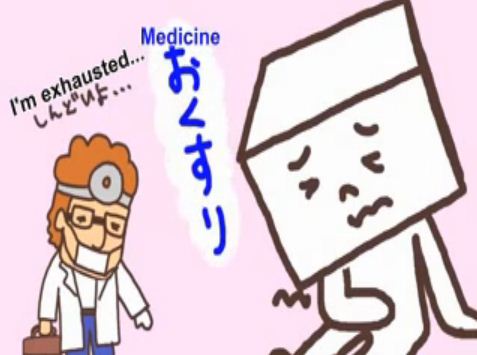
Artist Kazuhiko Hachiya explains the Fukushima Dai-ichi crisis to kids with "Nuclear Boy"

by Chris MaGee

Will this video elicit laughs in the future. Most probably. Will it get people laughing now. Mosy likely, but is that okay under the present circumstances. Probably not. Still this animated video that has been doing the rounds this week isn't for us grown ups. It's for kids, and Japanese kids specifically. Media artist Kazuhiko Hachiya made this animated short as a way to help young Japanese children understand exactly what is going on at the crippled Fukushima Dai-ichi Nuclear. While it may seem wrong to chuckle at the comparison between uranium and poop and radioactive exhaust and farts you know that this will immediately stick in youngsters' heads. Watch the whole short below... and find yourself wish that the situation with the plant was as easily fixed as slapping a diaper on it.

Sunday, February 27, 2011

New Akihabara hair salon caters to the otaku and cosplay crowd

by Chris MaGee

I know that we have a few cosplay enthusiasts who read the blog regularly (Alexandria Cruz, we're looking at you...), so when I saw this news item posted over at Anime News Network I knew I wanted to share it.

Anyone who has been to otaku ground zero, Akihabara, knows that any and every obsession with girls in maid uniforms, anime gear, or some things a little more kinky are indulged in the streets of "Electric Town". Now if you happen to be one of those highly-coveted beauties who wander the streets of Akihabara you have a place right in the neighbourhood where you can get your hair done... or your wig made as the case may be.

Fuwat is a new hair salon that opened near Akihabara Station last October, and besides the standard shampoo and cut services the stylists at the salon also can do your hair up when you head out cosplaying. And if you don't happen to have shocking pink hair to go along with your dress then the Fuwat stylists will set you up with a wig to compliment your outfit.

Cosplayers can check out Fuwat's official website here for the next time they're in Tokyo.

Saturday, February 19, 2011

Taichi Saotome swordfight performance amazing display of shadows and light

by Chris MaGee

During this busy week it was great to see something truly fascinating to ease the pressure. That came in the form a YouTube video posted by stage and screen technology studio Team LabNet of a New Year's performance titled "Dragon and Peony: Sword Dance and Shadowgraph". The video features Taichi Saotome, who if the name doesn't ring an immediate bell don't worry. I had to look him up myself, but it turns out 20-year-old Saotome is the young male actor who played female roles in Takeshi Kitano's "Zatoichi" and "Takeshis'". Saotome is a well known stage actor in Japan and he was asked to take part in this wonderful display of live performance and projected film. What you are about to see is all choreographed between Saotome and what is being projected on the screen behind him. Enjoy!

Thanks to Anime News Network for this great video.

Tuesday, February 8, 2011

What is the bestselling "Oniichan DVD"?

by Chris MaGee

Lord knows there has been some very odd stuff that has come to us from the world of Japanese video, but this week we think we've found one of the oddest. According to a news item posted over at Japan Today one of the hottest selling DVDs on the market in Japan right now is the ‘‘Oniichan DVD’’. The disc is a spin-off of the blockbuster "Oniichan CD" which sold over 30,000 copies. But what is the "Oniichan DVD"? Well...

Released this past November and marketed to men who wish they had a younger sister the "Oniichan DVD" consists of clips of teen and pre-teen girls calling out "Oniichan!", or "Big brother!" in a variety of situations. We're not making this up. Pop in the disc and you can hear a series of ultra-kawaii girls say "Oniichan..." sadly, angrily and with a pout, as well as, "Oniichan! I gave up making lunch," "Oniichan! I'm not popular because of you," and of course "Oniichan... I had a bad dream. Can I come sleep with you?" Marketed to men who wish they had a younger sister..? Yeah, we don't think so.

Saturday, February 5, 2011

"Rose of Versailles" creator Riyoko Ikeda gives recital at the Palace of Versailles

by Chris MaGee

Here's a news item that we can definitely file under "Just for Fun"... or it's just been a bit of a slow news week. Many of you will be familiar with the romance manga "Rose of Versailles". Originally serialized in Shueisha's Margaret Magazine in the early 70's the manga tells the story of Oscar, a member of Marie Antoinette's royal guard during the days leading up to The French Revolution. The hitch is Oscar is in fact a woman who has been secretly raised as a man in order to be an heir to her father. "Rose of Versailles" was wildly popular with young female readers and has been fodder for many a production of the all-female Takarazuka Troupe.

The manga's creator Riyoko Ikeda (above right) is pretty unique given that besides her manga creations she has studied music and singing and every once and a while will give a recital. That happened just this past week on January 29th at... wait for it... the Palace of Versailles. Fitting, don't you think? The 63-year-old Ikeda was in France to take part in the Angoulême International Comics Festival and was asked to give the recital at the site of her famous manga for a group of 100 invited guests. No amount of searching online yielded video of the recital, but we did find this video of a performance Ikeda gave in June of last year in Rome. Get ready for some piercing high notes and a lot of pomp, folks...

Thanks to Anime News Network for this bit of news.

Friday, January 7, 2011

Fan of all things ninja? Then make sure to check out Vintage Ninja!

by Chris MaGee

2010 was a busy year for the J-Film Pow-Wow and for me specifically with various writing and programming jobs cropping up. It was great news, but often the demands on my time and energy kept me from wandering the internet and digging up just plain fun content for the blog. Thankfully over the holidays I did a bit of aimless web surfing and discovered a great website that fans of Japanese film will want to take a look at.

With a mandate to showcase "shinobi, hooded heroes, and girls with sharp pointies in every form of media" Vintage Ninja is the place online to get your ninja fix. Not only does the site have features on ninja history, weaponry and of course ninja films, but it also features links on ninja collectibles like the above left Shinobi-themed sugoroku board game and vintage pics (like the one above right) from the programme to 1982 action film "Ninja in the Dragon’s Den" starring Hiroyuki Sanada.

So in between reading this week's reviews on the Pow-Wow and watching a few films take a break and head over to Vintage Ninja for a a bit of black tight-inspired fun!

Wednesday, December 8, 2010

Graffiti/ installation/ video artists Rinpa Eshidan give Mini Cooper their psychedelic treatment

by Chris MaGee

During my trip over to Tokyo for Tokyo Filmex 2010 I found myself trekking from the main festival site at Yurakucho Asahi Hall and up through the Ginza to the National Film Center where Unijapan had their DVD library set up. During all the too-ing and fro-ing I would pass the Ginza Mini Cooper showroom quite a bit and I'd see this wonderfully painted psychedelic-looking Mini Cooper in the showroom window with a stag emblazoned on its side. I enjoyed looking at it but I have to admit that with all the Filmex business going on that I never made the connection as to what I was looking at. It turns out that it was the work of a group of my favorite Japanese graffiti/ installation/ video artists Rinpa Eshidan.

For those of you who aren't familiar with the name Rinpa Eshidan make sure to check out their YouTube Channel, but suffice to say the group collectively takes over a space and begins to paint elaborate murals and build impromptu sculptures... and then they proceed to dismantle them. Painting is layered on top of painting and the process is repeated until they're finished or just exhausted. All the while Rinpa Eshidan are doing this they are also videotaping the process and ultimately the time lapse documentation of their projects becomes video art itself.

You can see what kind of treatment Rinpa Eshidan gave to the Mini Cooper that ended up in the showroom window by checking out their video chronicling the whole process below. Fascinating and fun stuff!

Godzilla goes up against Japanese whaling ships

by Chris MaGee

When director Ishiro Honda and screenwiter Takeo Murata were working on the script of their defining 1954 film "Godzilla" they based the beginning of the film on the true-life story of the Japanese fishing ship, the Daigo Fukuryu Maru that was accidentally bombarded with fallout from a U.S. nuclear test on Bikini Atoll in the Pacific in the spring of that same year. Now, over five decades later Godzilla is facing off against Japanese fishing boats, or more specifically Japanese whaling ships.

The Sea Shepherd Conservation Society has deployed a new ship in their fight against whaling - the above pictured "interceptor vessel" dubbed Gojira after Honda's classic kaiju film. The ship was built in Fremantle Western Australia and will shortly go into service confronting Japanese vessels conducting what they assert is "scientific research" on various whale species.

We first heard about the Sea Shepherd's Gojira via the blog of Prof. Aaron Gerow and he makes a very interesting point that instead of using an image of the original Japanese Gojira the folks at Sea Shepherd have chosen to use an image of the Godzilla featured in the 1998 U.S. remake. I guess that even the Sea Shepherd Conservation Society was smart enough to know that they shouldn't (or couldn't) use one of Japan's most beloved icons against Japanese vessels. Still, it's a reminder that we don't need of that terrible remake.

Friday, December 3, 2010

"Kakera" director Momoko Ando becomes the face of UNIQLO

by Chris MaGee

On my recent trip to Tokyo I was lucky enough to catch up wioth a number of filmmaker friends and guests who had attended the Shinsedai Cinema Festival here in Toronto. One filmmaker I was sad I couldn't meet up with was "Kakera: A Piece of Our Life" writer and director Momoko Ando. It wasn't without good reason though. Ando has been very busy writing the follow up to "Kakera", a project which I have been sworn to secrecy, but to help in raising her profile to in turn raise the profile of her next film Ando has joined such blockbuster stars as Meisa Kuroki and Ryuhei Matsuda and has been signed to appear in adds for Japanese casual wear retailers UNIQLO. I saw one of her posters in the window and was taken off guard, and now Ando is appearing in a TV spot for UNIQLO that you can check out below. Lesson learned from this? If you're an indie filmmaker in Japan, even if you come from famous stock like Ando does, you have to hustle to raise the funding for your next project!

Saturday, November 6, 2010

JAPANESE FILM BLOGATHON: The Fall and Rise of Seijun Suzuki: Part 2

Michiyo Ookusu, Zigeunerweisen, 1980

The Toronto J-Film Pow-Wow is proud to post the second half of the second half of our article "The Fall and Rise of Seijun Suzuki" as part of this year's Japanese Film Blogathon. To read the first half please click here.

by Chris MaGee

It's usually this period in Seijun Suzuki's career, the 12 years between his firing from Nikkatsu for "Branded to Kill" and the release of "Zigeunerwesien", that tends to get glossed over. The way most people discuss these years one could easily get the feeling that Suzuki was hiding in seclusion and barely able to eke out a living. This wasn't really the case. During the time of his lawsuit against Nikkatsu Suzuki was actually quite prolific.Without his regular studio income he made ends meet by directing a trio of TV projects. The first of these came only four months after his firing from Nikkatsu. In August 1968 Suzuki directed an episode of the TBS series "Good Evening Dear Husband" titled "A Duel". That was followed up the next year with an episode of the NTV series "Kurobe's Sun" titled "There's a Bird Inside a Man". Finally in 1973 Suzuki was asked to direct the premiere episode of the "Twilight Zone"-esque Fuji TV series "Horror Theatre Unbalance". This episode titled "A Mummy's Love", an adaptation of a macabre short story by author Fumiko Enchi, reunited him with two of the members of his Nikkatsu "Group of Eight", Atsushi Yamatoya and Yozo Tanaka. It's interesting to note that "Horror Theatre Unbalance" became a bit of a haven for directors who either worked on the margins of the Japanese film industry, like New Wave filmmaker Kazuo Kuroki, or for those who had jumped ship at Nikkatsu, like Yasuharu Hasebe who found the studio's decision to move into the production of Roman Porno, "romantic pornography" to be in poor taste. Even in this television sweet spot though Suzuki, the self-professed mischief maker, still managed to piss people off. Nissan Motors, one of the major sponsors of "Kurobe's Sun" pulled their commercials from Suzuki's episode because of an "objectionable scene in which the hero is hit by a car."
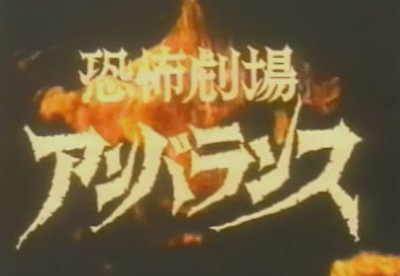
Horror Theatre Unbalance, Fuji TV 1973

Despite his lawsuit with Nikkatsu dragging on (and the annoyance that he engendered with the ad execs at Nissan) Suzuki was doing relatively well. With the money from these TV projects coupled with the eventual settlement paid out by Nikkatsu he could get through the next few years by picking up the occasional job directing TV commercials. The rest of the time he wrote essays that were compiled into a book named after his 1966 film "Kenga Erejii (Fighting Elegy)" plus he continued active friendships with his old cohorts Takeo Kimura, Atsushi Yamatoya and Yozo Tanaka. Tanaka actually was a neighbour of Suzuki and the two men would often meet at Suzuki's home for games of Go and long discussions of how to make a new kind of film, one that used the avant-garde territory of "Branded to Kill" as a jumping off point. Suzuki would keep these long chats in mind as he waited for the day when he hoped he'd be allowed to return to feature filmmaking. In the meantime though Tanaka and Atsushi Yamatoya were working on a project, one that took its inspiration from "Branded to Kill". It was also one that would eventually lead to the triumphant return of Seijun Suzuki.

Atsushi Yamatoya and theatrical poster for Trap of Lust, 1973

Both Atsushi Yamatoya and Yozo Tanaka had both had writing credits on "Branded to Kill", in fact Yamatoya had starred in the film as Killer No. 4 Koh. It was during the writing of the film that Yamatoya and Tanaka came up with the idea of a loose sequel to "Branded to Kill", one that would follow the character of the No. 1 Killer as he fights against the other members of the secret society of assassins. These would include quite a few sexy half-clad female killers. At first Yamatoya tried to write the screenplay himself, but his docket was already full writing scripts for films like Chusei Sone's "Showa Woman: Naked Rashomon", Yasuharu Hasebe's "Stray Cat Rock: Sex Hunter" and Toshiya Fujita's "Sweet Scent of Eros", so the task of finishing the screenplay was taken up by Tanaka. Once that was done though the two men were left with the dilemma of finding some kind of financing for the film. It would be folly to go knocking on doors at Nikkatsu. Having lost their legal fight with Suzuki the last thing they wanted was another "Branded to Kill" on their hands. Ultimately Yamatoya had to mine his contacts in Tokyo's underground film and theatre scene to somehow get his project made. Yamatoya had plenty of connections in the avant-garde having co-written scripts with writer/ director/ leftist radical Masao Adachi for 1966's "Season of Betrayal" and 1971's "Gushing Prayer" (the latter under the pseudonym Wataru Hino), so taking a walk on the artistic wild side wouldn't be a problem. His connections paid off, because here he and Tanaka met Genjiro Arato.

Theatre flyer, Genjiro Arato's Tenshogikan, 1972

Arato was the director of his own underground theatre troupe called Tenshogikan, "The Planetarium Hall". At that point in the early 1970's Tokyo was alive with these troupes that the Japanese referred to as shogeki, literally "small theatre". Tenjo Sajiki, Sakura, Tsuji Pro, Transformation, and more - dozens of these fringe troupes had been established in the city since the mid-1960's. Fueled by the public outrage against the U.S.-Japan Mutual Security Treaty, popularly known as ANPO, and taking their inspiration from the works of Jean Genet, Jean-Paul Sartre, Antonin Artaud, as well as avant-garde "happenings" the shogeki were out to topple traditional Japanese theatre and shock the establishment. What better place for rebellious spirits like Yamatoya and Tanaka to find funding and talent than amongst other rebels? Arato agreed to not only take the lead role of the No. 1 Killer, but he also offered the services of the actors and actresses in Tenshogikan. What's best is that with Yamatoya directing Arato was also convinced to finance the production with his own money. The truly unbelievable feat though was that upon the film's completion Yamatoya got it distributed by Suzuki's nemesis Nikkatsu. There was enough naked female flesh in the film that the studio released it on December 15th, 1973 as part of their Roman Porno line under the title "Trap of Lust". While the release of "Trap of Lust" wouldn't at that time benefit Seijun Suzuki directly it would put him just one degree of separation between himself and Genjiro Arato. In the world of film its these tangential relationship that can make or break a director, especially when they have the kind of spectacular failure that Suzuki was about to endure.

A Story of Sorrow and Sadness, 1977

In 1977 the day that Suzuki had been waiting for seemed to have arrived. Atsushi Yamatoya had penned a screenplay based on a story idea by manga artist Ikki Kajiwara about a fashion model who is transformed by a handsome trainer into a golf pro. Kajiwara had come to fame after writing a manga for Weekly Shōnen Magazine under the pseudonym Asao Takamori. "Ashita no Joe", the story of an orphaned streetfighter who becomes a lightweight boxing contender had captured the imagination of an entire generation of young Japanese. During the late 60's and early 70's "Ashita no Joe" had been embraced by student protesters, and even members of the radical leftist Red Army, as a near patron saint. Shochiku was willing to bank roll this Kajiwara/ Yamatoya script titled "A Story of Sorrow and Sadness" if Kajiwara was to produce. Meanwhile Yamatoya convinced a cagey Shochiku to bring his old friend Seijun Suzuki to come on board to direct. At that point in the late 70's the normally conservative, family-minded Shochiku had been mining talent from the margins of film and theatre for its productions. The hiring of experimental filmmaker Nobuhiko Obayashi for Shochiku's psychedelic 1978 horror film "House" was a good example of this. Seijun Suzuki, who had been spending the better part of the last nine years mulling over how he could create a new kind of film, wasn't ready to make a standard sport underdog movie though. With actress Yoko Shiraki and Yoshio Harada in the leads Suzuki turned "A Story of Sorrow and Sadness" into a fever dream meditation on the dehumanizing effects of fame. Using some truly stinging symbolism and gleefully disregarding continuity the film can be counted alongside "Tokyo Drifter", "Branded to Kill" and "Zigeunerweisen" as one of Suzuki's best works. Still audiences, at least the audiences that Shochiku was trying to appeal to, weren't looking for more than a feel good sports story with a pretty girl. A statement from the review for "Branded to Kill" that appeared in the June issue of the Eiga Geijutsu film journal could just as easily apply to "A Story of Sorrow and Sadness" - "We do not go to theatres to be puzzled." Seijun Suzuki's return to feature filmmaking promptly bombed.

Stills from Sunday Horror Series: The Fang in the Hole, 1979

In the wake of this failure many people, both in the Japanese film industry and without, would have agreed with Nikkatsu president Kyusaku Hori and said that "Suzuki should open a noodle shop," but Suzuki himself refused to give up. The only thing that he had ever done was make films, so that's what he continued to do. In 1979 he picked up another TV job, an episode of Fuji TV's "Sunday Horror Series" written by Atsushi Yamatoya. Titled "The Fang in the Hole" it starred actress Naoko Inagawa as a woman haunted by her dead gangster boyfriend (portrayed by Yoshio Harada). Although shot on a shoestring budget "The Fang in the Hole" showed that Suzuki hadn't lost his confidence as a filmmaker. The feeling of the episode picks up where "A Story of Sorrow and Sadness" left off. Stark, brilliantly coloured sets contrasted with wildly theatrical staging. Given the freedom to produce work like this Suzuki could have easily kept innovating in the world of television, but he and Yozo Tanaka had other ideas. Both friends had been working on a script based on the 1951 novel "Disk of Sarasate" by novelist Hyakken Uchida. Uchida had enjoyed his greatest popularity during the Taisho Era (1912-1926), a period in Japan's history that rolled America's Roaring 20's and the decadence of Weimar Germany into one. It was a period that fascinated Suzuki, in part because he was born at the tail end of it in 1923. Not wanting to start checking out real estate for that noodle shop Suzuki and Tanaka started looking for ways to fund their script, titled "Zigeunerweisen" (German for "Gypsy Airs"), without the help of a major studio. Tanaka remembered the the assistance he and Atsushi Yamatoya had received from Genjiro Arato with "Trap of Lust", so that's the door that he and Suzuki knocked on. Luckily for them Arato was in a generous mood.

Genjiro Arato and Juro Kara's Jokyo Gekijo in front of their red tent, 1964

Seijun Suzuki had lucked out. Just like he had done with "Trap of Lust" Genjiro Arato agreed to finance and produce "Zigeunerweisen". A little digging in his past reveals why Arato may have been so sympathetic to Suzuki's plight. When Arato was only in his early 20's he'd suffered through a painful firing as well. Before he had founded Tenshogikan Arato had been an actor in the most influential shogeki theatre troupe, Jokyo Gekijo, "The Situation Theatre". Founded in 1964 by writer and actor Juro Kara it had been named after a play by existentialist author and philosopher Jean-Paul Sartre, but soon that name was replaced in peoples minds by a new one - The Red Tent. This was because Jokyo Gekijo didn't hold their performances in traditional theatres. Like many shogeki troupes they took their performances off the stage and into the streets, or in the case of Jokyo Gekijo into the park. It was in various public parks that the troupe would erect their theatre, a red tent. Performances were only announced hours before they were to begin, both as a way to build excitement and also to prevent the police from knowing where they'd appear next. Arato's time in the Jokyo Gekijo would influence the rest of his artistic career, but this time was short-lived. Only after 10 months in the troupe he was fired due to what Juro Kara felt were violent outbursts against three other troupe members during one of their plays. Arato had created his own second chance in the theatre by founding Tenshogikan in 1972, and now he was going to give Seijun Suzuki his second by putting up the money for "Zigeunerweisen".

Toshiya Fujita and Seijun Suzuki on the set of Zigeunerweisen, 1979

With financing in place Suzuki began assembling his cast. "Lady Snowblood" and "Stray Cat Rock" director Toshiya Fujita would star as German professor Toyojiro Aochi, Yoshio Harada would star as Aochi's homocidal friend Nakasono, actress Naoko Otani would play dual roles as the gesiha Koine and Aochi's wife Sono, and actress Michiyo Ookusa would star as Aochi's perverse sister Shuko. A special appearance would be made by Jokyo Gekijo founding member and famed butoh dancer Akaji Maro as the blind beggar. In order to keep costs down nearly all of "Zigeunerweisen" was shot on location in Kamakura with locations being madly spliced and contrasted by Suzuki. Once again Takeo Kimura would provide the film's art direction. If the TV episodes that he'd worked on and "A Story of Sorrow and Sadness" were practice runs of Suzuki's new vision of film then "Zigeunerweisen" was his Suzuki's grand performance. While the story of the love/ hate friendship between Aochi and Nakasono and their swapping of lovers progresses in a fairly linear manner throughout the film's 145-minute running time Suzuki continually adds surreal flourishes - a giant red crab appears out of a dead woman's vagina, three blind beggars sing bawdy folk songs, characters who die mid-film continue to take part in the narrative. All this would definitely wow, or alienate, an audience, but once "Zigeunerweisen" was completed the question remained, how would an audience get to see it?

Toshiya Fujita, Naoko Otani, Yoshio Harada and Michiyo Ookusa, Zigeunerweisen, 1980

Seijun Suzuki had had a difficult enough time securing the directors job on "A Story of Sorrow and Sadness" at Shochiku and that film had bombed. With his bridges burned there and at Nikkatsu how was his latest film going to find a distributor? The studios themselves owned the theatre chains. The situation seemed impossible. That is until Genjiro Arato did what any good shogeki theatre director would do - he took "Zigeunerweisen" out of the studio run movie theatres and into the streets. Taking his cue from his Jokyo Gekijo days Arato had a special mobile, inflatable tent constructed and put up in Tokyo's Ueno Park. On April 1st, 1980 he began to hold regular screenings of "Zigeunerweisen" and something very strange began to happen. People came to see the film, and then they kept coming. Either a major shift had occurred in the Japanese consciousness since 1977, or Arato was simply smart enough to appeal to the arts crowd with his tent theatre. Regardless of the reason "Zigeunerweisen" ended up running for 22 weeks in its portable home, an estimated 56,000 tickets were sold and very quickly it began garnering glowing reviews. Once awards season rolled around Suzuki's film was honoured with trophy after trophy. It won Best Film, Best Director, Best Art Direction for Takeo Kimura and Best Supporting Actress for Michiyo Ookusa at the 1981 Japanese Academy Awards, plus it swept that year's Kinema Junpo Awards and had the honour of being named the Best Film of 1980 by the prestigious film journal.

Pistol Opera, 2001

No one could have predicted 12 years before that the dismissed and disgraced Seijun Suzuki would end up becoming one of the most honoured names in Japanese film. He ended up parlaying the success of "Zigeunerweisen" into two more films in what would become known as his Taisho Trilogy - 1981's "Kagero-za" and 1991's "Yumeji", both of which were produced by Genjiro Arato. What's even more satisfying is that "Branded to Kill", the film that nearly ended his career, has now become an undisputed classic of Japanese cinema. Suzuki even took the lead of Atsushi Yamatoya and Yozo Tanaka and made his own loose sequel/ remake of the film with 2001's "Pistol Opera". What is clear from Suzuki's success though is that it wasn't achieved by one single person. It was the result of longtime friendships, creative partnerships and the help from the world of Japan's avant-garde. Speaking of which, Genjiro Arato is still around too. In 2005 he produced the debut feature film of Tatsushi Omori, the son of Jokyo Gekijo alumni and "Zigeunerweisen" actor Akaji Maro. Titled "Whispering of the Gods" Arato once again screened the film in a tent theatre to avoid submitting the film to the Japanese censors. After the film finished its run he continued to screen films in the tent for several. First up, a retrospective of the work of "Group of Eight" member Atsushi Yamatoya including the "Branded to KIll" inspired "Trap of Lust".