Friday, January 29, 2010

Trailer arrives for Koji Wakamatsu's Edogawa Rampo adaptation "Caterpillar"

by Chris MaGee

With the news last week that Koji Wakamatsu's latest film "Caterpillar" was going to be in competition at the 60th annual Berlin International Film Festival it was only a matter of time that we got to see some stills and a trailer for this much anticipated project - and now Wildgrounds has come through big time. Not only have they posted a full gallery of stills and what, to me, is one of the most striking posters in ages, but they've also pointed the way to the theatrical trailer, and again it's a real winner.

As we've reported before "Caterpillar" is based on the 1929 short story "Imomushi (Caterpillar)" by mystery/ ero-guro literary icon Edogawa Rampo, the same story that formed the basis for Hisayasu Sato's segment, also titled "Caterpillar" in the 2004 omnibus film "Rampo Noir". That version, in keeping with the general tone of "Rampo Noir", was surreal, visually stylish, and steeped in sadomasochism. After seeing the trailer for Wakamatsu's take on the story, though, it definitely looks like he's eschewing flashy visual style for historical authenticity. The story, originally taking place during the First Sino-Japanese War, has been updated to the Second (1937-1945) and WW2. Shigeko (played by the wonderful Shinobu Terashima) sees her husband off to the front with a sense of pride, but as you can see from the trailer below, his return as a limbless casualty turns potential triumph into tragedy. Here's a perfect example of a trailer doing what a trailer should - giving you just enough of the plot and a feeling of the entire film while giving nothing away. It's pushed "Caterpillar" right to the top of my must see list of films for 2010.

Check out the trailer below and then make sure to head over to Wildgrounds to check out the gallery of stills and the full (and stunning) poster for "Caterpillar".

REVIEW: The Wonderful World of Captain Kuhio


(クヒオ大佐) Kuhio Taisa

Released: 2009

Director:
Daihachi Yoshida

Starring:
Masato Sakai
Sakura Ando
Reila Aphrodite
Hirofumi Arai
Kanji Furutachi

Running time: 113 min.


Reviewed by Eric Evans

Daihachi Yoshida has a keen sense of how to cinematically portray pathology. After crafting the gut punch of Eriko Sato's breakthrough performance as Sumika, the emotional dominatrix in 2007's "Funuke: Show Some Love You Losers", I wouldn't have guessed that his next film as writer and director would be the conman comedy "The Wonderful World of Captain Kuhio". But "Kuhio" is deceptive: It's funny, but the humor masks the persona of a protagonist as damaged and unstable as Sumika.

Masato Sakai stars as 'Captain Kuhio', a grifter who seduces women under the guise of a U.S. Navy operative on a special mission in Japan. He moves with military precision and purpose, always pressed and looking sharp in one of his various uniforms. But he doesn't limit his impersonation to mere cosplay; He is so entrenched in the disguise that he's had rhinoplasty to look more gaijin-like. And the nose plays: Sakai looks so absurd with a long, pointy schnozz that people have to take him at face value since no Japanese ever sported such a beak by natural means. When asked how he came to speak Japanese so fluently, Kuhio passes himself off as a Hawaiian (a descendant of near-legendary King Kamehameha, no less) who was so often mistaken for Japanese that he learned the language. He must choose his victims carefully since his English is limited to random military jargon and (very) small talk. He's got naïve bento-shop owner Shinobu (Yasuko Matsuyuki) on the hook, and is leveraging her out of every penny she's got; His act is so effective that she's halfway to bankrupting herself to fiannce their sham marriage. Kuhio, a charming sociopath, keeps her strung along but is searching for new revenue streams in the forms of museum worker Haru ("Love Exposure" and "Kakera" star Hikari Mitsushima) and bar hostess Michiko (Yuko Nakamura). When Shinobu's greedy and streetwise brother shows up looking to mooch off of his responsible sister, he quickly susses Kuhio's scam and blackmails him under threat of exposure. As Kuhio spreads himself thinner and thinner he has more difficulty juggling the lies, and much of the film's humor comes from his increasingly desperate attempts to keep his multiple victims credulous.

Like the better grift films ("House of Games", "The Grifters"), "Kuhio" is both a seductive peek into a world of grown-up make-believe and a cautionary tale. The glamour and daring of Kuhio's lifestyle quickly give way to a comically mad scramble for survival, yet the film doesn't shy away from showing the very real effects of the con on its female victims. Haru is young and decidedly not rich, seemingly victimized as an ego boost for Kuhio--why else choose someone who wouldn't have any cash to finance his lifestyle? Michiko is clearly savvy to the game, another odd choice for someone whose success depends upon victims who don't look too deeply into his stories. That Kuhio would choose these women as potential targets reveals a need beyond the fiscal: he's compelled to continue the charade by more than money, and when the deception unravels his life is as deeply affected as those of his marks.

Yoshida stumbles a bit here as he seems unsure of how to handle the final third of the film: The situations and performances warrant serious drama but tonally the film is still a comedy, and the two don't quite mesh. By the time Kuhio enters Walter Mitty territory it's no longer clear if he's been seeing the world as we've seen it, or through the filter of a rich yet psychotic fantasy life where he really has been sent on dangerous missions and awarded medals for bravery. It's a terrific role for Sakai, allowing him to go from leading-man suave to frantic, sometimes in the same scene. After the more or less one note role he had in the fluffy "The Triumphant General Rouge", it's heartening to see him in a role which requires him to be charming and oily and also sympathetic.

The film is most successful in its middle third, fluctuating from screwball comedy to emotional drama, but the whole thing really works. Though adapted from outside material (Kazumasa Yoshida's novel of the same name), this is Daihachi Yoshida's second film both writing and directing, and his second success. His next film, currently in production, is another comedy, this time starring Miho Kanno. I hope at some point he returns to straight drama since his "Funuke" was a film of singular intensity, and "Kuhio"--while a comedy--has a dark underbelly which makes the whole that much more rewarding.

Fun note: Mitsushima shares several scenes with her costar from "Love Exposure" Sakura Ando in an essentially thankless minor role, but the two have a near-catfight which will delight fans of Sion Sono's recent masterpiece.

Blue Ribbon Awards 2009 are handed out to "Mt. Tsurugidake" and "Dear Doctor"

by Chris MaGee

The awards season continues on in Japan with the annual Blue Ribbon Awards were announced on this week. What's interesting is that instead of there being one big winner like in 2008 with Yojiro Takita's "Departures" 2009 is proving to be a three way split for the most lauded films, namely Miwa Nishikawa's "Dear Doctor", Setsuro Wakamatsu's "The Sun That Doesn't Set", and Daisaku Kimura's "Mt. Tsurugidake" (above). The latter ended up being awarded Best Film at the 52nd annual event with winners being compiled by votes from seven Tokyo weekly newspapers. What's really odd though is that Kimura, the veteran 71-year-old cinematograher with such films as "The Beast Must Die" and "Poppoya: Railroad Man" to his credit, shared the Best Newcomer Award with Masaki Okada seeing that "Mt. Tsurugidake" was his directorial debut.

While "Mt. Tsurugidake" grabbed the top prize in terms of sheer numbers Nishikawa's "Dear Doctor" beat it out by taking hom three trophies, Best Director for Nishikawa, Best Actor for Tsurube Shofukutei, and Best Supporting Actor for Eita. Actually they didn't take home any trophies. In japanese award show style the actual hardware won't be handed out until February 16th during an official ceremony in Tokyo.

Check out the full list of winners below (courtesy of Tokyograph), and thanks to Japan Zone for the heads up on this.


Best Picture: Tsurugidake: Ten no Ki (Mt. Tsuruigidake)
Best Director: Miwa Nishikawa (Dear Doctor)
Best Actor: Tsurube Shofukutei (Dear Doctor)
Best Actress: Haruka Ayase (Oppai Volleyball)
Best Supporting Actor: Eita (Dear Doctor)
Best Supporting Actress: Kyoko Fukada (Yatterman)
Best Newcomer: Daisaku Kimura, Masaki Okada
Best Foreign Film: Gran Torino (Clint Eastwood)
Special Award: Toshiyuki Nishida (Tsuribaka Nisshi series)

Can't stop the gore - Noboru Iguchi, Yoshihiro Nishimura, and Tak Sakaguchi join forces

by Chris MaGee

If boring old farts like me thought that gore films are (or were) the next passing phase in Japanese popular film after J-Horror we'd be wrong, at least as long as the Father, Son and Holy Ghost of the genre - director Noboru Iguchi, director and special effects wizard Yoshihiro Nishimura, and stunt choreographer, actor, and director Tak Sakaguchi - are around to give us boring old farts the what for.

It was announced over at Twitch this week (thanks to a heads up from Mr. Don Brown that this trio of friends and colleagues are joining forces yet again, this time to direct a segment each in an upcoming omnibus film titled "Sento Shojo". Production on the film which will star gravure idol Yumi Sugimoto (in the above promo still) will carry her through three separate segments of the same story, and we can only assume that by the end of it someone might have a paper cut or two... or three... or might be disemboweled.

Outcast Cinema's Marc Walkow is saying that "Sento Shojo" will be starting production next week and that it will end up being backed and distributed by Nikkatsu's new genre/ gore wing Sushi Typhoon. And if you think that "Sento Shojo" doesn't have the same punch as, say, "Tokyo Gore Police" then don't worry. The English title for the film is slated as being "The Mutant Girls Squad". I think that's a bit harsh, don't you? Sugimoto-san doesn't even look a little bit mutated.

REVIEW: The Deserted Archipelago


無人列島 (Mujin rettô)

Released: 1969

Director:
Kanai Katsu

Starring:
Ben Hiura

Miyako Takeda
Kazuko Aoki
Jun Arai
Kazuyoshi Kushida

Running time: 55 min.


Reviewed by Chris MaGee


The Japanese New Wave, that revolutionary cinematic movement that in actual fact was never an organized movement at all, certainly added its share of masters into the pantheon of Japanese cinema - Nagisa Oshima, Shohei Imamura, Kaneto Shindo, Masahiro Shinoda, and Yoshishige Yoshida to name only a few. It also encompassed a number of equally powerful although less celebrated (at least here in the West) filmmakers like Susumu Hani, Masao Adachi, Kazuo Kuroki, Toshio Matsumoto and the infamous and visionary Shuji Terayama. While these filmmakers for the most part worked entirely independently they did share a spirit of exploration, protest, innovation, and iconoclism. In the turbulent Japan of the 60's and early 70's this feeling seemed to be in the water and it informed the work of numerous filmmakers, some marginal to the New Wave and some sadly forgotten. With New York's Japan Society putting on their retrospective of New Wave classics "Shinjuku Ecstasy" last year it seems that the time was ripe to reacquaint ourselves with the films from this "movement", but in a happy coincidence 2009 also saw one of these nearly forgotten filmmakers pulling himself from obscurity by releasing a 5-disc DVD set of films. That filmmaker is Kanai Katsu, and the film that kicks off the set, as well as the film that kicked of Katsu's independent filmmaking is 1969's "The Deserted Archipelago".

The first film in a loose trilogy that would continue with 1971's "Good-Bye" and 1971's "The Kingdom", "The Deserted Archipelago" is a surreal political tale, a film entirely of it's time. By the late 60's and early 70's the leftist student movements who had mobilized against the U.S.-Japan Security treat, better known as the Anpo Treaty, had splintered and re-splintered into ever smaller and more radical groups. By the time that Katsu was making "The Deserted Archipelago" many university campuses in Japan more closely resembled battlegrounds than they did places of learning. While these groups clashed over the finer points of political actions many shared the common goal of throwing off the yoke of U.S. Imperialism in their home country. It's this core idealogy that Kanai explores in his film.

In a world where the seasons have gone topsy turvy a young wounded man named "Land of the Rising Sun" Hidekuni is being led back to the Christian nunnery where he's been raised. There he is put on trial by the nuns for what we discover was his third escape attempt. His sentence is a severe whipping, but but torture that ends in a sexual coupling (sexual intercourse can't adequately describe what occurs) with the nun wielding the whip. Through this Hidekuni becomes pregnant and gives birth to a child from a tumor in his back. Escaped once again he is pursued by one of the nuns while the boy, growing like a siamese twin from his spine grows to adulthood. "Why do you always look to the Western sky?" this son/ twin asks Hidekuni. "I look West because I can't look East," Hidekuni replies. It's only through murdering this son/ twin that Hidekuni is truly set free to travel West and, as he puts it, "reignite the sun". This resurrection of the classic symbol of Japan is fraught with dangers and dream-like encounters. Kanai has Hidekuni encounter a Korean-Japanese couple, professional wallpaperers, their offspring, a comedic quintet of men connected by an umbilical cord, rampaging salarymen, and shirtless soldiers who attempt to stop Hidekuni from storming the Japanese parliament.

While the political symbolism that Kanai uses in "The Deserted Archipelago" is fairly obvious in spots, with Western religion, Western music including Hank William's "Elijah" and James Brown's "Papa's Got a Brand New Bag", and the assertion by the nuns that "A bit of sacrifice is necessary for peace" pointing the finger directly at U.S. influence in Japan, it would be a mistake to reduce everything that transpires in the film to a "this equals that" formula. It's obvious that Kanai possesses a truly fluid and inventive imagination, one capable of producing intuitive and poetic imagery that hints on multiple subtle meanings. His inclusion of 14th-century Dutch master Hieronymus Bosch's painting "The Garden of Delights" at points during the film is a key to the dangers of symbolic interpretation and the power of surreal imagery. Art historians have attempted with varying degrees of success to interpret Bosch's fantastic and grotesque imagery as being everything from a satire of Dutch church of the time, to coded heretical teaching of groups like the Cathars and Knights Templars, to mnemonic images designed to teach standard morals. Any or all of these interpretations may (or may not) be correct, but it's doubtful that Bosch's paintings have retained their hold on our imaginations by simply being pat symbols of the political and social life of his time. The exact same goes for Kanai's "The Deserted Archipelago".

As mentioned at the beginning of this review, with retrospectives of the work of Kanai's New Wave contemporaries popping up across North America last year one can only hope that film fans will dig a bit deeper to rediscover not only "The Deserted Archipelago", but all the films contained in his 5-disc set, either for a look into Japan of circa the late 60's or as a landmark of surreal filmmaking.

Weekly Trailers


Kokuhaku (Confession) - Tetsuya Nakashima (2010)


Tetsuya Nakashime came to most of our attention through his sweet (if quirky) "Kamikaze Girls", but with "Memories of Matsuko" and "Paco and the Magical Picture Book" he injected a bit of sour in with his sweet. With his upcoming screen adaptation of Kanae Minato’s best-selling mystery novel "Kokuhaku (Confession)" Nakashima explores the decidedly sour territory of a high school teacher (Takako Matsu) who plots to take revenge on the teenage bullies who murdered her daughter.


Dead Leaves - Hiroyuki Imaishi (2004)


From Production I.G., the same folks who brought you "Ghost in the Shell", "Blood: The Last Vampire" and the animated O-Ren Ishii sequence in "Kill Bill, Vol. 1" comes the zany outer space prison break "Dead Leaves". Cyborg Bonnie and Clyde team Retro and Pandy get nabbed by the cops and locked up in Dead Leaves, a prison complex built inside a half-destroyed moon. When they hatch a plan to break out and take all the other convicts with them, well, let's just say that all hell breaks loose.

"Sword artist" Tetsuro Shimaguchi talks fight choreography and "Super Kabuki" with CNN Go

by Chris MaGee

Here's a news item that I know Matt Hardstaff, our resident martial arts film expert, will... oh, I was going to type "get a kick out of"! That's too blatant a pun even for me. Here's an item that Matt will go crazy for. That's better.

CNN Go has posted an interview with Tetsuro Shimaguchi. "Who?" you may ask? Well, if you've seen Quentin Tarantino's "Kill Bill, Vol 1" then you've seen Shimaguchi's work. He and his fight troupe Kamui were responsible for choreographing the entire Crazy 88 fight sequence, in fact Shimaguchi plays one of the very first gangsters to taste The Bride's Hanzo-forged blade in the scene.

Besides his work on "Kill Bill" and Masahiko Tsugawa's 2008 film "Jirochô sangokushi (Samurai Gangsters)" Shimaguchi and Kamui have performed battle reenactments, known as "Super Kabuki", at a number of festivals and events across Japan and the U.S., and CNN Go gets some really interesting insights on what it is like to be a "sword artist", the term that he prefers to be called, and this little discussed aspect of the Japanese film/ entertainment industry.

You can check out everything that Shimagumi got to talking about with CNN Go correspondents Matt Alt and Hiroko Yoda here.

REVIEW: Samurai Assassin


侍 (Samurai)

Released: 1965

Director:
Kihachi Okamoto


Starring:
Toshirô Mifune
Keiju Kobayashi
Michiyo Aratama
Yûnosuke Itô

Eijirô Tôno

Running time: 123 min.


Reviewed by Marc Saint-Cyr


I had a strong feeling I’d be in good hands with “Samurai Assassin” just from the title and Toshirô Mifune’s top billing. Then that feeling intensified after I learned that its director is none other than Kihachi Okamoto, who delivered such other swordplay classics as “The Sword of Doom,” “Kill!” and “Zatoichi Meets Yojimbo.” And sure enough, this film did not disappoint in the slightest bit – in fact, it may very well be the most impressive jidai-geki piece I’ve seen in some time.

The film opens on February 17th, 1860 at the snow-covered Sakurada Gates, where a band of assassins wait in vain to kill the House of Ii’s ruling lord. The would-be killers, who belong to the opposing House of Mito, afterwards conclude that a traitor is among them and investigate two possible suspects: Tsuruchiyo Niiro (Mifune), a ronin whose greatest ambition is to reach the official rank of samurai, and Einosuke Kurihara (Keiju Kobayashi), a scholar of Western philosophy who is all too aware of the wave of change overcoming Japan at that moment.

At first, Mifune’s Niiro seems like just another rehash of the beloved Sanjuro character he first portrayed in Kurosawa’s “Yojimbo” and “Sanjuro”: he is roguish, unapologetically self-serving, sly and a ruffian, not to mention gruff and more than capable with a katana. He even works as a bodyguard (“yojimbo” in Japanese) at an inn as one way of earning a living for himself. Yet as the film goes on, Niiro is interestingly depicted as something of a loser. This is most apparent when he drunkenly stumbles from one inn to another in the pouring rain, slipping in the mud, a broken sandal in his hand. It is revealed that Niiro was raised by his mother and Kisoya (Eijirô Tôno), an elderly father figure, with the hope that he would become a fully-fledged samurai. Yet the true identity of his father is withheld from him, thus keeping him outside of the realm of official nobility and preventing him from marrying an upper-class princess (whom he is later reminded of by an inn proprietress who becomes the object of his lust). Consequently, he is made all too aware of his shortcomings in life and, frustrated, becomes increasingly obsessed with proving his worth as a potential samurai.

Apart from offering a fascinating new approach to Mifune’s usual ronin type, Niiro and his ambition serve as a jumping point for a rather brilliant exploration of the collapse of the samurai class. In what could only be described as a case of cosmic irony, the very Lord Ii whose death Niiro believes will finally elevate him to samurai status is in fact one of the last substantial remnants of the old order of Japan. He says many times throughout the film that his death will surely mean an end to the Tokugawa government, the Shogunate system and the samurai. Kurihara, who mentions the famous black ships’ presence at Shimoda, is all too aware of this and wishes to kill Ii for the sake of Japan ’s future while Niiro is foolishly blind to the true repercussions of his selfish quest. His gradual loss of perspective and morality is a masterstroke of tragedy, culminating back at the Sakurada gates amid heavy snowfall in an amazing, bloody final sequence.

Like Hideo Gosha’s “Sword of the Beast,” “Samurai Assassin” offers an intriguing study of the samurai just as they were about to enter their twilight. At the same time, it unravels a suspenseful tale of plots, suspicions and betrayals while also containing what I’d confidently call one of Toshirô Mifune’s greatest characters in his long and legendary career.

Read more by Marc Saint-Cyr at his blog.

Japanese Weekend Box Office, January 23rd to January 24th


1. Avatar (Fox)
2. Oceans (Gaga)
3. Surrogates (Disney)
4. The Imaginarium of Doctor Parnassus (Showgate)
5. Sayonara Itsuka (Asmik Ace)
6. Yugio 10th Anniversary Movie* (Nas)
7. Nodame Cantabile: The Movie 1 (Toho)
8. Where the Wild Things Are (Warner)
9. Bandage* (Toho)
10. Up (Disney)

*Japanese film

Courtesy of Box Office Japan

Haruka Ayase goes from "Oppai Volleyball" and being the blind swordswoman to KFC

by Chris MaGee

Okay, it's not at all unusual for even a critically-acclaimed actor or actress to take on a lucrative endorsement deal. We've seen Anne Hathaway become the face of L'Oreal Cosmetics, Gene Hackman does voice over work for the Oppenheimer Funds commercials, but I don't think we tend to see such high profile talent shilling for fast food joints. I guess that even though actress Haruka Ayase just picked up the Blue Ribbon Award for her role in Eiichiro Hasumi's "Oppai Volleyball" it doesn't mean that she doesn't need some extra cash, and quite a few extra calories.

The 24-year-old, who also won acclaim last year for her role as the blind swordswoman in Fumihiko Sori's "Ichi", has signed on to be the spokeswoman for KFC in 2010. The fast food company is celebrating its 40th anniversary in Japan and to kick off a year of special meal deals, promotions, and of course a new campaign of commercials Ayase was on hand at a press conference in Tokyo last week with KFC Japan president Masao Watanabe plus the most popular inanimate buddy for photos of giddy gaijin touring Japan, the fiber glass Colonel Sanders that stand outside Japanese KFC restaurants.

Ayase was presented with a doll designed to resemble her, plus a bucket of chicken. She admitted that while shooting a series of commercials for KFC that she'd swiped a drumstick or two between takes. She's a braver person than me. While I may not have the iron-coated stomach of my youth anymore I'm still pretty resilient when it comes to eating greasy foods... except for KFC. man, that stuff does a number on me. Well, my only advice to Ayase is to hit the treadmill after polishing off a bucket of chicken otherwise she may end up losing that "Oppai Volleyball" figure.

Thanks to Japan Today for this bit of news, and to MSN Japan for the above image.

REVIEW: Vibrator


ヴァイブレータ (Vaibureeta)

Released: 2003

Director:
Ryuichi Hiroki

Starring:
Shinobu Terajima
Nao Omori

Jun Murakami
Riho Makise
Tomorowo Taguchi

Running time: 95 min.


Reviewed by Chris MaGee


There seems to have been a whole new genre of romantic films birthed during the last ten or fifteen years. Richard Linklater's "Before Sunrise" kicked it off in 1995 and then its sequel "Before Sunset" along with Wong Kar Wai's "In the Mood for Love", Claire Denis' "Friday Night" and Sofia Coppola's "Lost in Translation" introduced us to a new brand of slow, moody love stories where lonely strangers indulge in just as much anticipation and conversation as they do lovemaking (if they ever indulge in lovemaking at all). None of these films could be called "plot driven", so for most movie audiences they've been an acquired taste, but for those of you (like myself) who've acquired a taste for these fleeting romances then Ryuichi Hiroki's 2003 film "Vibrator" is one that you should make a point to see.

Rie (Shinobu Terashima ) is a woman with issues. The winter night that we first meet her she's roaming the aisles of a convenience store hunting for sweet German wine to quell her alcoholism. She's a freelance journalist living from one writing assignment to the next and her thoughts, revealed to us through voice over and onscreen inter-titles, are an ongoing roll of alienation, compulsion and loneliness. Once she's got her bottle in hand where will Rie go? Nowhere in particular it seems, but a chance meeting gives her a destination and purpose. Into the store walks a scruffy young man with dyed blonde hair who, as Rie describes him "looks like a fisherman, but he's cute" and at that moment her cellphone vibrates in her inside coat pocket. For those of you out there hoping for marital aids to make an appearance in the film this is your cue to be disappointed. Although, like so many filmmakers of his generation, director Ryuichi Hiroki got his start working in the world of pinku eiga "Vibrator", although it includes some nudity and sex, is more concerned with the relationship that develops between Rie and this young man, Okabe (Nao Omori) after she follows him out of the store and into the snowy night.

It's a potent mix of lust, loneliness, her relating to something in Okabe that has Rie jumping into this stranger's cab and heading off with him on a run up north to Niigata. It turns out that Okabe is a kindred spirit. A contract truck driver he lives from job to job, hauling everything from loads of tires to methamphetamines hidden inside frozen tuna across the highways and backroads of Japan. Like so many of these films about strangers crossing paths and falling in love, or at least in infatuation, the plot of "Vibrator" pretty much ends there, but it is only the beginning of us getting to know these two these two people. As they barrel through the night, day then night again, making stops to drop off and pick up cargo and to make love Rie and Okabe slowly reveal more and more about their pasts, their weaknesses, their desires. Okabe talks about his past as a yakuza pimp while Rie divulges her bulimia. Due to Rie's almost constant voice over we also get a totally convincing portrait of female sexual desire, something that is so very rare in cinema, whether from Japan or anywhere else in the world.

Ryuichi Honda adapted "Vibrator" from a novel by Mari Akasaka, a book I am sadly unfamiliar with so I'm uncertain as to how much of the film can be credited to Honda and how much to the very impressive talents of its two stars. Both Shinobu Terashima and Nao Omori give such unpretentious and matter of fact performances that as I watched "Vibrator" I felt as if I was right there in the cab with them, not interpreting two characters in a movie, but building my own relationship with two very real, painfully lonely people. Meanwhile Honda presents us with perfect moments, moments when his two leads aren't talking that speak just as loudly to us. The scene where Rie wanders away from the truck to take in a local winter festival lit entirely by candlelight stands out as particularly moving.

The brilliance of a film like "Vibrator", or for any of the well made entries into the romantic subgenre of star-crossed stangers, is that even if we have never acted on it we’ve all felt at one time or another that a friendly smile, a warm body next to us and miles of open road would be the best bet for escaping our little, lonely lives. "Vibrator" is our chance to to make that escape, at least via Honda's touching vision and two wonderful performances.

Tuesday, January 26, 2010

Chris MaGee's Top Picks of 2009 and the 00's


We've jut put another year to rest, and you can't do that properly without reviewing the past 12 months and choosing your favorite films, so that's exactly what we here at the J-Film Pow-Wow have done. All of us - Bob, Matt, Marc, Eric and Chris - have chosen not only our top five favorite Japanese theatrical and festival releases for 2009, but also our top five favorite DVD releases as well. See that we didn't just pass from one year to the next, but from one decade to the next we've also drawn up our lists of what we feel were the best films of the 00's (or "noughts" as we've also seen people calling them). So scroll down and see if any of your favs made our lists, or maybe you'll find some films that you didn't get a chance to catch in '09 (or in the 00's) that you'll end up putting on you "to see" lists. Enjoy!


Top Five Theatrical Releases of 2009


1. Naked of Defenses (dir. Masahide Ichii)

Former comedian Masahide Ichii's simple story of two female factory workers, one who's expecting her first child and the other struggling to come to terms with a miscarriage, is a classic exercise in less-is-more. This young director has effortlessly created a contemporary classic. The best film of 2009 and one of the very best of the decade.


2. The Dark Harbour (dir. Naito Takatsugu)

28-year-old filmmaker Naito Takatsugu ensures his spot as one of Japan's most talented young directors with his sophomore film "The Dark Harbour". A down beat comedy reminiscent of the work of Aki Kaurismaki and early 90's Takeshi Kitano it introduces us to lonely fisherman Manzo (Shinya Kote) and his quest to find a woman to share his life by the sea.


3. emerger (dir. Aki Sato)

Screenwriter Aki Sato's "emerger" is a truly rare occurance - a debut film from a first time director that perfectly captures its subject matter, that of a physically and emotionally wounded woman and a heartbroken gay man who connect in the lonely city. It packs more into its 40-minutes than most films do in 120-minutes. Here's hoping Sato gets busy on her sophomore film very soon.


4. Air Doll (dir. Hirokazu Kore-eda)

With the combination of Hirokazu Kore-eda and cinematographer Mark Lee Ping Bing how can you go wrong? But beyond the visual beauty of the film what makes "Air Doll" one of the best of last year is the revolatory performance by Korean actress Bae Doo-na as an inflatable sex doll who comes to life, falls in love, and gains a heart. Her Nozomi will go down with Setsuko Hara's Noriko and Kinuyo Tanaka's Oharu as one of the classic female characters in Japanese cinema.


5. Ain't No Tomorrows (dir. Yuki Tanada)

34-year-old director Yuki Tanada showed us that she possesses the unique talent of bringing totally believable young people to the screen in her 2004 feature debut "Electric Button (Moon and Cherry), but with her adaptation of Akira Saso's manga "Ain't No Tomorrows" she tops her earlier effort and brings us the first teen movie since John Hughes' 80's landmarks that makes us laugh and cry with a group of mixed up high schoolers.


Top Five DVD Releases of 2009


1. The World of Kanai Katsu (Kanai Katsumaru Productions)

How often does a DVD release introduce a previously unknown filmmaker to a whole new generation of film fans? Not that often, but when 73-year-old veteran independent filmmaker Kanai Katsu released his award-winning films from the 60's, 70's and straight through to the 90's on a five-disc limited edition box set that's exactly what happened. Surreal, provocative, and darkly humorous the accolades for Kanai Katsu's work has finally come. Buy direct from Katsu himself here.


2. Takashi Ito Film Anthology (Image Forum)

In the world of underground and experimental filmmaking there are some films and filmmakers you end up reading about more than you actually see their work. One of those filmmakers is 53-year-old Takashi Ito. The protégé of "Funeral Parade of Roses" director Toshio Matsumoto he has gone on to become one of the guiding lights of experimental Japanese film in the past three decades. Now the folks at Image Forum finally give us a chance to see these long discussed films in a wonderful 2-disc set.


3. Tora-san: Collector’s Set 1 (AnimEigo)

The longest running film series in cinema history... and not just Japanese cinema history. We're talking world cinema history. With 48 films released by Shochiku over 26-years you'd have thought that the "Otoko wa tsurai yo" or Tora-san films would have made their way to DVD a long time ago. They hadn't, but now they have in an AnimEigo box set that includes the first four films in the series.


4. Black Rain (AnimEigo)

For the longest time you could only find Shohei Imamura's sublime 1989 Hiroshima drama "Black Rain" on a sub par Fox Lorber DVD that sold for hundreds of dollars in online auctions. Thanks to the folks at AnimEigo Imamura fans (and film fans alike) can finally witness this late Imamura masterpiece.


5. Hazard (Evokative Films)

Okay, Evokative Film's release of "Hazard" is on my list because it's a great unrecognized film in director Sion Sono's filmography that deserves a lot more love thrown its way. It's also on my list for purely selfish reasons as I was lucky enough to write the introductory essay in the liner notes. So, there are two solid reasons why this is one of the best DVD releases of last year... and did I mention I wrote the introductory essay in the liner notes?


Top Ten of the 00's


1. Spirited Away (dir. Hayao Miyazaki, 2001)

After seeing Hayao Miyazaki's "Spirited Away" for the first time I wandered around my apartment for two hours afterward, dumbfounded by the magical world I had just visited and somewhat sad that I had to leave after only two hours. I've made many visits back since and this has become one of a favorite films of all time.


2. Vortex & Others (dir. Yoshihiro Ito, 2001-2008)

While I was only introduced to the short films of Yoshihiro Ito by my Shinsedai brother-in-arms Jasper Sharp last year "Vortex & Others" (made between 2001 and 2008), but they've quickly become some of my very favorites. You can name drop filmmakers like David Lynch, Seijun Suzuki and Luis Bunuel to give an idea of these perfect shorts, but in the end Ito is a cinematic original. Fascinating films that I can only hope will be seen by more audiences and soon.


3. 9 Souls (dir. Toshiaki Toyoda, 2003)

What starts out as a hip comedy about nine escaped cons suddenly becomes an utterly compelling tragedy about trying to come to terms with wrongdoing. Toshiaki Toyoda pulls off one of the best ensemble cast performances in Japanese film since Akira Kurosawa's "Seven Samurai". Really.


4. Naked of Defenses (dir. Masahide Ichii, 2009)

** See #1 on my Top 5 Theatrical Releases of 2009... Then see the film!


5. The Milkwoman (dir. Akira Ogata, 2005)

Director Akira Ogata goes from his brilliant 2000 film "Boy's Choir" to a contemporary classic with "The Milkwoman", the story of a middle-aged grocery cashier and milkwoman and a selfless social worker and their slow, but inevitable fall into a romantic relationship.


6. Doing Time (dir. Yoichi Sai, 2002)

No getting shanked in the exercise yard or raped in the shower in Yoichi Sai's prison film. Instead Sai's adaptation of Kazuichi Hanawa's autobiographical manga of his three year prison term for weapon's possession is a touching, funny, and soulful character piece.


7. All Around Us (dir. Ryosuke Hashguchi, 2008)

Thank god! First off that director Ryosuke Hashiguchi broke his silence after seven years away from the director's chair, but also because he did it with this insightful and truthful look at a marriage over one decade. Tae Kimura's performance is astounding!


8. The Hidden Blade (dir. Yoji Yamada, 2004)

Yoji Yamada's "The Twilight Samurai" might have been nominated for an Academy Award, but in my opinion it was only a test run for this second film in his Samurai Trilogy. "The Hidden Blade" really is the kind of film that just doesn't get made anymore - one full of human drama, romance, intrigue, and unforgettable characters.


9. Bashing (dir. Masahiro Kobayashi, 2005)

Masahiro Kobayashi presents a damning indictment of Japanese isolationism with a tense, minimal drama based on the true story of kidnapped aid worker released from Iraq who returns to Japan only to be publicly shamed. A brave film.


10. Gozu (dir. Takashi Miike, 2003)

It it totally over the top? Nearly impossible to follow? Unapologetically insane? Yes, yes, and yes, but it also is shot through with moments of surreal brilliance and took the yakuza film where it never went before and may never go again.

Marc Saint-Cyr's Top Picks of 2009 and the 00's


Top Top Five Theatrical Releases of 2009


1. Naked of Defenses (dir. Masahide Ichii)

The first film I saw at the Shinsedai Cinema Festival may also have very well been the best one. Eloquently constructed, it tells the story of tensions between two workers at a rural plastics factory, one of whom being eight months pregnant. The entire film is great, but its final scenes are some of the strongest and most heartfelt I’ve seen in a long while.


2. Freeter’s Distress (dir. Hiroki Iwabuchi)

This uber-low-budget film is probably my personal favorite of what I saw at Shinsedai. Not a documentary so much as a diary, it reveals the hardships of young Hiroki Iwabuchi as he struggles to make ends meet with just a part-time job, sometimes only just barely scraping by. It gives a whole new meaning to no-budget filmmaking.


3. Toad’s Oil (dir. Kôji Yakusho)

Mixing nutty, screwball comedy with heartbreaking drama, Kôji Yakusho’s debut film, which was screened at the Toronto International Film Festival, is seriously messy, but in a good way. Somehow, he makes it all work, stirring together a cross-country road trip, two touching father-son relationships, liberal doses of traditional folklore, one aggravated black bear and much more into a most pleasant viewing experience.


4. Aruongaku (dir. Tomohisa Takashi)

Another of the gems found at Shinsedai, this doc provides an insightful portrait of musician and video artist Takagi Masakatsu. Highly inspiring for anyone with creative aspirations.


5. Departures (dir. Yojiro Takita)

Japan ’s recent winner for the Best Foreign Language Film Oscar isn’t without its share of weak points or formulaic ingredients. However, it still holds up as an enjoyable, affecting and often funny film about life and death. Tsutomu Yamazaki in particular is marvelous, skillfully stealing every scene he’s in.


Top Five DVD Releases of 2009


1. AK 100: 25 Films by Akira Kurosawa (Criterion)

Alas, my bank account and already extensive collection of the Emperor’s film’s ruled out the possibility of me getting this early on, but it’s still impressive enough to make me include it here – and salivate a little. While devoid of special features, the set would still make a wonderful addition to anyone’s DVD library, if only because it gathers together the bulk of Kurosawa’s films in one set. Also, the previously unreleased “Sanshiro Sugata,” “The Most Beautiful,” “Sanshiro Sugata Part II” and “The Men Who Tread on the Tiger’s Tail” (all planned to be released separately by Criterion at some point) are definite draws.


2. Tora-San: Collector’s Set 1 (Animeigo)

I haven’t actually picked this set up or seen any of the films it contains, but I know enough about them to appreciate this release. The “Tora-San” series is one of Japan ’s most successful franchises and, at forty-eight films, easily the longest-running one. Now, thanks to Animeigo, its first four entries are available to North American audiences in a handsome package.


3. In the Realm of the Senses (Criterion)

Criterion certainly deserves props for releasing not one, but two films by Nagisa Oshima on their prestigious label (the other being his kaidan “Empire of Passion”), but this one’s release in particular is worth some congratulations. The famous, beautiful and chilling “In the Realm of the Senses” is still, to this day, censored in Japan for its graphic sexual content. That we have the freedom to see it as it was meant to be seen is a great gift; to be able to keep it on our DVD shelves and see it at our leisure is a true luxury.


4. Eclipse Series 15: Travels with Hiroshi Shimizu (Criterion)

I hadn’t really heard of Hiroshi Shimizu before Criterion’s Eclipse branch released this four-film set, but now he is one of my favorite filmmakers from Japanese cinema’s golden age. His stories of life on the road combine a gentle, generous spirit with the pleasures of discovering some of the more hidden corners of Japan in the 1930s and ‘40s.


5. Dodes’ka-den (Criterion)

Long known mainly for the disaster it brought upon Akira Kurosawa, “Dodes’ka-den” was finally given a respectable DVD release this year. A dazzling, bold and intimate display of creativity, it illustrates the great filmmaker’s talents outside of the jidai-geki and noir genres in which he created his more famous masterworks.


Top Ten of the 00's (in alphabetical order only)


Battle Royale (dir. Kinji Fukasaku, 2000)

Kinji Fukasaku’s legendary and influential adaptation of Koushun Takami’s novel might have tipped into cheap exploitative spectacle, but, amazingly, the confrontational thriller manages to keep its sharp social critique intact every step of the way.


Bright Future (dir. Kiyoshi Kurosawa, 2003)

A fascinating tale about jellyfish and unexplainable violence, “Bright Future” provides an emotionally affecting look at loneliness and the distance that lies between generations.


The Clone Returns Home (dir. Kanji Nakajima, 2008)

Noticeably influenced by Andrei Tarkovsky, this gorgeously shot study of identity and loss offers one more reason to celebrate the return of smart science fiction this past decade.


Departures (dir. Yojiro Takita, 2008)

See #5 on my Top Five Japanese Films of 2009


Dolls (dir. Takeshi Kitano, 2002)

While I’d probably consider “Sonatine” to be my favorite Kitano film thus far, this is easily his most masterful.


Ichi the Killer (dir. Takashi Miike, 2001)

It’s been many years since I’ve seen the insane yet brilliant “Ichi the Killer,” but many of its images still linger strongly in my brain, as if carved there. Still one of Miike’s strongest films, it’s a must-see – if you think you can stomach it.


Nobody Knows (dir. Hirokazu Koreeda, 2004)

The first film of Koreeda’s I ever saw, “Nobody Knows” is a film of heartbreaking poetic beauty.


Spirited Away (dir. Hayao Miyazaki, 2001)

As someone constantly on the lookout for high-quality fantasy cinema, I always look forward to seeing a Miyazaki film. Of the ones I’ve seen thus far, this one still deserves recognition as his masterpiece, and I think I’d be hard-pressed to find a worthy challenger for that lofty position.


Visitor Q (dir. Takashi Miike, 2001)

This film’s here simply because I couldn’t just pick one Miike, and also, of course, because of the way it amazingly combines the grotesque with tenderness, hilarity and beauty.


Vortex & Others (dir. Yoshihiro Ito, 2001-2008)

This is a fantastic, delightfully imaginative collection of shorts from filmmaker Yoshihiro Ito. He was possibly the most rewarding discovery from last year’s first Shinsedai Cinema Festival, and is definitely on my list of Japanese filmmakers to keep an eye open for.

Matthew Hardstaff's Top Picks of 2009 and the 00's


Top Five Theatrical Releases of 2009


I have a confession. For the last year of my life, I’ve been deep in production on my own feature, Bluebird. Having a fulltime job whilst trying to make the film doesn’t leave much time to for other things, including watching films. I get to watch the occasional DVD, but my consumption of recent films is naught. I’ve gone from watching a movie a day to one a week, if I’m lucky. I haven’t seen anything that was released theatrically last year from or in Japan, so my list is the 5 films I wanted to see, but was never able to.


1. Love Exposure (dir. Sion Sono)

I have yet to see a Sion Sono film I didn’t like, and the idea of watching a four-hour epic makes me rather excited. He pushes boundaries that very few filmmakers dare to push. Love him or hate him, his films will challenge you. And that’s what a good film should do.


2. Vampire Girl vs. Frankenstein Girl (dir. Yoshihiro Nishimura)

I did actually have tickets to see this film at After Dark, as the J-Film Pow-Wow co-presented the film. However, due to my own daftness, I was promptly hit by a car whilst crossing the road (my own fault entirely) and spent the time I would have used watching the film talking to the police. I’m a big fan of Yoshihiro Nishimura, so this is required viewing for me.


3. Symbol (dir. Hitoshi Matsumoto)

This played at TIFF, but my TIFF attendance was limited to two days. This film was not playing on either of those days. I loved Dai Nipponjin, and can only imagine (well I can’t really) what zany antics ensue, and it makes me sad that I missed it, as I hear its quite amazing in a what the *%#@ kind of way.


4. Air Doll (dir. Hirokazu Koreeda)

With or without Koreeda directing this film, which is one of the many great things going for it, besides its original and amazing concept, the inclusion of Bae Doo-na as the doll is one of the biggest draws for me. Whilst not as popular in her native Korea as she probably should be, she’s an incredibly engaging actor who is also very easy on the eyes.


5. Yatterman (dir. Takashi Miike)

Some people don’t like the G rated Miike, but I still love him just the same. I thought The Great Yokai War was incredible, and everything I’ve seen for this film makes it look absolutely insane, so I’m all for it. He somehow still manages to subvert the genre’s he’s working in, even if it’s in subtle and unusual ways. Even a Miike kids film is a kids film like no other.


Top Five DVD Releases of 2009
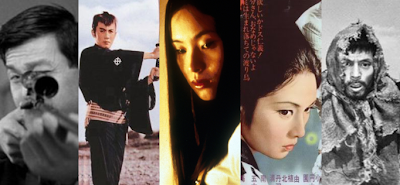

1. Audition (Shout! Factory)

Shout Factory’s Blu-ray release of Audition isn’t great just because it’s a Blu-ray release of Audition, but also because the audio commentary between Takashi Miike and Daisuke Tengan is amazing. Besides the plethora of information presented, not just about the film and the process under which it was made, but also about Miike and Tengan and their future projects, the commentary should prove to all that having a moderator, someone to pose questions to the cast and crew during lull times is essential.


2. A Colt is my Passport (Criterion/ Eclipse)

This film oozes cool. And the gunfight finale is amazing. For me the epitome of Nikkatsu action cinema and the borderless style they popularized. A Japanese film classic. Part of Criterions Eclipse series in the bright pink Nikkatsu Noir box. If I have one complaint, its that Criterion needs audio commentary on their Eclipse series DVD’s.


3. The Human Condition Trilogy (Criterion)

A nine and a half hour film starring Tatsuya Nakadai! Yes please! Need I say more? The man’s never been in a bad film. Another wonderful Criterion release that allows all to bask in the terrific humanist drama that unfolds in Manchuria during WW2. All the film is missing is audio commentary. If Peter Jackson can do his 1 million hours of commentary for Lord of the Rings, someone should be able to cover the nine and a half for this classic.


4. Wandering Ginza Butterfly (Synapse Films)

One of my favourite Meiko Kaji films, Synapse Films put together a wonderful DVD with a great commentary track by Chris D. I think it’s obvious that according to me, all good DVD releases must have good commentary. Regardless, I’d still be happy with this DVD sans the commentary, because the film is so damn good and Meiko Kaji is so nice to look at. If there was a contest for the most mesmerizing eyes in the history of cinema, it would be a tie between Meiko Kaji and Tatsuya Nakadai. They say more with their eyes than most actors do with all their tools combined.


5. Sleepy Eyes of Death collectors set Vol. 1 (AnimEigo)

Animeigo gives us the first four films in the longest running Samurai series of all time. Raizo Ichikawa died at the age of 37, so any and all films of the amazing Japanese film and Kabuki actor is a pleasure to get my hands on. A half breed samurai with a disdain for Christianity and a penchant for death, even by todays standards the series is strikingly original, and Raizo Ichikawa is incredibly compelling.


Top Ten of the 00's


1. Visitor Q (dir. Takashi Miike, 2000)

You’ll laugh, you’ll cry. You may even become a little nauseous. Miike puts you through a range of conflicting emotions in such a short period of time, he turns a simple Pasolini inspired family drama into a astonishing piece of digital cinema. You will never look at necrophilia the same way again.


2. Electric Dragon 80,000V (dir. Sogo Ishii, 2001)

Some films are so incredible visceral they astound me. Electric Dragon is not only one of those films, it’s one of the best films that convey the notion that film is not only suppose to engage you on an emotional level, but also a physical level. And it helps that it’s by one of the most influential Japanese directors in the last 30 years. Plus, anything that has Tadanobu Asano and Masatoshi Nagase in it, squaring off against one another in a battle for supreme electrical supremacy is bound to be amazing.


3. A Snake of June (dir. Shinya Tsukamoto, 2002)

By the time Shinya Tsukamoto was about to embark on his journey into the feminine side of body horror, he’d already established himself as one of the most original and daring Japanese directors in recent history. But with A Snake of June he also established that he was capable of taking his visceral style and using it to create a film that’s beautiful and touching. The imagery, especially that of the dew covered plants and snails, is breathtaking.


4. Still Walking (dir. Hirokazu Koreeda, 2008)

I’ll be honest. I cry when I watch films. Not a lot of films, but some. Well, very few. But 2008 saw me cry twice. This first was during JCVD. The second was during Still Walking. I haven’t cried since either of those films. It’s amazing that no matter how sad and/or depressing the subject matter might be, Koreeda always manages to turn into something astoundingly beautiful. It’s an incredibly small film, but at the same time its ideas are so large and universal, it’s amazing your brain remains intact by the dense nature of his work.


5. The Glamorous Life of Sachiko Hanai (dir. Mitsuru Meiki, 2003)

This is how every pinku film should be made. A dash of sex and nudity, a smidge of surreal imagery, a large amount of political subversion and the use of toy action men to represent panic in the war room. Any film that has a woman violated by George Bushes nasty trigger finger should automatically by nominated for every award imaginable.


6. Tokyo Gore Police (dir. Yoshihiro Nishimura, 2008)

Love him or hate him, Yoshihiro Nishimura has become a special effects giant . He’s worked on a wide range of popular horror films, and has singled handled pushed the envelope for gore special effects so far, it’s impossible for anyone to turn back. Gone are the simple days of red paint and mannequin limbs. And despite how this film appeals to fan boys around the world, it also manages to be uniquely Japanese, with plenty of references to the likes of Edogawa Rampo and all the social problems unique to Japan , such as ritual suicide and trendy teenage girl wrist slicing.


7. Rinne (dir. Takashi Shimizu, 2005)

Takashi Shimizu changed the way we watch horror films. And with Rinne, he established himself as a master of the genre. He takes the warping of time and space that he established so well with the Ju-on films and pushes it to a new level, without relying on the same type of horror that Hideo Nakata made so popular with Ringu. He creates a truly original and inventive horror film that still uses horror, not gore, to shock you, and he does it oh so effectively.


8. Paprika (dir. Satoshi Kon, 2006)

I appreciate a good anime film, and nothing floored me this decade more than Satoshi Kon’s Paprika. While many other anime directors seem content to recycle the same content and imagery, Satoshi Kon pushed the envelope with Paprika. Its imagery is mind boggling. Visually nothing even comes close to the marvel that is Paprika. Just thinking about it still drives me batty. And just saying the name Paprika gives me goose bumps. I bow down to Satoshi Kon and his marvelous brain.


9. Kairo (dir. Kiyoshi Kurosawa, 2001)

Best apocalyptic horror film ever! No one creates seething tension like Kurosawa, and no one can make you leave the theatre feeling like you want to pull a black plastic bag over your head and scream. It’s so simple in its execution, but it’s so damn unsettling.


10. Dai Nipponjin (dir. Hitoshi Matsumoto, 2007)

Very few films will leave you scratching your head, laughing at the ridiculous nature of what you’re viewing on screen, and then asking yourself what exactly you’re laughing at. Is that a monster with the head of Riki Takeuchi? This is one of the most subtly funny films you will ever see.

Bob Turnbull's Top Picks of 2009 and the 00's


Top Five Theatrical Releases of 2009


1. Air Doll (dir. Hirokazu Koreeda)

Doo-Na Bae gives a tremendously affecting performance as a blow-up doll who comes to life and tries to understand loneliness and what it is to be human.


2. Bare Essence Of Life (dir. Satoko Yokohama)

Satoko Yokohama's second feature is a gentle, funny, strange and occasionally surreal look at two people's, not to mention the human race's, attempts to try to control what scares them.

3. Symbol (dir. Hitoshi Matsumoto)

WTF has a new poster child and its name is "Symbol". Hitoshi Matsumoto's most recent film is a head-shaking, sometimes frustrating and sometimes hilarious experience that touches on the metaphysical, the religious and the philosophical.

4. Love Exposure (dir. Sion Sono)

The initial stills from Sion Sono's latest were enough to put it in my Top 5. And everything just kept getting better after that.

5. Still Walking (dir. Hirokazu Koreeda)

Yes, it's a cheat. Hirokazu Kore-eda's story about a family's annual ritual of getting together to remember the passing of the eldest son was actually a 2008 release. It made it's way to North American shores in 2009, though, so I'm allowing it. It's a simple, quiet and lovely bit of filmmaking that deserves further mention.


Top Five DVD Releases of 2009


1. Nikkatsu Noir (Criterion/ Eclipse)

5 films (each of which probably could have made the list by itself) of glorious black and white cinematography and lots of yakuza antics. Thank you Eclipse. Now bring us more!

2. The Human Condition (Criterion)

574 minutes of prime Masaki Kobayashi. Why wouldn't this be on the list?

3. Detective Bureau 2-3: Go To Hell Bastards! (Kino)

Rat-a-tat pulsing snare drums blast out of the speakers, scantily clad dancers jiggle around a Christmas tree and Jo Shishido smirks while holding a large machine gun like weapon...And that's just the menu of the DVD. Seijun Suzuki does it again.


4. 3 Seconds Before Explosion (Kino)

Another fast paced, colourful and completely entertaining story of undercover spies and gangs with lots of stylish violence.

5. Wandering Ginza Butterfly / Wandering Ginza Butterfly 2: She-Cat Gambler (Synapse Films)

A double shot of the lovely Meiko Kaji (as Nami The Red Cherry Blossom) righting injustices and having big final showdowns with bad guys.


Top Ten of the 00's


1. A Gentle Breeze In The Village (dir. Nobuhiro Yamashita, 2007)

A beautiful sweet tale of a young girl transitioning from her one room schoolhouse into adulthood. It's a crime this isn't available to a wider audience.


2. Linda Linda Linda (dir. Nobuhiro Yamashita, 2005)

You want a coming of age film for teens? Nobuhiro Yamashita knows how to make them. A sweet story about 4 young girls practicing for a battle of the bands competition, Yamashita allows the camera to linger with these characters and lets us get to know them.


3. The Taste Of Tea (dir. Katsuhito Ishii, 2004)

A tale of a Japanese family who are wrapped up in their own personal issues and problems until the head of the family is able to show them how to enjoy the simple things in life. Warm, wonderful, funny and surreal. And it contains The Mountain Song.

4. Pulse (dir. Kiyoshi Kurosawa, 2001)

Kiyoshi Kurosawa's incredibly creepy ghost story is a doomsday scenario tied to a tale of humans being disconnected from the world around them. Brilliant sound design throughout.

5. Ju-On: The Grudge (dir. Takashi Shimizu, 2002)

Gradually this film works on you using its sound field, subtle effects and disorienting timeline until you're all curled up in a tiny ball in your chair.

6. Still Walking (dir. Hirokazu Koreeda, 2008)

Hirokazu Kore-eda has the ability to tell simple stories in very engrossing and compassionate ways.


7. Battle Royale (dir. Kinji Fukasaku, 2000)

Kinji Fukasaku's last great movie.

8. Nobody Knows (dir. Hirokazu Koreeda, 2004)

12 year old Akira has been left in charge of his three younger siblings (all from different fathers) by his selfish mother in this tragic and very moving story. Kore-eda does it again.

9. Survive Style 5+ (dir. Gen Sekiguchi, 2004)

Explosions of colour and fun. And Tadanobu Asano.

10. Spirited Away (dir. Hayao Miyazaki, 2001)

The sheer amount of creativity and imagination put into this film and its characters is staggering.

Eric Evans' Top Picks of 2009 and the 00's


Top Five Theatrical Releases of 2009


1. Love Exposure (dir. Sion Sono)

Anyone who saw the movie understands. I can't wait to devote another 4 hours to watching it again! George Harrison famously bankrolled a Monty Python flick simply because he wanted to see a Monty Python movie. If I had Beatle money, I'd write Sono a blank check.


2. Fish Story (dir. Nakamura Yoshihiro)

Near impossible to describe how this film works. "An ornate puzzle of interlocking narratives describing how a punk album from the 70s saves the world from a meteor impact 30 years later" sounds appropriately quirky, but it doesn't convey the humor or charm or fun of the film.


3. Kamogawa Horumo (dir. Motoki Katsuhide)

Commercial and slick, yes, but soulful, exciting, and deeply goofy. Chiaki-chan plays geeky, there are lots of laughs, and the effects are great--what more do you want?


4. Nobody To Watch Over Me (dir. Ryoichi Kimizuka)

This may sound like clichéd police procedural, but honest performances and smart pacing elevate it. Japanese critics prefer "Dear Doctor" and I might have gone with "Fish Story", but if this film is seen by Oscar voters, it has a shot.


5. K-20/ Yatterman (tie), (dir. Sato Shimako/Takashi Miike)

2009 was the year of the superhero in Japanese cinema, and here are two very different examples of why. "K-20" is as Hollywood as a Japanese film gets, but in the best possible way. Sato (the Japanese woman director who inexplicably gets left out of the discussion) channels Raimi and Mulcahy but never copies them, and the result is a fun steampunk popcorn flick that's better with each viewing. Miike had 2 major hits this year, cementing his commercial status in his home country, but he didn't lose any of his edge--he just translated it into a family friendly format. Hollywood should take notice: You don't need $200 million or 3D to make a superhero story thrilling and fun.


Top Five DVD Releases of 2009

1. Pigs, Pimps & Prostitutes: 3 Films by Shohei Imamura (Criterion)

Criterion has been a good friend to fans of Japanese film, with 2009 sticking out as a particularly rich year. "Pigs and Battleships", "The Insect Woman" and "Intentions of Murder" probably didn't look this good in theaters, and the inclusion of "Imamura: The Freethinker"--a mid-90s episode of French TV show 'Cinéma de notre temps' focusing on the filmmaker--was the kind of out-of-left-field surprise that Criterion is known for. Slipcased set, booklets for each film with essays, lots of extras.


2. Nikkatsu Noir (Criterion/ Eclipse)

Joe Shishido in his swaggering prime. I dearly hope that the Eclipse wing of Criterion is profitable enough to continue, because these collections are deeply wonderful. Devoid of the more elaborate packaging and bundled extras of their pricier cousins, sets like "Nikkatsu Noir" nevertheless provide crisp, clean, restored versions of films that dearly want to be seen. Slipcased slimline set in the Eclipse style.


3. Debauched Desires: Four Erotic Masterpieces by Masaru Konuma (Kimstim)

Synapse may get the flashier releases and Pink Eiga may be more complete an overview of the genre, but Kimstim takes the pinky cake for this shockingly affordable and genuinely sexy 4-DVD set. "Wife To Be Sacrificed" is the title everyone will know (and rightfully so, it's a must-see), but each of the others--"Tattooed Flower Vase", "Cloistered Nun: Runa's Confession" and especially the beautifully composed "Erotic Diary of an Office lady"--deserve to be appreciated. Barebones packaging.


4. 893239: Yakuza Niju-Sanku (Kuro Tokagi Gumi)

Originally a YouTube challenge to create a yakuza-themed film for ¥100,000 or less (about US$1,000), "893239" collects dozens of entries ranging from the dark to the comic to the avant garde. The films vary from the slick and professional to the barebones-budget amateur, but they're nearly all surprisingly entertaining and most are subtitled. Barebones packaging.


5. Icons of Science Fiction: Toho Collection (Sony)

Three cheers for Sony for making a legit copy of "Mothra" available at last, and at a low price. "H-man" and "Battle in Outer Space" round out the set, and the world is that much closer to having all of Eiji Tsuburaya's awesome work on subtitled DVD. Barebones packaging.5


Top Ten of the 00's

1. Kamome Shokkudô / Seagull Diner (dr. Naoko Ogigami, 2006)

With all the talk of woman directors in Japan, Ogigami is strangely overlooked. All of her films are funny and charming, but "Kamome Diner" has the best combination of accessibility and just-this-side-of-twee characterization that mark her work. Imagine Wes Anderson's world filtered through a feminine, Japanese viewpoint and you're pretty close, with the notable exception that Ogigami's characters are far more realistic. Sort of.


2. Zatoichi (dir. Takeshi Kitano, 2003)

As much as I enjoyed the somber "Dolls", Kitano's re-imagined "Zatoichi" is his most accessible movie. Kitano--always an interesting if uneven director--lost his way a bit in the second half of the oughts, but the goodwill he generated with this smart, funny crowd-pleaser is still buoying him. I wish he had envisioned this as the start of a series.


3. Zenzen Daijobu / Fine, Totally Fine (dir. Yosuke Fujita, 2008)

There's been a bit of a backlash against quiet, quirky comedies of late, but for me "Fine, Totally Fine" is above criticism. It's quite possibly the most perfectly cast film in recent memory, without one weak link or false note. YoshiYoshi Arakawa is the film's standout, aptly described by nearly half the world's reviewers as gormless; Kimura Yoshino plays against type as a wallflower and completely pulls it off.


4. Machine Girl (dir. Noburo Iguchi, 2008)

The film that started the dreaded splattergore subgenre. I'd argue that Takashi Miike had much more to do with turning on western audiences to the more, uh, extreme elements of Japanese cinema, but Iguchi's first widely seen feature gets all the blame. It's certainly over the top in a way few films are, and plenty of fun besides.


5. Always san-chôme no yûhi/ Always: Sunset on Third Street (dir. Takashi Yamazaki, 2005)

A huge commercial hit that also cleaned up at the Japanese Academy Awards, "Always" is polarizing: What some see as warmly and unabashedly sentimental others saw as cloyingly saccharine. I saw the movie without any preconceptions, and I deeply enjoyed it for what it was--a nostalgic trip through a pre-neon Tokyo with characters that, while idealized, were lovable. It also employs some of the most convincing CGI ever.


6. Taste of Tea (dir. Katsuhito Ishii, 2004)

A crazy, creative exploration of the unconventional Japanese family, "Taste of Tea" is the nexus of Ishii's narrative storytelling and bizarre visuals. It's a great litmus test DVD: If you show it to that special someone you're dating and they don't like it, ditch them and move on--they're not right for you!


7. Kiraware Matsuko no isshô / Memories of Matsuko (dir. Tetsuya Nakashima, 2006)

"Matsuko" is a deeply melancholic story told in the vernacular of the technicolor musical, a singular work of visual art. It's not always a pleasant experience watching, but the juxtaposition of the downbeat narrative with such striking visuals, well… it's not quickly forgotten.


8. Suwingu Gâruzu/ Swing Girls (dir. Shinobu Yaguchi, 2004)
The film that cemented Juri Ueno's celebrity and launched the careers of a half-dozen other young actresses is the best and brightest example of the Japanese high school 'losers become winners' film. Very similar to Yaguchi's preceding hit "Waterboys" but possessing a charm and rhythm all its own.


9. Ichi the Killer (dir. Takashi Miike, 2001)

Probably a less successful film that Miike's "Audition", but with little doubt the most deranged and violent yakuza film ever made. The art house crowd might have been able to appreciate "Audition" despite its gruesome bits, but "Ichi" is take it or leave it, in your face moviemaking that is as vibrant and shocking now as it was nearly 10 years ago.


10. Akai Hashi no Shita no Nurui Mizu/ Warm Water Under A Red Bridge (dir. Shohei Imamura, 2001)

Imamura lost none of his edge as he aged, but he may have tempered it a bit. While sexually charged, "Warm Water" is more memorable for its magical realism. The number of filmmakers still creating unique, distinctive works 40 years on into their careers is not long, and as his last full-length film, "Warm Water" reveals Imamura to be as potent at 75 as he ever was.