Friday, October 29, 2010

Jasper Sharp's Zipangu Fest announces its full line-up of Japanese gems

by Chris MaGee

Okay, we at the Pow-Wow have been lucky to have worked with Japanese film curator and author Jasper Sharp for a while now, most notably on Toronto won Shinsedai Cinema Festival. During this time we've known that Sharp was prepping something special for Japanese cinephiles in London with Zipangu Fest, but aside from the few advance screening events we've had to keep our lips shut about what cinematic goodness Jasper Sharp was readying for UK audiences. As of today though Sharp is finally sharing the full line-up for the inaugural Zipangu Fest taking place at the Barbican, Café 1001 and Genesis Cinema in London between November 23rd and 28th.

What can folks expect? How about Kota Yoshida's "Yuriko's Aroma" (above) as the opening night film or a special double bill of Tetsuaki Matsue's award-winning film "Live Tape" with Matsue and singer/ songwriter Kenta Maeno in attendance? The other half of this double-bill is Akihiro Murakane's documentary "Rock Tanjo: The Movement 70's" (trailer below) that chronicles the Japanese rock scene of the 1970's with bands like Flower Travellin' Band, Brain Police and Creation. Lovers of pink films won't want to miss the premiere of Hisayasu Sato's new film "Love & Loathing & Lulu & Ayano", while gore fans will want to catch Noboru Iguchi's "Mutant Girls Squad". Zipangu will also be bringing London audiences a special art animation shorts programme from the folks at CALF that will include work from Mirai Mizue, Tochka and Atsushi Wada. To round off the fest Zipangu will be holding the UK premiere of Gen Takahashi's epic cop drama "Confessions of a Dog".

Of course there's much, much more that Sharp has slated for those attending Zipangu Fest, so to take a look at what you can look forward to (and pick up tickets for!) head to the fest's official website here.


ã ­ã ã ¯èª ç The Movement 70's
Uploaded by ari7788. - Watch more music videos, in HD!

REVIEW: Death Kappa


Death Kappa

Released: 2010

Director:
Tomo'o Haraguchi

Starring:
Daniel Aguilar Gutiérrez
Hideaki Anno
Shinji Higuchi
Misato Hirata
Ryûki Kitaoka

Running time: 90 min.


Reviewed by Matthew Hardstaff


Fever Dreams, the production arm of Media Blasters, like Sushi Typhoon, seems to have found its market it caters to it very well. "Machine Girl" and "Tokyo Gore Police" have proved that. And so they decided to head into a territory that very few low budget production companies venture into, the Kaiju film. To create a Kaiju film effectively, you have to have a team of professionals that understand that practical effects are the way to go, and a team that understands how to create them efficiently, at low cost, and at the same time making them look fantastic. Not an easy task. Whilst the Kaiju film doesn’t seem to be getting the play it used to get, the films that are made like "Gamera the Brave" and "Godzilla Final Wars" are all fairly big budget films. Even the Korean film "D-Wars", which crammed more CG dragons onto the screen than one though possible, had a big budget. So can you make a Kaiju with a low budget?

A scientist, played by Daniel Anguilar Gutierrez tells us that there are many creatures throughout history that science cannot account for. The yeti, the loch ness monster, the chupacabra, and in Japan, the Kappa. The Kappa is a mythical creature, who spends its time living in rivers, eating cucumbers, wrestling and causing mischief. Kanako (Misato Hirata) is a failed singer who returns to her home of Shirokodama to live with her grandmother. However, upon her return, a group of hooligans run down Kanako’s grandmother, and with her dying breath she tells Kanako she must protect Kappa. Kanako, like most, always believed Kappa were mythical creatures, but little did she know her grandmother visited a shrine each day, giving the Kappa cucumbers. Once Kanako takes over, things are great. The Kappa and Kanako’s friends spend their days dancing to Kanako’s music and frolicking in the countryside. Little do they know that there is an evil group of militant scientists that are hell bent on restoring Japan to its former Showa glory, bringing back the nationalistic military might of the former age, and to do this, they want to use the genes of a Kappa, genetically modifying a person with Kappa genes, making super soldiers!

"Death Kappa" succeeds on many levels. Its biggest success is that the effects are for the most part practical. Director Tomo’o Haraguchi has done special effects on films such as "Air Doll", "Bullet Ballet", "Uzumaki" and "Gamera 2" and he utilizes the skills of Isao Takahashi, who has built all the miniature city sets in many Kaiju films. Yes, there are some CG effects, but for the most part, they are only used to enhance the practical effects. Even the nuclear blast that unleashes the horrific creature Hangyola’s that Death Kappa must do battle with is a mix of CG and practical effects. And so the battle between Hangyola’s, the Japanese army, and Death Kappa is pretty awesome, creative and colossal. But what about the rest of the film? It’s funny for sure. The secret group of militants lead by Yuriko (Mika) is particularly funny, especially Mika’s performance. Plus, she seems to be dressed as Nami the Scorpion, doing her best Meiko Kaji impression, and there’s also a special appearance by a guy that looks like Tatsumi Hijikata from "Horrors of Malformed Men". In short, Haraguchi is trying to make something fun, filling the screen with references to his favourite films. Does he succeed?

Sort of. My three biggest complaints? One, the film was obviously shot on low end HD cameras, and its very evident during the early scenes outdoors. Whilst for the most part it looks fine, there are some shots that show the formats weak points. Two, the music doesn’t fit the genre. Sure the pop songs that Kanako sings don’t fit Kaiju per say, but they at least performs a narrative and comedic purpose. It’s the score that doesn’t fit. It doesn’t have that same rumbling, drum filled soundtrack that is the norm for Kaiju. It doesn’t shake your soul like it should. And finally, my final complaint. The aspect ratio. Granted Kaiju started before Tohoscope and other widescreen formats existed, but that quickly became the norm. These films scream wide image! I’ve said this before with the recent crop of samurai films, but you can’t really create a throwback to a specific genre if you don’t elicit the same visuals. And in that area this film falls short.

But, it’s still pretty entertaining, and whilst satirical and funny, it still does manage to utilize the same anti-war and anti-nuclear message that Ishiro Honda used with the mother/father of all Kaiju, "Gojira".

Read more by Matthew Hardstaff at his blog.

Three unknown Akira Kurosawa screenplays uncovered in archives

by Chris MaGee

Here's a news story that seems like it was perfectly timed for this year's centenary celebrations of the birth of master filmmaker Akira Kurosawa. It was announced on Thursday that three unproduced scripts by Akira Kurosawa written between the late 40's to the early 1950's have been uncovered.

The first script for a film titled "Kanokemaru no Hitobito" was discovered in the archives of the Shinobu Hashimoto Memorial Hall in Ichikawa, Hyogo Prefecture. Kurosawa enthusiasts will recognize Hashimoto's name as he worked as a screenwriter on a number of Kurosawa's most well known films such as "Rashomon", "Ikiru" and "Throne of Blood" as well as penning scripts for such Japanese classics as Masaki Kobayashi's "Harakiri" and Kihachi Okamoto's "Sword of Doom". The screenplay for "Kanokemaru no Hitobito" was written by Hashimoto and based on a story idea by Kurosawa about the crew of a transport ship caught up in massive storm at sea. Apparently Kurosawa had intended to produce the film with actor Toshiro Mifune in 1951, but production was halted before the film could be completed.

The second screenplay is for a film titled "Asu wo Tsukuru Hitobito", a film that was to have been a collaborative effort between a number of directors at Toho. Because the screenplay had been worked on by a number of these other filmmakers Kurosawa had not wanted his name to appear as an author.

The last screenplay isn't actually a screenplay at all. In the early 40's when Kurosawa was still an assistant director at P.C.L. (the studio that would one day be known as Toho) he was asked to write a radio play titled "Youki na Koujou". It would go on to be produced and broadcast by NHK in the summer of 1942 after which the original script was stored away in the archives of the Tsubochi Memorial Theatre Museum at Waseda University.

Obviously there will be a lot of interest in these heretofore unknown Kurosawa screenplays. It wouldn't be much of a surprise if Toho and the Kurosawa estate somehow fast-tracked these into production, especially seeing how the estate of Kurosawa has been plagued in the past few years by gross financial mismanagement.

Thanks to Tokyograph for this exciting piece of news.

Shohei Imamura's Japan Academy of Moving Images morphs into the Nippon Eiga Daigaku

by Chris MaGee

The work of director Shohei Imamura has undoubtedly had an immense impact on filmmakers and film lovers the world over. Such seminal films as "The Insect Woman", "The Profound Desire of the Gods" and "Intentions of Murder" have been repeatedly named as some of the best Japanese films in history, and Imamura is one of the few directors who have been honoured twice with the Cannes Film Festival's Palm d'Or - once in 1983 for "The Ballad of Narayama" and then for a second time in 1997 for "The Eel". Imamura's legacy isn't just limited to his films though, but also to his desire to foster young filmmaking talent. It was with this in mind that he founded the Japan Academy of Moving Images, an institution that has given us a slew of talented filmmakers in the past 30 plus years, but now the school is metamorphosing into a truly historic institution.

It was recently announced that the Japan Academy of Moving Images is changing its name to the Nippon Eiga Daigaku, and it is being heralded as the "first film university in Japan". Previously many post-secondary institutions (Osaka University of Arts, Tokyo University of the Arts to name only two) have offered film programs, but Nippon Eiga Daigaku will be the first degree-granting institution dedicated entirely to film studies. According to the university's website both Japanese and international students have until the end of 2010 to apply to be considered for one of the 140 spots available when Nippon Eiga Daigaku opens its doors in April of next year.

Shohei Imamura founded the Japan Academy of Moving Images at Yokohama's Vocational School of Broadcast and Film in 1975. Not only have such prestigious names as film critic and historian Tadao Sato, Shiro Sasaki, producer of such films as Yoshimitsu Morita's "The Family Game" and Shuji Terayama's "Farewell to the Ark", and Toshiro Ishido, screenwriter of Nagisa Oshima's "Night and Fog in Japan and Imamura's "Black Rain", held teaching and administrative positions at the school, but many of today's most successful directors are graduates. These include Takashi Miike (Audition, 13 Assassins), Katsuyuki Motohiro (Bayside Shakedown) and Sang-Il Lee (Hula Girls, Scrap Heaven). In 1986 the Japan Academy of Moving Images expanded to include a second location in Kawasaki City, Kanagawa Prefecture. Its this second facility as well as a newly constructed building that will house the Nippon Eiga Daigaku. We can only imagine what new filmmaking talents will come from this renewed institution.

Our thanks to Cinema Today for this great news.

BOOK REVIEW: J-Horror: The Definitive Guide to The Ring, The Grudge and Beyond


J-Horror: The Definitive Guide to The Ring, The Grudge and Beyond

Author: David Kalat

Publisher: Vertical

320 pages

ISBN: 1932234084

Published: 2007


Reviewed by Eric Evans


Charting the evolution of the Japanese horror film from the early ‘90s to the today of the 2007 publication date, David Kalat’s “J-Horror: The Definitive Guide to The Ring, The Grudge and Beyond” is valuable as both a film guide and history lesson. It introduces lesser-known names and films that predate the pivotal “Ring”, and Kalat (below left) is at times laugh-out-loud frank in his evaluation of their peculiar charms.

Hideo Nakata’s 1998 breakout film “Ring” receives the bulk of the book’s first 50 pages as the cultural standard-bearer and visual reference point for much of the J-Horror boom—it’s the fulcrum for the entire book. Kalat works to establish the literary and direct-to-video work that led up to its success, and the proliferation of similar films that flooded the marketplace after. It’s a valuable thing, having that contextual anchor, because as he explains there were multiple precedents to the film with each contributing something to its development, and certainly scads of similarly themed films after. Kalat takes his time establishing that neither of J-Horror’s “two daddies”, original novelist Koji Suzuki and “Ring” director Nakata, considered themselves horror buffs or enthusiasts. This point, Kalat argues, was the key to them expanding the scope of what a horror story could be. Without a love of and respect for the conventions of horror, they were able to craft a tale that was free of the tired tropes fans might have otherwise expected. For example, Suzuki wrote “Ring” in part to prove that fathers were as caring a parent as mothers (his novel had a male protagonist). Further chapters document other well-known J-Horror film series, such as the “Ju-On” and “Tomie” films. (Tomie isn’t a ghost and doesn’t quite work in the same way as, say, “Ju-On or “Dark Water”, but the multiple films chronicling her being dismembered and not dying happened in large part owing to the boom created by “Ring”.)

I approach books like this with a fairly specific set of expectations. I want to learn about the the hows and whys of each film and the people behind the scenes—essentially a long-form, literary DVD extra of sorts—and I want the context to either point me toward films I haven’t yet seen, or compel me to rewatch films I have, with a fresh eye informed by the author’s insight. Kalat wins on both counts, and his blunt dismissal of some films might have saved me several hours of misery. Though he may not have thought much of “Phantom of the Toilet” I am sufficiently intrigued by chapter 3 to seek it out (no easy task if you need English subs), and “Don’t Look Up” is high on my “to watch” list.

Stylistically Kalat’s writing falls somewhere between August Ragone’s knowledge of and passion for his subject, and any internet crank’s opinionated rant. I often read books of this sort wishing they hadn’t been written in quite so high-minded and scholarly a way so that pages can be turned with greater ease, but here and there Kalat slips into prose which, though not quite purple, distracts form the point at hand. The Japanese film industry in 1991 was “limping along like a dying donkey”? Too cute, sir. Even where I agree with him, Kalat manages to lose me a bit with writing meant to be funny but skewing juvenile: “Film critics and other pointy-heads hold sequels in low regard as a general rule. This is because film critics and other pointy-heads want to reward artistry and vision instead of crass commercialism, and sequels wear their brazen mercenary nature to ostentatiously on their sleeves. That, and so many of them suck.” Critics respond very well to well-crafted sequels (“Sanjuro”, “Dark Knight”, “Aliens”, “Godfather II”, “Ip Man 2”, etc.) and the pointy-headed bit was funny once. It’s also somewhat obnoxious that, despite all the potential confusion between books, TV shows, direct-to-video, and features similarly named, that Kalat chooses to frame his distaste for the Romajinization of “Ring” to “Ringu” by pretending that title doesn’t exist. He essentially says “I don’t like it so I won’t use it” despite the fact that that’s the name on the DVD sleeve. It’s incumbent on a writer of film books to use the published titles given those films, not the names he or she might prefer. But these are small complaints: the book is quite readable for just about anyone, no advanced theory degree required.

David Kalat’s “J-Horror: The Definitive Guide to The Ring, The Grudge and Beyond” was nearly called “Dead Wet Girls” and it’s a shame it wasn’t, given how prevalent that imagery is in many of the films discussed. It covers a great many titles in an entertaining and easily digested way. Though I’m sorry he didn’t get around to some of the most effective “Ring”-influenced films (“The Eye 10” but no “Shutter”?) the book casts a wide net, and places Korean and Hong Kong films of the same vein into canon. The J-Horror boom may be over, but there are still gems to be enjoyed, and Kalat makes it far easier to find them and watch them in the context of the movement.

The films of artist Keiichi Tanaami finally come to DVD in impressive new set

by Chris MaGee

The name Keiichi Tanaami may not ring bells with Japanese film fans, but art enthusiasts will recognize Tanaami immediately as one of Japan's most influential pop artists. Born in 1936 Tanaami studied design at Musashino Art University and eventually found himself working at the prestigious Hakuhodo ad agency, but life in the ad game didn't satisfy him. It was in the late 60's that Tanaami relocated to New York City, and it was here his artwork began to take shape. Much of Tanaami's artistic development was helped along by his involvement with Andy Warhol and his famous Factory, as well as Tanaami's ingestion of liberal doses of LSD. Since then Tanaami's art has been defined by its cartoonish, psychedelic imagery that fits in nicely with other pop artists of the same period like Tadanori Yokoo and Peter Max.

Tanaami didn't just limit his creative vision to two-dimensional work though, and now Paris-based publisher and film distributor c-a-r-t-e blanche has put together Tanaami's 14 short films in a truly impressive DVD set titled “A Portrait of Keiichi Tanaami”. Not only does the set include such films as 1975's "Sweet Friday", 2002's "A Gaze in Summer 1.9.4.2" and 2005's "The Harmonic Gleam Vibration", but it also includes a 116-page book with a special introduction to Tanaami's work that was written by the late Shuji Terayama.

You can order "A Portrait of Keiichi Tanaami” from either France or from Japan. Before you rack up your credit card check out clips from the set in the YouTube trailer below.

CONTEST: Win a FREE double pass to see "Golden Slumber" at Reel Asian!


We are a mere ten days away from the 14th annual Toronto Reel Asian International Film Festival. We at the Pow-Wow are especially excited about this year's line-up as we are acting as a community co-sponsor for Reel Asian's screening of Yoshihiro Nakamura's dramatic thriller "Golden Slumber". Adapted from a novel by bestselling author Kotaro Isaka "Golden Slumber" tells the story of Aoyagi (Masato Sakai), a deliveryman who finds himself running for his life after being framed for the assassination of the Japanese prime minister.

We believe that "Golden Slumber" is one of the most entertaining films of the year (read Chris MaGee's review of the film here, so we're thrilled that Toronto audiences will be getting a chance to catch the film on November 12th at 10:00PM at The Royal Cinema (608 College Street). To celebrate this screening at Reel Asian we want to give away a free double pass to the November 12th screening. All you have to do to enter the contest is this:

Head to the J-Film Pow-Wow's Facebook group and post the answer to this skill-testing question on its wall before noon on November 2nd - What Beatles album did the song "Golden Slumbers" appear on?

That's it! One lucky winner will get a free double pass to see "Golden Slumber" at Reel Asian. Good luck to you all! Check out more of the great line-up for the 14th annual Toronto Reel Asian International Film Festival here.

REVIEW: Noriko's Dinner Table


紀子の食卓 (Noriko no Shokutaku)

Released: 2006

Director:
Sion Sono

Starring:
Kazue Fukiishi
Ken Mitsuishi
Yuriko Yoshitaka
Tsugumi
Kazumasa Taguchi

Running time: 159 min.

Reviewed by Bob Turnbull


"Are you connected to yourself?" "Only being close to death can make you appreciate living." "We all just want to avoid pain."

Heady stuff. If you were wondering whether Sion Sono's horror sequel to his earlier 2001 "Suicide Club" was going to find some dark corners to explore, it does. However, it isn't really a horror film. Nor is it a sequel. It deals with some horrific concepts, actions and even images (in particular, it revisits the mass suicide of young school girls on a subway platform from the previous film and gives additional context to it), but it doesn't work on providing immediate scares. Since this is a very talkative movie (both in character conversation as well as with ever-present narration), it leaves you with concepts, ideas and emotions that will bounce around in your head for awhile. It's when they pop out that you need to be worried.

The timeline of "Noriko's Dinner Table" begins before "Suicide Club" and seems to span completely across that film only occasionally touching portions of it (e.g. the mass suicide, the web site haikyo.com), so it's by no means a typical "sequel". Looking at the film in any conventional sense is somewhat of a meaningless task anyway - through its four main characters (each given their own chapter), the film explores the nature of self, losing one's innocence, the trappings of family / societal expectations and the purpose of living. Sounds a bit like a dry, third year university essay, doesn't it? Not at all...Sono, as he seems to always do, manages to pull you along effortlessly from one scene to the next, always dangling the possibility that something is right around the corner. Through the abundance of music (similar themes repeated again and again) and all four central characters getting their own turns at narration, there is a constant sense of brittle tension. With the movie at a long 160 minutes, the technique keeps you engaged and alert.

That's important because it doesn't spoon feed the viewer it's plot or its ideas. Things begin, appropriately enough, at a dinner table. 17 year old Noriko, her younger sister Yuka (probably only about a year younger) and her parents are passively eating their end of day meal like most other families. Actually, Noriko is just picking at her food since she's sulking. Her father insists she go to a local community college and not to the big city of Tokyo for further education. He feels that bad things happen in the big city (ie. boys) and that Noriko can get everything she needs from their small township - just like he does via his small town newspaper reporter job. Feeling rebellious, Noriko leads a cause at school to get more access to computers. This increased access allows her to find the haikyo.com web site where she becomes very involved in discussions with like minded girls. This spurs her to run away to Tokyo and meet up with her new friends. The leader of the group - and architect of the subway mass suicide - is Kumiko who goes by the screen name of "Ueno Station #54" (a reference to the train station locker where she was left as a baby and claims was actually her birthplace). She runs a "family rental" business that provides paying customers actors to fill any particular role they want - usually roles that have been vacated by a previous family member leaving.

As the chapters unfold (the story actually spans several years), Yuka also runs away from home to join the group and their father investigates and finally makes his way to Kumiko. The overall guidance that she provides her followers seems to be that you need to lose yourself before you can find yourself. Though Noriko claims she finally becomes the person she always wanted to be after joining the family rental service, the conversations they have in their "roles" are incredibly mundane - they aren't actually living now that they've become cyphers for other people's needs. It's within this deep loneliness that they are supposed to truly discover themselves and really become connected. Either that, or they commit suicide - sometimes as part of a "grander plan". It's a rich, dense and difficult world that Sono has created - one that ties the Suicide Club (also known as the Suicide Circle) into the circle of life. If the entire affair drags a bit towards the end, it certainly pays off emotionally (the excellent performances by all are a big reason for this too). Sono essentially bookends the film with another dinner table sequence, but you can decide whether or not the characters have come full circle themselves.

Read more from Bob Turnbull at his blog.

Asia Society and Museum brings New York audiences rare cinematic treats from the 60's

by Chris MaGee

Today's announcement of the full inaugural line-up of Jasper Sharp's Zipangu Fest wasn't the only programming news for Japanese film lovers. The Midnight Eye Facebook Page shared news about a programme of Japanese films from the 60's that will be screening at New York City's Asia Society and Museum between November 5th and December 10th. What's so neat about this modest line-up of five films is that the the Asia Society programmers are bringing audiences films that aren't normally screened or readily associated with Japanese cinema from the 60's.

On hand at at Asia Society and Museum will be Hideo Gosha's "Three Outlaw Samurai" from 1964, Mikio Naruse's "Yearning" (above) also from 1964, Nagisa Oshima's "Pleasures of the Flesh" from 1965, Kihachi Okamoto's "Age of Assassins" (trailer below) from 1967 and finally Eiichi Kudo's "Fort of Death" from 1969. Not your usual collection of Oshima, Teshigahara and Imamura now is it? If you're in the New York City area next month then make sure to see these rarely shown films on the big screen. Head to the Asia Society website here for schedule and ticket details.

Weekly Trailers


Line - Tadasuke Kotani (2008)


Filmmaker Tadasuke Kotani contrasts two crises in his own life - trying to mend his relationship with his alcoholic father and caring for his girlfriend's child despite not being its father - with interviews he conducted in Okinawa with a group of prostitutes. "Line" was featured at 27th annual Torino Film Festival.


Tange Sazen: The Secret of the Urn - Hideo Gosha (1966)


The legendary one-eyed, one-armed samurai Tange Sazen appears in Hideo Gosha's 1966 film "The Secret of the Urn". Sazen joins forces with the imperiled Yagyu clan in its search for an urn inscribed with a treasure map. This map will lead the clan to a stash of treasure that will aide them in their conflict with an evil lord.

REVIEW: Silver


シルバー SILVER

Released: 1999

Director:
Takashi Miike

Starring:
Atsuko Sakuraba
Kenji Haga
Shinobu Kandori
Rumi Kazama
Hisao Maki

Running time: 79 min.


Reviewed by Marc Saint-Cyr


There are few directors, Japanese or otherwise, with as full a filmography as Takashi Miike. One of the best-known things about the idiosyncratic auteur is his reputation for tackling multiple projects per year. With such a vast career that dips into as many genres and forms of broad entertainment as Miike’s does, it can be tricky to try and determine just how many (if any) personal details about the man himself actually make it into his work (though there are telling hints, such as his declaration that "Young Thugs: Nostalgia") is his favorite of the films he has made). However, those who seek out enough films will be able to spot the clear-cut gems he has produced over the years, among them "Audition," the "Dead or Alive" trilogy, "Visitor Q" and "Ichi the Killer." Then there are films that stand out as gun-for-hire projects – what could be called filler material. 1999’s "Silver," which is based on a manga by Hisao Maki and was made before the abovementioned films but after "Fudoh: The New Generation," "The Bird People in China" and "Young Thugs: Nostalgia," is one of those films.

"Silver"’s plot is conveniently of the by-the-books revenge story variety, with some secret agent ingredients thrown in. The curvy Atsuko Sakuraba plays the main character: a secret service agent named Jun whose mother, father and sister are all murdered one night by a mysterious gang. She flees to the United States where, it is fleetingly mentioned, she does some training with the FBI, then comes back to Japan three years later and reunites with her former supervisor and lover. He arranges her to be trained in a women’s pro wrestling league, where she will add to her skills in karate. She invents an alter ego for herself named Silver and sets out to claim her vengeance from Nancy, the notorious dominatrix behind her family’s murder. Along the way, she is watched by a secretive organization known as the Viper’s Nest.

The main weaknesses of "Silver" stem from two factors: its exploitation formula-derived dullness and its tendency to fall apart logically. For an example of the latter, take the wrestling storyline. It would make sense for Jun/Silver to go undercover in the league if her target was involved in that world in some way. But the thing is, she isn’t. Thus, the handful of wrestling sequences thrown into the film are nothing more than weak (albeit entertaining) excuses to see buff women grappling with each other in the ring and a means of giving Jun her skintight, black and white costume. More confusing are the numerous mentions of secret societies throughout the film. It is never made clear what the main goals of the Viper’s Nest are exactly (besides being evil in general). Even plot points that should be pretty clear are muddled and murky. Why exactly was Jun’s family killed? What role did Nancy play in the incident? What exactly was in it for her?

Luckily, "Silver" is not just a flimsy exploitation flick – it is a flimsy Takashi Miike exploitation flick, meaning that there are plenty of wonderfully bizarre elements dispersed throughout its duration. The bulk of them are centered on Nancy, the villainess who is first seen taking breakfast on her balcony – with a black dildo in her hand. She lives in a strange city in the middle of the desert, which is never given any explanation – and in fact, we never see more of the city beyond Nancy’s house. Weirder, and more frightening, are the various S+M activities that Nancy indulges in, usually with a bespectacled corporate president who she gleefully humiliates. One especially icky scene that brings to mind a similar moment in "Audition" involves a pink wig, a riding crop, contortionism and a jar of urine. Nancy herself makes quite the unusual nemesis, particularly when she is shown in her kinky costumes wielding numerous instruments of punishment. Other absurd touches include a thug whose face is quite literally demolished by Jun; her family’s killer, whose appearance is oddly based on the "Friday the 13th" films’ Jason; an S+M club patron with an impossibly big, pixelated member and the strange CGI-composed environments and effects that occasionally turn up.

Along with such comically strange additions from Miike, "Silver" also offers more predictable yet amusing things like some decent fight sequences, a cheesy soft-core sequence between Jun and her boss, a showdown with a Viper’s Nest agent and a surprise cliffhanger ending – even though there doesn’t appear to have been any follow-up to the film ever made. Between these elements and the more outlandish, “Miike-esque” ones, "Silver" makes for a fairly entertaining, sometimes baffling jaunt. Yet there is no denying the C-grade, cheap thrill aspect of the film – or that Miike has made far, far better works than this one.

Read more by Marc Saint-Cyr at his blog

Wednesday, October 27, 2010

Pink film director Sachi Hamano tells the story of feminist pioneers in upcoming film

by Chris MaGee

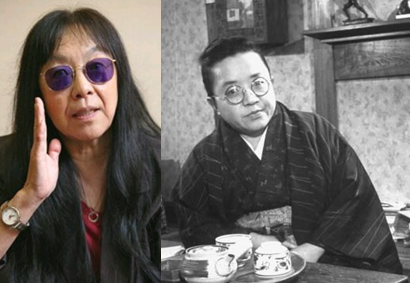
Sachi Hamano is a name that should be better known in the West. The 62-year-old filmmaker (above left) has been the most prolific female director in Japanese cinema for nearly 40 years. Working in the pinku eiga genre Hamano has an astounding 300-plus films to her credit (many under the banner of her own production company Tantansha), but her work in recent years has gone well beyond these softcore erotic movies. While her 2001 film "The Lily Festival" did explore themes of female sexuality it was also a humorous and heartwarming look at a group of seniors living in a retirement complex. Now Tokyograph is reporting on a new film directed by Hamano, a historical drama based around two of 20th-century Japan's most influential women.

Hamano has recently finished principal photography on her film "Yuriko, Dasvidaniya". The film is based on the lives of novelist and feminist activist Yuriko Miyamoto (above right) and her friend and colleague Russian literary scholar Yoshiko Yuasa. Both women were key figures in the women's suffrage and feminist movement during the late 1920's and into the 1930's. Both women traveled to Russia to study literature and Communist ideology, a move that would ultimately lead to repression and repeated arrests in Japan under the militaristic Hirohito-led government. It was also suggested that despite the fact that both women were married that they had been romantically linked.

Singer Hitomi Toi is making her acting debut in "Yuriko, Dasvidaniya" as Yuriko Miyamoto opposite actress Nahana as Yoshiko Yuasa. The rest of the cast is rounded out by Ren Osugi and Kazuko Yoshiyuki. No specific release date has been announced for the film yet as Hamano is currently soliciting funds from investors to complete post-production work. Let's hope that money comes through soon as this sounds like a fascinating project.

Round-up of special events in Japanese film blogging: Wildgrounds and V-Cinema

by Chris MaGee

The Japanese film blogging community is spread right around the globe, but we're a pretty close knit bunch. I have to say that it's always a fantastic time when we meet in the flesh at film fests and events and no single blog would be the successes that we are without the help of our fellow J-bloggers. With that in mind we wanted to let you know of a couple of special podcasts and events that are happening with our colleagues online. These are things you won't want to miss...

As we've mentioned before, the passing of animators Satoshi Kon and Kihachiro Kawamoto were huge blows to Japanese film. Now the folks at the V-Cinema Podcast are paying tribute to Kon and Kawamoto in a commemorative episode co-hosted by Nishikata Film Review's Cathy Munroe Hotes. Included in the podcast are interviews with Jasper Sharp, Mark Schilling and Jason Gray about how these two artists impacted Japanese film and culture.

Meanwhile, our friends from France Wildgrounds have announced an event that will bring together the Japanese film blogging community. Last year Wildgrounds declared a Japanese Film Blogathon and dozens of folks online participated (you can read the J-Film Pow-Wow's contributions here). Well, Wildgrounds is doing it again! Between November 3rd and 11th check out Wildgrounds and the J-Film Pow-Wow to read contributions from all us J-Bloggers. It'll be a fun and informative event!

Actress Hikati Mitsushima and director Yuya Ishii tie the knot

by Chris MaGee

As I've said before, we at the J-Film Pow-Wow don't normally dig into the private lives of actors and directors on the blog. We much prefer keeping our focus on their work on the big screen as opposed to their doings behind closed doors; but when the announcement of the wedding of one of Japanese film's hottest young actresses and one of its hottest young directors comes down the pipe, well, we have to let you know about it.

Tokyograph is reporting that 24year-old actress Hikari Mitsushima (above left) and 27-year-old director Yuya Ishii (above right) have tied the knot. While details of their wedding is under wraps the two did register their marriage on Monday. Mitsushima met Ishii last year while shooting Ishii's latest film "Sawako Decides". Ishii is fast becoming known as a wunderkind of the Japanese indie scene, releasing a new film annually. Mitsushima is best known in North America for her role in Sion Sono's 4-hour epic "Love Exposure". Misushima and Sono had also been romantically linked for a time.

Our congratulations go out to the bride and groom!

Kinema Junpo brings us its list of the best anime films of all time

by Chris MaGee

It was at the beginning of this month that we posted a story on a list of the 150 best animated films of all time as voted by a group of animators and industry insiders at the 2003 Laputa Animation Festival. Out of the 150 56 of those titles were Japanese, a testament to creativity and ingenuity of Japanese animators; but now Japan's most respected film journal is weighing in on this same subject.

Kinema Junpo, Japan's oldest and most prestigious film journal, has compiled their list of the best Japanese Anime Films. There are some ties, but in total thirteen films are named. Many are obvious contenders - Hayao Miyazaki's "The Castle of Cagliostro" (which tops the list) and "My Neighbor Totoro", Taiji Yabushita & Kazuhiko Okabe "The Tale of the White Serpent", and Isao Takahata's "Grave of the Fireflies", but if this is a list of anime films and not simply animated films then where is Mamoru Oshii's cyberpunk classic "Ghost in the Shell"? Hiroyuki Kitakubo's action-packed "Blood: The Last Vampire"? The mind-bending animation of Masaaki Yuasa's "Mind Game"?

Have a look at the list (courtesy of Wildgrounds) and have your say in the comments about what you're happy to see included and what you think are glaring omissions.

1. The Castle of Cagliostro (1979, Hayao Miyazaki)
2. Nausicaä of the Valley of the Wind (1984, Hayao Miyazaki)
3. My Neighbor Totoro (1988, Hayao Miyazaki)
4. Shin Chan – Attack of the Adult Empire (2001, Keiichi Hara)
5. Akira (1988, Katsuhiro Otomo)
6. Puss in Boots (1969, Kimio Yabuki)
7. Urusei Yatsura 2: Beautiful Dreamer
8. The Little Norse Prince (1968, Isao Takahata)
9. The Tale of the White Serpent (1958, Taiji Yabushita & Kazuhiko Okabe)
10. Summer Days with Coo (2007, Keiichi Hara)

(*next three positions tied for #10)

11. Summer Wars (2009, Mamoru Hosoda)
12. Laputa: Castle in the Sky (1986, Hayao Miyazaki)
13. Grave of the Fireflies (1988, Isao Takahata)

Japanese Weekend Box Office, October 23rd to October 24th


1. Umizaru 3: The Last Message* (Toho)
2. Knight and Day (Fox)
3. The Incitemill* (Warner)
4. The Expendables (Shochiku)
5. Ohoku* (Shochiku/ Asmik Ace)
6. Sakuradamongai No Hen* (Toei)
7. From Me To You* (Toho)
8. The Lightning Tree* (Toho)
9. 13 Assassins* (Toho)
10. Resident Evil: Afterlife (SPE)

*Japanese film

Courtesy of Box Office Japan.

Sunday, October 24, 2010

REVIEW: Closed Note

クローズド・ノート (Kurozudo Nouto)

Released: 2007

Director:
Isao Yukisada

Starring:
Erika Sawajiri
Yusuke Iseya
Yuko Takeuchi
Yuka Itaya
Hiromi Nagasaku

Running time: 138 min.


Reviewed by Eric Evans


“Closed Note” is a Japanese riff on Nicholas Sparks, a movie that will polarize viewers based on their tolerance/affection for that sort of romance. Technically speaking the movie is tripe, and not particularly well-crafted tripe. Supporting characters and subplots are jettisoned when they become inconvenient; romantic and melodramatic elements are curiously underplayed when they should have been hammered home with the subtlety of “Always”. Yet it has a kind of warm and gentle relentlessness, as if the T-800 in the original “Terminator” was played by a silly, frolicking puppy. Yes, it means you harm, but it’s so adorable! Even as we sat watching it, calling out its shortcomings as if spectators at a sporting event, it wormed its way into our good graces.

Like any movie of this type it has an inoffensive, attractive cast. Erika Sawajiri is Kae, a college student studying to become a teacher. The film opens with her moving into a new apartment, in which she finds the titular notebook—the diary of previous resident Ibuki (Yuko Takeuchi), conveniently an elementary ed teacher who chronicled her entire first year of teaching and whose story is told in flashback. Kae notices a mysterious (and ruggedly handsome!) fellow gazing at her through the apartment’s open window. That’s Ryu (Yusuke Iseya), neighborhood artist and sort-of stalker. Ryu soon shows up at Kae’s day job at a high-end fountain pen store, and his brusque manner charms her. In between classes (an afterthought) and her second chair status in the local women’s mandolin orchestra (yes, you read that correctly: women’s mandolin orchestra) she escapes into Ibuki’s life by reading her diary. Ibuki also writes about how she fell in love with a special guy, and Kae decides to employ these tactics in her pursuit of Ryu.

Director Isao Yukisada uses a number of tricks that worked for me despite being employed to less than ideal effect. The fictional Kyoto of the film is buffed and glossed to near-Brigadoon standards, all its streets clean and tree-lined to magnify the storybook quality of the enterprise; Every sunny day begins with flowers in bloom and birds singing, and ends with a perfect sunset that casts a golden-peach glow on everything. Kae’s apartment and street look and feel like elaborate sets, and though Yukisada definitely isn’t going meta by showing hints of exposed 2x4 holding up fake storefronts, everyone involved must have seen the 1950s technicolor musical influence. Had Ryu broken out in song on the steps opposite Kae’s window a la Ewan McGregor in “Moulin Rouge!” I wouldn’t have been shocked. Such an approach would ordinarily signify that the film is a fable, however couched in real-world vernacular, but not here. Oddly (and similarly to missed opportunity “Paco and the Magical Picture Book”), Yukisada chooses to use the same glowy idealized Kyoto for both the present day and flashback narratives. Without differentiating between the two, the fable aspect is wasted on a story which neither celebrates nor subverts the expectations raised by the visuals. The story is resolved in as unsatisfying a way as possible. It’s intended to be sad and sweet, yet feels perfunctory. It’s neither sad nor happy, just sort of there.

If you enjoy films like “The Notebook” and “Dear John” (and despite being somewhat maudlin, I quite liked the former’s sincerity and heart), you’ll find “Closed Note” to be mostly satisfying, like having a bag of popcorn instead of a proper dinner. The pieces of a good romance are all here, just assembled incorrectly. I have to wonder if Yukisada purposely engineered something off-kilter to thwart the expectations of his audience, adding a touch of real life to what could have been a slam dunk love fantasy. He’s also the director responsible for the mega-hit “Crying Out Love in the Center of the World” so he knows how to assemble the proper elements of a romantic melodrama. Like that film, “Closed Note” hits certain beats and has lots of warm, pretty images of beautiful people staring off wistfully, their minds full of longing. Also like that film, “Closed Note” meanders and underwhelms. Unlike it, however, I felt invested enough that I wanted a cleaner resolution for the characters. The film’s twist is obvious from 10 minutes in, but that isn’t a weakness—most romances aren’t about the destination so much as the journey. It’s just that “Closed Note” arrives a block or two away from where it was meant to, and takes its time getting there.

Release date and package artwork revealed for UK DVD of "Confessions of a Dog"

by Chris MaGee

We at the Pow-Wow were very happy when we heard the announcement that director Gen Takahashi's 3+ hour police epic "Confessions of a Dog" had been picked up by UK-based distributor Third Window Films. Not only is "Confessions of a Dog" a riveting tale of corruption in Japanese law enforcement, but we were very proud that the DVD extras for the disc will include interviews and discussions with Gen Takahashi (above right) shot at the 2010 Shinsedai Cinema Festival.

At the time of the original announcement in early August no specific dates had been announced for the DVD release. Now that's changed. Third Window Films has not only announced that "Confessions of a Dog" will be hitting shelves on March 14th, 2011; plus they have revealed the DVD artwork (above left). Ad to that that Third Window has also announced that films fans in London will get to see the UK Premiere of the film at the inaugural Zipangu Fest next month. Very good news for fans of Gen Takahashi, who I predict there will be many as "Confessions of a Dog" goes into wider release.

Hiroshi Abe and Hidetoshi Nishijima co-star in upcoming Canadian-French co-production

by Chris MaGee

There are two actors in Japan who have recently been dabbling in foreign productions, or at least Japanese films with heavy foreign influences. 46-year-old Hiroshi Abe not only starred in Tahi action filmmaker Prachya Pinkaew's 2008 film "Chocolate, but he recently starred in director Akira Ogata's remake of Louis Malle's 1958 thriller "Ascenseur pour l'échafaud (Eleveator to the Gallows)". Meanwhile 39-year-old Hidetoshi Nishijima has been shooting a film with Iranian director Amir Naderi titled "Cut" in which he plays a film professor who takes a job as a human punching bag for the yakuza. He also starred in the recent film directed by John H. Lee, "Sayonara Itsuka", in which he had to speak Thai. Japanese actors starring in foreign productions is nothing new, but these two stars are taking this trend to the next level by co-starring in an upcoming Canadian-French co-production.

Titled "Memories Corner" the film tells the story of a French journalist who travels to Kobe to cover the public memorial service commemorating the 10th anniversary of the Great Hanshin Earthquake. Belgian actress Déborah François stars as the journalist while Abe plays her love interest and Nishijima plays her interpreter. "Memories Corner" is the directorial debut of 28-year-old Audrey Fouché, a graduate of Paris' La Fémis film school. The film is set for a theatrical release in France in the spring of 2011 and hopefully a Japanese (or international) release will follow shortly thereafter.

Thanks to Nippon Cinema for this piece of news.

REVIEW: Okoge


おこげ (Okoge)

Released: 1992

Director:
Takehiro Nakajima

Starring:
Misa Shimizu
Takehiro Murata
Takeo Nakahara
Noriko Sengoku
Masayuki Shionoya

Running time: 120 min.


Reviewed by Chris MaGee


One thing that is repeated again and again about the films of Yasujiro Ozu is that almost his entire body of work, and certainly his later period films, are concerned with the disintegration of the traditional Japanese family. Well, this fact is so often repeated because it's true and Ozu's films have had such a lasting and universal appeal because of his long fascination with generational clashes that it is nearly impossible for contemporary audiences to watch a sensitive domestic drama without thinking of Ozu's work. This was the case for me as I sat to watch Takehiro Nakajima's 1992 film "Okoge", although most audiences would initially find it hard to draw parallels between Ozu's tatami mat rooms and mono no aware weepiness with a film about gay hook-ups, drag queens, childhood abuse and rape.

On a sunny summer day Sayoko (Misa Shimizu), an anime voice talent, heads to the beach with her co-worker and he co-worker's children. It's only once they scout out a perfect spot by the water that they realize that thius just isn't any beach - it's a gay beach. There she meets Goh (Takehiro Murata) and his older lover Tochi (Takeo Nakahara). Despite Tochi being trapped in a show marriage he is deeply in love with Goh and the sight of the two of them kissing in the surf sends a vicarious romantic thrill through Sayoko. Cut ahead and Goh and Tochi's liaisons at Goh's apartment are put to an end when Goh's mother (Noriko Sengoku) moves in after a fight with her daughter-in-law. Having to do his duty and take his mother in Goh is at a loss as to where he and his lover can share private time together. As if on cue Sayoko runs into the two at their local gay bar and offers a spare room in her flat to the displaced couple. The bartender asks if Sayoko is an "okoge", the Japanese slang term for a fag hag, or a woman who hangs out with gay men. Sayoko takes on the moniker with pleasure and soon the three are building a cozy friendship and then an unorthodox family unit in Sayoko's apartment... that is until Tochi's wife discovers what her husband is up to. Her threat to expose her husband's homosexuality sets off a chain of events that will fracture the trio of friends.

Longtime screenwriter Takehiro Nakajima takes what could have been a cliched tale of gay love and friendship and turned it into an insightful and affecting film. He accomplishes this in two ways - first, through careful and considerate character structuring, and secondly though an honest and often steamy depiction of gay romance. The love between Goh and Tochi is profound and Nakajima makes us feel for them as they try and negotiate a hotel room or anywhere private to be together away from the judgmental eyes of mainstream society. Although Sayoko's immature and overly enthusiastic invitation to share her apartment with these two strangers turns out to be a bit of a narrative speed bump Nakajima soon explains Sayoko's odd and impulsive behaviour. It turns out that Sayoko is a survivor of childhood sexual abuse at the hands of her foster father and bullying by her foster brothers and sisters. This has flipped her development so that sexuality was cruelly forced on her as a child, so subsequently Sayoko spends her adult life acting very much like a child. Still the buzz of her sexuality exists under cheery and oblivious exterior, but by taking in Goh and Tochi she can be a part of (without participating) a healthy adult sexual relationship. And when I say healthy I mean healthy. The love scenes between Takehiro Murata and Takeo Nakahara don't leave anything to the imagination. Praise has to be given to Nakajima for this honest depiction as so many filmmakers neuter gay relationships to make them palatable to straight audiences; but the way that Sayoko spends the scene listening through the walls to the lovemaking while leafing through an artbook of Frida Kahlo paintings is a lovely touch. Sex isn't the only thing treated honestly in "Okoge" though. A lover's fight between Tochi and Goh is as heartbreaking or more than most straight spats on screen, and the scene in which Tochi brings his drag queen friend to sub as his wife at a work colleague's wedding combines righteous rage and triumphant courage. But what does all this have to do with Ozu?

Despite the refinement, simple beauty and gentle humour of Ozu's films it becomes apparent that his view is ultimately a pessimistic one - the old ways and morals are doomed due to the younger Japanese generation's stubbornness, indifference, fascination with the modern. That's not to say that Ozu's young characters won't one day grow old and eventually bemoan how their own offspring have will let slide the traditions they've established, but the world that Ozu depicted was one of slow, inevitable decline and "Shikata ga nai...", "It can't be helped." Nakajima's film deals with the same kind of familial and generational conflicts, albeit based around the sexuality of its characters. Tochi's attempts at keeping face and maintaining harmony while hiding his homosexuality, Goh's conflicts with his family over getting trapped in an arranged marriage with a woman and in the end Goh's caring for his infirm mother, and Sayoko's constant struggle to maintain an emotional equilibrium while trying to come to terms with childhood abuse and search for an ideal family unit. Self-sacrifice to maintain a household, the conflict of wanting to be true to oneself while at the same time honouring the wishes of your parents and siblings, and the longing for an idealized family. These are all hallmarks of Ozu's cinema, but ultimately Sayoko's, Goh's and Tochi's failure to uphold "traditional" societal values and expectations can be helped. Unlike Ozu's world the three of them persevere and renew their damaged lives by establishing new traditions and concepts of family only partially based on previous paradigms. And what makes "Okoge" such an enjoyment is that the family that its three protagonists end up creating is based on the very best aspects of what society views as a traditional family - understanding, acceptance, respect and love.

Zipangu Fest and Close-Up present avant-garde Japanese films from the 60's and 70's

by Chris MaGee

Jasper Sharp's Zipangu Fest is fast turning into one of the most exciting Japanese film events of the year. It was recently announced that Zipangu is teaming up with video archivists and publishers Close-Up to present a programme at Zipangu titled "Nippon Year Zero: Japanese Experimental Film from the 1960s-1970s".

Four filmmakers will be represented for this programme: U.S. writer and film historian Donald Richie and his 1962 film "War Games" and 1967's "Dead Youth", Motoharu Jonouchi's 1974 film "Shinjuku Station" and 1968's "GEWALTOPIA Trailer", and Masanori Oe's 1967 film "Great Society". This last film is presented on six screens and explores through found footage the influence of the United States on the global community. (Check out an image from "Great Society" above.)

If you're in London then make sure to head out to Zipangu Fest and this programme specifically on November 23rd at the Bethnal Green Working Men's Club. These are films that rarely (if ever) get screened publicly, so don't miss out! If you aren't lucky enough to be in the UK then check out a clip from Motoharu Jonouchi's "GEWALTOPIA Trailer" below.

Universal/ Illumination Entertainment to adapt Nao Urasawa's "Pluto" to the screen

by Chris MaGee

The work of manga artist Nao Urasawa was introduced to millions of Japanese film lover's through Yukihiko Tsutsumi's adaptation of Urasawa's "20th Century Boys". Not only was Tsutsumi's trilogy about a group of childhood friends going up against a totalitarian government in a dystopian future on of the most expensive Japanese films to hit the screen, but the three films combined were also one of the top money-makers of the past half-decade.

Now Anime News Network is reporting that Universal Pictures and Illumination Entertainment, the same folks who brought us this year's CG-animated comedy "Despicable Me", have picked up the rights to adapt Nao Urasawa's 204 manga "Pluto" into an animated film. "Pluto" is a darker, grittier re-imagining of Osamu Tezuka's world famous creation "Astro Boy" and follows a cybernetic boy through his adventures in a near future world.

Thus far neither Universal nor Illumination have announced a director, voice talent or release date for "Pluto", but Illumination CEO Chris Meledandri has publicly expressed his excitement about bringing Urasawa's manga to the screen: "Naoki Urasawa has defined an imaginative world full of inventive action and adventure but it was his characters and heartfelt story that compelled me towards acquiring these rights." Now, let's just hope that this re-imagining of "Astro Boy" does better than Imagi Animation's disastrous 2009 CG-animated "Astro Boy".

REVIEW: Strange Circus

奇妙なサーカス (Kimyô na sâkasu)

Released: 2005

Director:
Sion Sono

Starring:
Masumi Miyazaki
Issei Ishida
Rie Kuwana
Mai Takahashi
Fujiko

Running time: 108 min.


Reviewed by Bob Turnbull


When I mentioned to fellow Pow-Wow contributor Matt Hardstaff that I was going to watch Sion Sono's 2005 film "Strange Circus" this week, he gave me an interesting comparison point to Sono's latest venture: "It's like "Cold Fish" on acid". Having just seen that particular blast of fearless phenomenal filmmaking at this year's Toronto International Film festival, I was rather puzzled. "But, but...", I stammered in response, "how can that be? "Cold Fish" was on acid!". Maybe it was an "Inception" type of multi-layered effect - what happens if you take acid while already on acid while in a dream? Well, I suppose you might end up with something like "Strange Circus".

I don't mean to overemphasize the drug angle here since the film does have an overall arc, structure and focus, but after a bright red screen opening quote from Huysmans' "Against The Grain" (considered to be a novel without a plot or any structure) about a girl severing a man's head and bringing it to her mother, a brief interlude at a circus like show that invites its bored, costumed audience to kill themselves on stage and a young girl's walk through a completely blood-red smeared hallway, the hallucinogenic quality of the movie is pretty apparent. The film's method of disorienting the viewer by showing scenes that could be from dreams, in progress novels, past experiences or current reality certainly is a challenge to follow at times, but the bigger challenge is dealing with the central concept of a man who sexually and mentally abuses his wife and twelve year-old daughter. Mitsuko not only has to deal with her father as her school principal (where he televises his daily speeches to classrooms like a grand overlord), but with his whims at home as well. He forces her to watch (from the inside of a cello case) the vigorous sex he has with her mother Sayuri and then makes them switch roles. Mitsuko feels like she and her Mom are almost merging into one person - she had earlier in the film expressed the thought that "I was born to my mother as she awaited execution. I've been standing in for her there ever since." - and believes that she is looking more and more like her.

Given that, while watching from inside the cello case, Sayuri sees herself having sex with her husband. It's a clever trick by Sono since this not only avoids any exploitative shots of Mitsuko with her father, but helps to emphasize the subservient roles many females are forced into in a strongly patriarchal society - roles that seem to be handed down from one generation of women to another. However, the film displaces us again by jumping to the wheelchair bound Taeko as she shows her latest novel to a group of editors. The story of her book is everything we've seen in the film so far. So has this all been from her imagination? Or is she the grown up Mitsuko working out her past in literary form? Or is it some odd mixture of truth and delusion? She is drawn to a young editor named Yuji who becomes a personal assistant of sorts for her, but, as we've already become accustomed to in the film, neither may really be what they claim to be.

As with many of his other films, he uses repeated, delicate and well known musical themes to underscore certain moments and to build levels of tension. This time he calls on Bach, Liszt and Debussy to provide his soundtrack. Sono also packs some truly beautiful images into what is overall a truly disturbing and unsettling film. He never loses sight of engaging the viewer, though, and doesn't resort to cheap exploitation in order to get across actions of incredible human degradation. Actions that have their consequences for all the parties involved. It's yet another example of how Sono has become one of the most interesting, fascinating and completely fearless filmmakers around these days.

Read more from Bob Turnbull at his blog.

Weekly Trailers


A Liar and a Broken Girl - Natsuki Seta (2010)


Director Natsuki Seta brings Hitoma Iruma’s novel “Usotsuki Mii-kun to Kowareta Maa-chan” to the screen with "A Liar and a Broken Girl". The film centers around the freindship between Maa-chan (Aya Omasa) and Mii-kun (Shota Sometani). Both were kidnapped a decade previously and have never fully recovered from the trauma. Now their past tragedies and current lapses in good judgment dovetail into a series of unfortunate events. "A Liar and a Broken Girl" is set to premiere at the Tokyo International Film Festival this month.


The Long Darkness - Kei Kumai (1972)


Japanese New Wave director Kei Kumai brought us this romance in 1972. "The Long Darkness" stars Go Kato as Tetsuro, a university student, who meets and falls in love with a waitress named Shino, played by Komaki Kurihara. The two travel together to Shino's hometown and there deepen their love while dealing with demons from their past.

Yoshimitsu Morita directs Eita and Ken'ichi Matsuyama in upcoming train otaku film

by Chris MaGee

Yoshimitsu Morita (above left) is a director whose career has had a very interesting trajectory. His 1983 films "The Family Game" has been widely acclaimed as one of the best Japanese films of the 1980's and it routinely appears in Japanese cinema history books to illustrate the boom in independent film production in Japan. Over a decade later Morita would have a huge hit on his hands with "Lost Paradise", an erotic romance co-starring Koji Yakusho and Hitomi Kuroki. It ended up being one of the biggest box office earners in Japan in 1997. Another ten years on Morita was helming Toho's remake of Akira Kurosawa's "Sanjuro". While it performed well at the box office many critics wondered if the world really needed a remake of this Kurosawa classic. Obviously Morita has had more than three films in his three decade career, but this gives you an idea of the range of projects that his filmmaking talents have encompassed. Now Tokyograph is reporting on another entry into Morita's 27 film career.

"Bokutachi Kyuukou ~A Ressha de Ikou~" will bring Morita's fascination with trains to the big screen. The film will co-star Eita and Ken'ichi Matsuyama (above right in a promo image) as two trainspotters who travel the length and breadth of Japan's railway lines savoring their love for locomotives. Morita is apparently as crazy for trains as his two lead characters and is responsible for penning the script for "Bokutachi Kyuukou". According to the Tokyograph report Morita promises trainspotters that 80 different models of trains will chug across the screen in this new film. Japanese movie audiences and train hobbyists will have to wait until the fall of next year for that to happen though.

REVIEW: Siren


新・妖女伝説 セイレーン (Shin yôjo densetsu: seirên)

Released: 2004
Director:
Satoshi Torao

Starring:
Sola Aoi
Ikki Funaki
Jun'ichi Kawamoto
Hideaki Mizuki
Kazuyoshi Ozawa

Running time: 76 min.


Reviewed by Marc Saint-Cyr


The difference between an homage and a rip-off is something frequently debated and measured in different ways by film fans. However, whenever an obvious rip-off of something much better appears, I don’t think there is very much confusion or disagreement regarding what it actually is and what it is trying to do – especially if it is a bad rip-off. Signs of borrowing in an homage can be obvious, but they can also be forgiven if the end result is sincere or original enough. A good homage will always amount to something more than its references. A true rip-off, on the other hand, is shameless, ungrateful and selfishly made. Its makers seek to ride on the coattails of previous works solely to reap as many benefits as possible – all with little or no signs of gratitude, respect or originality.

Which brings me to 2003’s "Siren" (AKA "Erotic Ghost: Siren"). After the opening sequence in which AV star Sola Aoi mysteriously emerges from the sea naked, the film begins with five bank robbers concluding a successful heist. As they drive to their hideaway, it is revealed that they have been assigned code names mostly taken from movie serial killers. There’s Lector, Freddie, Jason, Chucky and...erm, Jews. No, I can’t recall which serial killer movie that one’s from either. Anyways, when the crooks stop to pick up food and supplies, they encounter the alluring Aoi, now clad in a colorful, revealing outfit. They kidnap her after she sees their loot and hold her prisoner at their temporary home base. The criminals talk about their plans for their shares and squabble over which one of them will take advantage of the girl. Strange deaths among their ranks begin to occur, and the gang slowly falls apart due to confusion and suspicion, its members not fully grasping the true source of danger until too late.

Right away, it is clear that "Siren" only ever aims low, and it hits its low points accordingly. The robbery premise is clearly lifted from "Reservoir Dogs," and of course, it never even begins to match that film’s merits. One could argue that it never even tries – the formula is simply there, swiped and used in a lazy, uninspired fashion. Everything about how the "Dogs" model is used in "Siren" can be gleaned from the clumsy flashback to the heist. Through shaky, handheld camerawork, the crooks are shown running to their getaway vehicle as rock music blares on the soundtrack and, amusingly, random passersby cast them looks of vague curiosity, but nothing more. What might have been intended to be cool and exhilarating only comes across as lame and uncomfortable. The characters themselves are never intimidating; instead, they are predictably cocky, immature and not all that bright.

And then there’s Sola Aoi’s character, who adds a bizarre element of erotic supernatural horror into the crime film model. The gangsters repeatedly hear a woman singing enchantingly throughout the film, which is nearly always followed by a fresh kill. When the corpses are found, they are covered with a strange, slimy substance – which, oddly, is never commented on by any of the gangsters, who’d rather suspect each other instead of the anonymous girl they’ve brought along. Of course Aoi is behind the odd occurrences, and later she explains that she feeds on men’s greed. Just as obvious (if not more so) is the main purpose of her character in the film, which requires Aoi to reveal generous amounts of flesh and provide steamy sex scenes – though surprisingly, there aren’t quite as many of the latter as one might expect from this kind of product. Luckily, things are kept simple regarding the whole horror/monster aspect. There aren’t any bad CGI effects or anything – just some cheesy sound effects and Aoi in varying states of undress, though I really got tired of seeing her licking her lips and smiling knowingly at her potential victims.

Ultimately, "Siren" is clumsy, crude and predictable, but all by design. While there are some unexpected elements thrown in – including the extended focus on the gangster plotline and unexpected references to "Un Chien Andalou" and "The Shawshank Redemption" – there is no denying that the main purpose of this thing is to deliver cheap thrills, some violence and plenty of skin. As amply demonstrated by the crappy transitions, sound effects and digital video cinematography, "Siren" is simply messy, cheap and not all that satisfying.

Read more by Marc Saint-Cyr at his blog

Wednesday, October 20, 2010

Theatrical producer & actress Teruko Nagaoka, 1908-2010

by Chris MaGee
It is hard to imagine someone contributing to the world of Japanese film and theatre for an entire century but that is exactly what Teruko Nagaoka. It is very sad news that pioneering female theatrical producer and actress best known to Western audiences for her roles in the films of Yasujiro Ozu passed away from natural causes in Tokyo yesterday. She was 102.

Nagaoka was born Teruko Shinohara in 1908 in Morioka, Iwate Prefecture. At the age of 20 she would drop out of Tokyo's Bunka Gakuin College and travel to Paris where she would study drama. In 1930 she returned to Japan and founded a small theatrical company that would mount Japanese productions of modern French plays. This theatrical experience would lead Nagaoka to the famed Bungakuza shingeki theatre company, which she would join in 1937. Nagaok's talents weren't limited to the stage though. She would appear in Mikio Naruse's "Repast" (1951) and "The Thunder of the Mountain" (1954), and Yasujiro Ozu's "Tokyo Story" (1953) and "Good Morning" (1959). More recently Japanese audiences would recognize knew Nagaoka's voice from Eiichi Yamamoto's animated drama "Oshin".

Our deepest condolences to Nagaoka-san's family and friends, and our thanks go to Mainichi News for the details of her her life.