Tuesday, March 30, 2010

Top Ten Japanese Films-Within-Films


In the year or so that we've been posting our top ten lists we've covered various genres of Japanese films - our favorite horror films, yakuza films, gay and lesbian films, even our favorite documentaries. This month we thought we'd present a different kind of list, one that is a genre unto itself, although a very specific one - The Top Ten Japanese Films Within Films. These films turn in on themselves with the mechanics of filmmaking being shifted from behind the camera to in front of the camera and has the filmmakers becoming characters in the drama unfolding onscreen. This cinematic moebius strip isn't an easy one to pull off, but here we present those we feel are the best examples of this genre. Enjoy! And have your say in the comments if you think we've missed one of your favorites.


10. Peep "TV" Show - Yutaka Tsuchiya (2003)

Yutaka Tsuchiya is a politically and idealogically revolutionary documentary filmmaker who rose to prominence with his 1999 documentary "The New God" that highlighted the right wing punk band The Revolutionary Truth and its charismatic lead singer Karin Amamiya. What started as a portrait of youthful rebellion and political uncertainity quickly morphs into a love story between Tsuchiya and Amamiya who by the end of "The New God" have become a couple. The two would go on to collaborate on a part fact and part fiction film in 2003 titled "Peep 'TV' Show" based on a story idea by Amamiya. Hasegawa, a voyeuristic "terrorist" obsessed with the attacks of September 11th secretly streams video of people he stalks between images of the collapsing World Trade Center on his website PeepTVShow.com. He quickly gains a following of disaffected and socially isolated people. One of these, Moe, a Gothic Lolita seeks out Hasegawa wanting to become a part of his plan to "peep at the corpses under the rubble". The gap between the watcher and the watched becomes narrower and narrower as "Peep 'TV' Show" goes on, and we very quickly realize that we are one in the same as the characters who spend a great deal of time staring impassively at screens - internet video, cellphone cameras, security monitors, etc. Like a set of Russian stacking dolls we are sitting and watching a film about people watching "reality" through films. Even though the political overtones get a bit heavy handed at time the end result of Tsuchiya's and Amamiya's dystopic vision is as timely today as it was upon its release seven years ago. CM

 
9. Fall Guy - Kinji Fukasaku (1982)

Director Kinji Fukasaku is known as one of the defining filmmakers of Japanese cinema, with his yakuza dramas like "Battles Without Honour and Humanity" and "Yakuza Graveyard" defining the genre and his final film "Battle Royale" introducing whole new audiences to Japanese film. Fukasaku's output was much more diverse than just bloody action films though. He helmed everything from dark drama's like "House on Fire" to cheesy sci-fi adventures like "War in Space". In 1982 Fukasaku had one of the biggest hits of his career with "Fall Guy", a screen adaptation of Kouhei Tsuka's stage play "Kamata Koshin-Kyoku". Yasu (Mitsuru Hirata) is one of movie star Ginshiro's (Morio Kazama) fawning posse who shadow him both on screen and off. When Ginshiro gets Konatsu (Keiko Matsuzaka), one of his many girlfriends, pregnant he convinces Yasu to tell the world that the baby is his. In order to support his new girlfriend and unborn child Yasu takes on work as a stuntman in everything from gangster movies to jidai-geki epics, ultimately agreeing to take a life-threatening tumble down a mammoth set of stairs, a stunt that even scares Ginshiro. Like "The Magic Hour", "fall Guy" is a laugh-filled tribute to filmmaking in Japan. The opening credits are a literal kaleidoscope of Golden Age Japanese stars and starlets, but this being a Fukasaku film there's darkness in between the pratfalls. Like so many of Fukasaku's protagonists Yasu is an underdog who uses his rage at being taken advantage of by Ginshiro as much as his growing love for Konatsu tobecome one of the backlots most sought after fall guys. CM

 
8. Reincarnation - Takashi Shimizu (2005)

Although the J-Horror Boom got kicked off in 1998 with Hideo Nakata's "Ringu", a film about a video tape that kills anyone who watches it, the best example of a J-Horror film within a film has to be Takashi Shimizu's 2005 chiller "Rinne (Reincarnation)". Filmmker Matsumura (Kippei Shiina) is cashing in on a decades old multiple murder case by turning it into a film. Young actress Nagisa Sugiura (Yuka) has been cast as the daughter of a university professor who 35 years before killed 11 guests at a small inn as well as his own children in an insane attempt to test the veracity of reincarnation. As the cameras begin to roll on Matsumura's film Nagisa and the crew begin to experience horrific visions and are haunted by the ghost of one of the homocidal Professors daughters. Soon Nagisa comes to realization that those working on the film are in fact the reincarnated souls of those who were savagely murdered all those years ago, but the real surprise is who Nagisa may in fact be a reincarnation of. While Shimizu would use the film within a film formula for the sequel to his genre-defining "Ju-on", with the film crew inciting the wrath of the vengeful ghost Kayoko by filming in her house, "Rinne" takes the film motif even further. Sadly this film was released as the J-Horror Boom was waning, so despite Shimizu's continued dedication to the horror genre this 2005 film didn't get the same kind of exposure that it so richly deserved. CM


7. A Man Vanishes - Shohei Imamura (1967)

Of all the films on this list none can claim to blur the line between filmed fact and filmed fiction better than Shohei Imamura's 1967 "documentary", "A Man Vanishes". We intentionally put documentary in quotes because Imamura never intended this film to be a straight record of facts. "A Man Vanishes" follows the investigation into the disappearance of plastics salesman Tadashi Oshima by his wife Yoshie, but the first clue that this isn't your typical documentary film comes when actor Shigeru Tsuyuguchi, who starred in Imamura's "The Insect Woman" and "Intentions of Murder", accompanies Yoshie on interviews with her husband's friends and work colleagues. What they uncover is true - that Oshima was under suspicion for embezzling funds from his company, and that he may have been having an extra-martital affair, and in fact may have gotten the woman pregnant. It's also a fact that Yoshie's sister Sayoko, a failed geisha, may have been another of Oshima's lovers. Fact shifts to fiction when Yoshie begins to express feelings for Tsuyuguchi and when the actor discusses this development with Imamura the director's response is that this is exactly what he wanted to happen, that they shouldn't discourage Yoshie's growing love for Tsuyuguchi. It's a curious attitude for the director of a documentary, a film form that prizes objectivity above all else. Once Yoshie, Sayoko, and Tsuyuguchi assemble at a tea house for a heated confrontation Imamura's true plan is revealed - the tea house turns out to be a film set and "A Man Vanishes" turns out to be a work of fiction, one based on a true story, but that Imamura has manipulated to make us question what exactly documentary reality is. When a director points his camera to tell a story isn't it already a fiction? Is it possible to be totally objective? A fascinating film presenting and equally fascinating dilemma. CM


6. The Magic Hour - Koki Mitani (2008)

The work of 49-year-old playwright, screenwriter and director Koki Mitani has often been described as carrying on the traditions of the Hollywood screwball comedies of Howard Hawkes, George Cukor and Preston Sturges, but one of Mitani's films does more than just take inspiration from these 1930's and 40's classics. With 2008's "The Magic Hour" Mitani pays homage to the film industry by creating a story about a bit part actor who is tagged to play the the role of his career in a very dangerous real-life drama. After a hotelier named Bingo (Satoshi Tsumabaki) gets caught having an affair with the girlfriend of mob boss Teshio (Toshiyuki Nishida) he's given two choices: recruit the infamous hitman Della Togashi for Teshio's gang, or end up getting fitted for a pair of cement shoes. The choice is clear, but Bingo has one problem - no one knows the identity of Della Togashi, not even Teshio. Solution to this problem? Bingo poses as a young film director and hires Murata (Koichi Sato), a body double and small time actor, to portray Togashi in a very unorthodox gangster film. Murata puts everything he's got into the role of Della Togashi, never suspecting that his co-stars on this film are in fact real mobsters. Don't expect tattooed yakuza in Mitani's gangster film. "The Magic Hour" exists in the imagined world of tommygun toting mobsters and breathy femme fatales straight out of Hollywoods Golden Age while incorporating real-life director Kon Ichikawa and a fictional sequel to his 1961 crime drama "Kuroi Ju-nin no Onna". CM


5. One Fine Day - Takeshi Kitano (2007)

To mark the 60th anniversary of the Cannes Film Festival its organizers commissioned 34 world renowned filmmaker to each direct a 3-minute short that would encapsulate "their state of mind of the moment as inspired by the motion picture theatre." Some truly impressive talent got involved - Roman Polanski, Wim Wenders, Ken Loach, and Oliver Assayas to name only a few. All brought their own feelings about cinema to the project, but it was auteur, media court jester and all around Renaissance Man Takeshi Kitano whose short "One Fine Day" reveals the an accident prone tinkerer behind the wizard of moving pictures. The set up is dead simple - a scruffy looking country bumpkin buys a ticket to see Kitano's 1996 film "Kids Return" at a rundown movie theatre. Inside he discovers he's the only one in the audience and shortly after the opening credits roll the film breaks. "Chotto matte kudasai!" the projectionist (played by Kitano himself) shouts out, leaving the man to share his lunch with a stray dog who sits in the aisle. A few more abortive attempts and the film finally gets going... but for the end credits. The lights come up, but there's no refund for this 3-minute screening. We could have easily included Kitano's deconstructed 2007 comedy "Glory to the Filmmaker!" in this top ten, but "One Fine Day"'s 3-minutes summarizes Kitano's minimalist aesthetic, wicked sense of humour, and nihilistic philosophy that carries through his entire filmmography better than "Glory"'s nearly 2-hour run time. CM


4. Who's Camus Anyway? - Mitsuo Yanagimachi (2005)

Mitsuo Yanagimachi, the director of such contemporary classics as "Godspeed you, Black Emperor!" and "Himatsuri", contributes one of the most self-referential film-within-a-films on this list with his 2005 film "Who's Camus Anyway?" The story follows a film student named Matsukawa (Shuji Kashiwabara) and his crew as they move from pre-production to shooting of a film titled "The Bored Murderer". The plot of this film within a film is a young man, portrayed by Hideo Nakaizumi, who kills an old woman simply to have the experience of murder. The director of the film ("The Bored Murderer" not "Who's Camus Anyway?") gives the actor a copy of Albert Camus' existential classic "L'Etranger", which chronicles a similarly pointless murder, to help him with his motivation. Soon actor and role begin to merge in surprising and dangerous ways. "Who's Camus Anyway?" revels in its referencing of other films (Matsukawa's obsessively jealous girlfriend is nicknamed Adele after a character in Francois Truffuat's "The Story Of Adele H" as well as incorporating stylistic touches from other filmmakers (the main characters are introduced in a one-shot/ one-scene tracking shot reminiscent of Mizoguchi). "Who's Camus Anyway?" comes to a violent climax during which Matsukawa and his crew film the murder scene from "The Bored Murderer". In a post-Tarantino age of films based on films it's interesting to see a veteran filmmaker like 64-year-old Yanagimachi take his cinematic and literary influences and put them into his creative blender. CM

3. Millennium Actress - Satoshi Kon (2001)

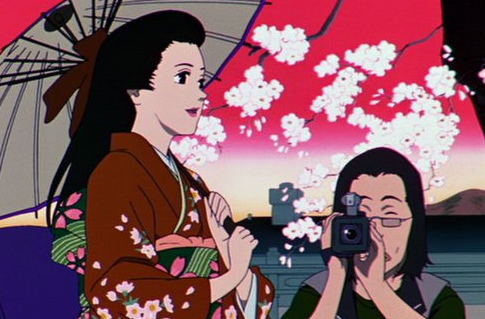
If there's a narrative thread that weaves its way through the films of anime director Satoshi Kon it's that what seems real isn't always real. Not since sci-fi author Philip K. Dick has an artist played with the reliability (or unreliability) of our perception of reality. He established this mind-bending aesthetic with his 1998 adaptation of Yoshikazu Takeuchi's novel "Perfect Blue" and took it to elaborate new heights with his surreal take on Yasutaka Tsutsui's sci-fi mystery "Paprika"; but it was the melding of his mutable world view with a story based on one of Japan's most beloved screen starlets that lands Satoshi Kon at the number four slot on our list of films within films. 2001's "Millennium Actress" follows Tachibana, a TV documentary filmmaker, and his cameraman as they go on the assignment of a lifetime - an on camera interview with Chiyoko Fujiwara, an actress who mysteriously retired from the screen at the peak of her popularity to live a life of seclusion. What could have caused her to turn her back on fame? Didn't she feel a responsibility to her fans to keep acting? What has she been doing with herself? All these questions are put to Fujiwara as they'd been put to real-life actress Setsuko Hara, star of Yasujiro Ozu's "Tokyo Story" and Akira Kurosawa's "No Regrets for Our Youth", in 1963 when she unceremoniously quit acting, refusing to give interviews or appear on camera to this very day. While at the time of her retirement Hara revealed that she never really enjoyed acting all that much Satoshi Kon's Chiyoko Fujiwara's reasons for leaving the limelight center around a lost love, a dissident artist she fell in love with as a teenager. Throughout "Millennium Actress" Tachibana and his cameraman literally follow Fujiwara through her entire career - from propaganda films in Manchuria to outer space epics - as she searches for her the man she loves. It's an ingenious creative decision that has Kon making a film about filmmakers making a film about an actress performing in films as a way to fulfill her unrequited desires. CM


2. The Man Who Left His Will on Film - Nagisa Oshima (1970)

Nagisa Oshima is probably one of the most intellectual and didactic directors in Japanese film history. By the late 60's and early 70's Oshima's films weren't just about the narratives on screen. Theory and ideas became just as if not more important than characters and situations. His intensive exploration of political, social and cinematic theories culminated in his 1970 film "The Man Who Left His Will on Film". In terms of basic narrative the film tells of a poltical and cinematic activist who, with Bolex 16mm movie camera in hand, jumps to his death from the top of a building. A young man named Motoki (Kazuo Goto) takes the camera from the dead man's hand only to have it confiscated by police. He fights to get the camera back, does and then screens the film, the suicide's cinematic will, and tries to piece together this man's last moments. Soon the filmed footage and Motoki's existence begin to dovetail together. That's pretty much where the narrative ends and the theoretical conundrums begin - Did this man exist or not? Was he a fiction created by Oshima? (who appears on camera with his film crew), Is Motoki in fact the man who threw himself from the building? Can what we see as reality really be trusted? What role does cinema play in social and political action? "The Man Who Left His Will on Film" continues to be endlessly discussed and debated in film studies classes around the globe, something Oshima probably would be happy with. CM


1. Pastoral: To Die in the Country - Shuji Terayama (1974)

For his third feature film avant-garde poet, playwright and fillmmaker Shuji Terayama not only mined his past for inspiration, but sent a cinematic other into the middle of the story in order to right the percieved wrongs of his boyhood years. Like the nameless protagonist (played by Hiroyuki Takano) in 1974's "Pastoral: To Die in the Country" Terayama grew up in the remote Shimokita Peninsula in Aomori Prefecture near the volcanic Mt. Osore believed by the locals to be a gateway to hell. Our young protagonist grows up surrounded by these kind of superstitions and constantly watched over by the narrow-minded and unforgiving townsfolk of his village. The boy's mother is one of these. So determined to keep her son as part of this pathetic little community the boy is nearly kept a prisoner in his own home. If it weren't for the lovely young woman next door and the circus with has pitched its tent at the edge of town our protagonist would have no hope of escape. For nearly half of the film the audience tries to grip onto any kind of narrative foothold as Terayama seduces and assaults them with one surreal sequence after another, but the colour and chaos comes to an abrupt halt as the film switches to black and white and it's revealed that "pastoral" is in fact a film being directed by a filmmaker (played by Kantaro Suga) about his childhood memories and traumas. One of these traumas is his over-protective and narrow-minded mother. Through his film he hopes that either his grown self or his younger self will be able to work up the courage to kill his mother and free him from his small town roots. The remainder of "Pastoral" feature the adult filmmaker and his young self engaging in philosophical discussion about memory and free will. The filmmaker also confronts the object of his anger and fear - his mother. What starts out as a dream tale of days past quickly becomes one of the most powerful films within films in cinema history. CM

Midnight Eye marks their first decade with their top picks of the past 10 years

by Chris MaGee

Here's a piece of news that all us Japanese film bloggers are very happy to hear - Midnight Eye is celebrating their 10th anniversary this year! If you write about Japanese cinema online you owe a huge debt to Tom Mes, Jasper Sharp and their rotating crew of writers, reviewers and film scholars. I personally believe that Mes and Sharp are the second wave of Japanese film scholarship after Donald Richie, Tony Rayns, Mark Schilling, Isolde Standish, and many others. You need only look at the filmmakers who have gained an audience in the West as a result of their exposure on Midnight Eye to know that that this is the case - Takashi Miike, Shinya Tsukamoto, Rokuro Mochizuki, Ryuichi Hiroki, Go Shibata, Yutaka Tsuchiya, and Tsuki Inoue to name just a few. Their "Midnight Eye Guide to New Japanese Film" (above) has also become essential reading for anyone interested in what Japan has had to offer cinematically in the past 25 years.

To mark the occasion Mes, Sharp and the Midnight Eye crew (including Nicholas Rucka, Eija Niskanen, Roger Macy, Midnight Eye webmaster Martin Mes, and fellow Toronto homeboy Jason Gray) have named their top films of the past decade. Want to know who picked Miike's "Dead or Alive 2" and "Audition", Koji Wakamatsu's "United Red Army", Hirokazu Kore-eda's "Nobody Knows", and Masaaki Yuasa's "Mind Game" as their top picks of the past ten years? Then head over to Midnight Eye here.

Congratulations on your first decade, Midnight Eye! The Toronto J-Film Pow-Wow wouldn't exist without you.

Another Hollywood remake of "Godzilla" stomping our way? Good idea or bad?


by Chris MaGee

Yesterday word spread like wildfire online about how Burbank, California-based production company Legendary Pictures has bought the rights from Toho to produce a new U.S. remake (reboot, re-imagining, what have you) of "Godzilla". Toho "retired" the king of all kaiju monsters after Ryuhei Kitamura's 2004 film "Godzilla: Final Wars" (above), but now it looks as if this new remake will continue the franchise. This news has almost immediately divided folks into the "for" and "against" camps, but I thought I'd try and weigh in with a an opinion that falls somewhere in the middle.

It's always hard for me to divorce Godzilla the character from the monster that appeared in Ishiro Honda's brilliant 1954 original "Gojira". Despite the obvious limitations of the special effects in Japan circa '54 "Gojira" is not only entertaining but a massive piece of cinema catharsis that only two years after the U.S. Occupation finally allowed the Japanese to work through the horrors they had experienced during WW2, albeit through the use of science fiction metaphor. Godzilla as A-bomb was an ingenious creation, but as the franchise continued at Toho this initial post-war message quickly gave way to sheer entertainment and eventually sheer kitsch.

It was the fact that for many, many years Toho's intention was to simply get ticket buyers into movie theatres and wow them with giant monster fights that made the 1998 Roland Emmerich Hollowood remake of "Godzilla" (at least for me) a little more palatable. Not that it was a good film, far from it, but it had been 44-years since the character of Godzilla had done anything but simply entertain with his marauding adventures.

So, now we are looking at another Hollywood remake (reboot, re-imagining) of this classic character, but is this a good thing? Frankly, with the state of mainstream Japanese films in the past few years, I wouldn't have been that happy had I heard it was Toho themselves who were bringing Godzilla back to the big screen. With Legendary Pictures being the folks behind the about to be released "Clash of the Titans" remake we can at least expect above average CGI effects in this new "Godzilla"... Hell, it may even be in 3D. The problem I have is this whole "remake" thing.

In the past few months James Cameron's "Avatar" showed major studios that an original story can be married up with cutting edge special effects to create a huge money-maker at the box office. Okay, let me clarify - an "original" story that's not a remake, reboot, etc. of a tried and true film or franchise. Yes, I am aware of the similarities between "Avatar" and "Dances with Wolves". Nothing that new under the sun I guess. Still, "Avatar" wasn't a remake, and I'd hope on some level that its success would "reboot" Hollywood creativity and get their writers creating new story ideas as opposed to giving "Godzilla" yet another CGI make over.

In the end I think that despite the characters noble origins Godzilla is meant to entertain. If it's the Japanese or the Americans who want to entertain us with him, then so be it. I just wish someone would finally start telling us new stories.

Nod to Twitch for being one of tyhe first to jump on this news.

Trailer for Masahiro Kobayashi's "Haru to no Tabi" starring Tatsuya Nakadai finally arrives

by Chris MaGee

It was just under a year ago that news broke about art house director Masahiro Kobayashi making a new film starring none other than screen legend Tatsuya Nakadai. Titled "Haru to no Tabi" Kobayashi's intention for his film was for it to be "a modern version of a masterpiece like Yasujiro Ozu's 'Tokyo Story' or Akira Kurosawa's 'Ikiru.'" That's a pretty daunting goal; but now the full theatrical trailer for the film has appeared online and despite the overly dramatic music and voiceover "Haru to no Tabi" indeed looks promising.

The film tells the story of a retired fisherman named Tadao (Nakadai) who goes on a trip to Tokyo with his young granddaughter, Haru (Eri Tokunaga). Once there he attempts to makes amends with his two estranged brothers, potrayed by Hideji Otaki and Akira Emoto. Like I said, the shmaltz factor in this trailer was a bit surprising given that this is a film from Kobayashi, the man who brought us such minimalist dramas as "bashing" and "A Man Walking on Snow", but hopefully the soaring strings and standard NHK-esque narration has just been tacked on as a marketing tool and doesn't reflect on the content of the film. The glimpses of Nakadai's performance as Tadao alone makes this, along with Koji Wakamatsu's "Caterpillar", a must see film for me this year.

Head over to Nippon Cinema to check out "Haru to no Tabi" due out in Japanese theatres on May 22nd.

"Miss Kurosawa Film" wins top prize at the 2nd annual Okinawa International Film Festival

by Chris MaGee
 
No, this is not another story related to the 100th anniversary of the birth of Akira Kurosawa. "Miss Kurosawa Film" is another cinematic animal entirely - a comedic chick flick that just took home the top award in the Laughs category at the 2nd annual Okinawa International Film Festival. Directed by Taku Watanabe and co-produced by Fuji TV "Miss Kurosawa Film" is the story of Kazuko Kurosawa, a member of the comedy trio Morisanchu and certified single woman, that is until she meets a male fan who wins over her heart. Will Kurosawa be able to fit this new man into her life on the road as a comedienne?

The theme of the Okinawa International Film Festival is "Laugh and Peace" with a special emphasis on the laughs. "Miss Kurosawa Film" beat out other top Japanese comedy films enetered into competition including Hiroaki Ito's "Selfish Planet" and Takashi Miike's "Zebraman 2" plsu such Hollywood heavy hitters as Todd Phillips' "The Hangover" and "Kyle Newman's "Fanboys". In the Peace category the top award went to Aditya Chopra's "Rab Ne Bana Di Jodi".

For more on this year's Okinawa International Film Festival click here. Thanks to Tokyograph for pointing the way to this story.

Kyoko Koizumi leads an ensemble cast in the Kyoto set "Mother Water"

by Chris MaGee

I'll always have fond memories of the 10 days I spent in Kyoto back in 2006, and since then the memories of its historic buildings, winding side streets, and of course the food (of those Kyoto sweets!) has had me hankering to get back there. As long as the bank account level is low, though, I'll have to sate that urge for Kyoto by catching a film like the upcoming "Mother Water". Kevin Ouellette over at Nippon Cinema has details on the Kyoto-based production that tells the story of three women in a quaint Kyoto neighbourhood populated by small businesses. Directed by Kana Matsumoto "Mother Water" stars Kyoko Koizumi (above right) as the propriatress of a small coffee shop, Satomi Kobayashi (above left) as the owner of a nomi-ya, Mikako Ichikawa as a tofu maker, and Ryo Kase as an antique furinture dealer. The supporting cast is rounded out by Kento Nagayama, Ken Mitsuishi, and Masako Motai. As Kevin mentions in his post a number of these actors have starred opposite each other before, most notably in the films of director Naoko Ogigami.

"Mother Water" is set to be released in Japaense theatres in October of this year. Thanks to Cinema Cafe.net for the above promotional still from the film.

"Onobori Monogatari" brings the story of a struggling manga artist to the big screen

by Chris MaGee

One of the highlights of my 2009 was being able to read Yoshihiro Tatsumi's massive autobiographical manga "A Drifting Life". Through its 840 pages Tatsumi's alter ego Hiroshi as he establishes himself as a manga artist, first in Osaka then in Tokyo. It's a fascinating read, so make sure to check it out. The reason I mention Tatsumi's epic manga is that while reading this news item posted at Tokyograph about another upcoming manga-to-movie screen adaptation I couldn't help seeing similarities to "A Drifting Life".

A live-action film adaptation of Satoshi Karasuya's manga "Onobori Monogatari" is set to be released in Japanese theatres on July 17th. Directed by Yasutaka Mori, "Onobori Monogatari" will star 30-year-old Yoshio Inoue as a manga artist who moves from Hirakata, Osaka to establish himself in Tokyo. Karasuya's 4-panel manga which ran in Takeshobo's Manga Club between 2006 and 2008 was based on his own experiences trying to make his way in the competitive manga market.

There's no theatrical trailer posted at the offical website for "Onobori Monogatari" yet, but we'll keep an eye out for one in the coming weeks. Thanks also to Anime News Network for additional details on this story.

What's wrong with this picture?

by Chris MaGee

Here's a little visual puzzle for you - Take a look at this 1980's Japanese commercial for cockroach traps, and we mean take a good hard look. Doesn't that guy in the middle wearing the glasses look familiar? Look closely. Did you guess right? Yes, that is indeed Nagisa Oshima, the director of such classics as "Night and Fog in japan" and "In the Realm of the Senses". Don't ask us what he's doing in this commercial. We have absolutely no idea why. We just wanted to share this "What the f**k?!" moment from YouTube with you all on this Tuesday.

Japanese Weekend Box Office, March 27th to March 28th


1. Doraemon The Movie: Nobita's Mermaid Legend* (Toho)
2. Pretty Cure All Stars DX 2: Ray of Hope Save the Rainbow Jewel* (Toei)
3. Sherlock Holmes (Warner)
4. Liar Game: The Final Stage* (Toho)
5. Avatar (Fox)
6. The Vampire's Assistant (Toho Towa)
7. Nine (Kadokawa/Shochiku)
8. G-Force (Disney)
9. The Hurt Locker (Broadmedia Studio)
10. Memoirs Of A Teenage Amnesiac* (Toei)

* Japanese film

Courtesy of Box Office Japan.

Friday, March 26, 2010

Hot Docs brings a treasure trove of Japan-themed documentaries to Toronto

by Chris MaGee

When your main film focus is Japanese film the annual Hot Docs documentary film festival here in Toronto can either be feast or famine. There are years when there may be no Japanese documentaries, or one or two that only have a tangential connection to Japan and then there are years like this one when I find myself wanted to cram in doc after doc into my viewing schedule.

In amongst the 168 films announced at a press conference this past Tuesday the Hot Docs programmers included six films that will have anyone interested in Japanese culture heading to pick up their Hot Docs tickets and passes. They are:

Eat the Kimono: Kim Loginotto's and Clair Hunt's documentary on dancer, feminist activist and star of Masaru Konuma's 1974 pink film "Tattooed Flower Vase" Hanayagi Genshu. Infampus in Japan for her unconventional ideas and her stabbing of her dance teacher, for which she served eight months in prison, Genshu believe that wmen in Japan mustn't be eaten by the kimono but to "eat the kimono."

Gaea Girls: Another film by Kim Loginotto, this time in collaboration with Jano Williams, about all female Japanese pro-wrestlers. "Gaea Girls" follows Takeuchi, a new recruit who goes from the strict backstage training regimine to the punishing spotlight, fighting in front of adoring fans.

Diary of an Urban Priest: Finnish filmmaker Pirjo Honkasalo creates a riveting portrait of former boxer and now guitar playing, motorcycle riding Buddhist priest Yoshinobu Fujioka who ministers to those living on the margins in Tokyo's nightclubs and bars.

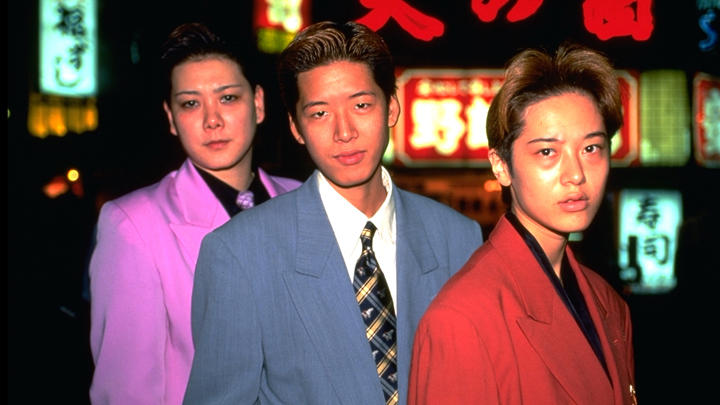
Shinjuku Boys(above): The final film by Kim Loginotto, again with Jano Williams, "Shinjuku Boys" explores women living their lives as men and working at Tokyo's New Marilyn Club where straight women who have become disillusioned with male companionship seek out (mostly) sexless affection from this hosts/ hostesses.

The Invention of Dr. Nakamats: Danish artist Kaspar Astrup Schröder turns filmmaker to introduce us to the inventor of the floppy disk, compact disc, as well as 3,375 other patents - 80-year-old Dr. Yoshiro NakaMats. An eccentric who won the Nobel Prize for Nutrition after he felt compelled to document every meal he ate for 34 consecutive years and whose current goal it to live to the ripe old age of 144.

We Don't Care About Music Anyway: Yoshihide Otomo, Umi no Yeah!!!, Numb & Saidrum and Hiromichi Sakamoto are just some of the artists highlighted in French directors Cedric Dupire and Gaspard Kuentz look at Tokyo's thriving experimental and noise music scene.

Hot Docs 2010 runs from April 29th to May 9th. To get more details on the full line-up as well as tickets and passes visit the official Hot Docs website here.

TJSFF'10 REVIEW: A Third Skin


第三の肌 (Dai san no hada)

Released: 2008

Director:
Kotaro Wajima

Starring:
Lily

Mitsuru Karahashi
Yu Kawamura


Running time: 29 min.


Reviewed by Chris MaGee


A film doesn't need to be feature length and weighted down with a complicated plot in order to capture an audience. I was reminded of this point at this year's Toronto Japanese Short Film Festival when I was lucky enough to see a simple but profound half hour film called "A Third Skin". Written and directed by Kotaro Wajima the film centers around a homeless man who plays piano in a public park and what occurs when he is nearly robbed of both his music and his life. Inspired by a quote from French literary theorist and semiotician Roland Barthes, "...you will be touching what I have touched. A third skin unites us," Wajima has created a delicate story that uses music to communicate its message of giving and the power of shared creation.

While our homeless protagonist, played by Mitsuru Karahashi (Kamen Rider, Samurai Sentai Shinkenger) can bewitch visitors to the park with his music the spare change he collects isn't enough to get him off the streets. When night comes he wheels his stand-up piano to one of the many tent cities that sprout up on the margins of Japan's public parks; but one night his make shift home is invaded by a group of junior high school boys bent on destruction. These boys, who Wajima explained during a post-screening Q&A session are the victims of bullying who are taking their rage out on the most vulnerable targets - the homeless, not only beat the piano player into a bloody pulp but also set his piano on fire. Left for dead he is taken in by Chika, ("Vital" and "Asyl Park and Love Hotel" star Lily) a homeless woman who lives in a nearby tunnel. Chika has a gift hidden in the dark recesses of her home for the piano player - an old, out of tune piano that she lets him use as he recovers from the attack. The piano player and Chika are joined by an unlikely guest, one of the boys who unwillingly took part in the beating. He witnesses the piano player give Chika the only thing he has to offer in return for her hospitality - the joy of making music.

While the narrative of Wajima's film is as lean as can be (and may come off as a bit trite when read in a review like this) it's not what makes "A Third Skin" so magical. It's success comes from Wajima's grasp of what every good filmmaker knows - a story can be told just as successfully using sound, lighting, colour, the things that fill the spaces around the narrative just as effectively as the narrative itself. When Wajima shows us this homeless man pushing his piano through the park at dusk we can almost smell the crisp evening air, and when he warms himself by the propane heater in Chika's spartan but comfortable home in the tunnel we nearly get a physical sense of warmth. Of course the main tool used to convey the emotional message of "A Third Skin" is music. Franz Liszt's "Liebestraum" is used to lull us so that Wajima can then crash us to earth with the boys' attack on the homeless camp. It's a frightening sequence to behold and one that uses the sound of piano wires straining and snapping in the fire as its brittle climax. Another piece of music forms the emotional core of "A Third Skin" though. The duet the homeless man composes for he and Chika to play on her piano (composed for "A Third Skin" by Toshiya Fueoka, one half of Japanese indie duo Mondialito) brings Wajima's film to a lovely conclusion.

Having only graduated from the Film Department of Kyoto's University of Art and Design in 2006 Wajima shows boundless potential as a filmmaker with "A Third Skin". It's exciting to think what will come from this 26-year-old Yamagata native in the years to come. Thankfully New Directions in Japanese Cinema, an ongoing project managed by VIPO (Visual Industry Promotion Organization) and the Agency for Cultural Affairs in Japan, was there to give Wajima the opportunity to make "A Third Skin", one of the five the NDJC produced in 2008. In the same way that the piano player gives his gift of music to Chika I hope Kotaro Wajima's work can be shared with many more film fans around the world soon. Judging by "A Third Skin" he has many more gifts to give us.

Art director Takeo Kimura, 1918-2010

by Chris MaGee

Japanese film lost one of its greatest unsung heroes this past week. Takeo Kimura, production desinger and art director for over 200 films including classics by Seijun Suzuki, died of pneumonia on March 21st in a Setagaya-ku, Tokyo hospital. He was 91.

Kimura was born in Ebisu, Tokyo in 1918 Kimura studied theatre and performing arts before joining Nikkatsu in 1941 as an assistant in their scenery department. He made his debut as a full-fledged art director working on Masanori Igayama's 1945 film "Umi no yobu koe". Kimura would work designing the look of various Nikkatsu productions before being assigned to work with a 40-year-old director who was churning out the studios B-grade yakuza and youth films. That man was Seijun Suzuki and Kimura's first collaboration with him was 1964's "Flower and the Angry Waves" starring Akira Kobayashi. It was the beginning of a partnership that would last, off and on, for the next 37-years and end up encompassing some of Suzuki's most representative works - 1964's "Gate of Flesh", 1966's "Tokyo Drifter" and "Fighting Elegy", 1980's "Zigeunerweisen" and 2001's "Pistol Opera". ""Kimura makes every movie as if it were his last," Suzuki revealed in an interview, saying that Kimura's attitude was often, "'If this is my last [film] then I can do anything I want.' That's why I love working with Kimura as an art director." Obviously both men shared this artistically permissive spirit and would ultimately change the look of Japanese films in the process. The surreal look and of Suzuki's film's simply wouldn't have existed without Kimura. So crucial was Kimura's input in Suzuki's work during the 1960's that he ended up receiving a co-writing credit on Seijun Suzuki's most famous film "Branded to Kill".

With the arrival of the 70's arrived, Nikkatsu's firing of Suzuki for his "incomprehesible" filmmaking style and the studio's shift into roman porno production Kimura went freelance and continued to bring his distinctive visual style to films by Kei Kumai (Sandakan 8), Mitsuo Yanagimachi (Himatsuri), and Kaizo Hayashi (To Sleep so as To Dream). Kimura would also take teaching positions at both the Faculty of Arts, Tokyo Polytechnic University and Associate Professor of Film Studies at Kyoto University. Kimura refused to slow down in the last decade of his life. He set a Guines Book of World Record for being the oldest debut filmmaker with his 2008 film "Yume no Manimani" which told the story of the dean of a college and survivor of the bombing of Hiroshima (Hiroyuki Nagato) and his relationship with a brash, headstrong student (Yoshio Inoue). he would most recently take on production design duties for Kanji Nakajima's "The Clone Returns Home" and art direction duties for Ikki Katashima's "Serial Dad".

Our deepest condolences to Kimura-san's surviving family and friends. Thanks to Japan Zone for the details on this. We leave you with one of Kimura's defining pieces of work - Seijun's Suzuki's "Tokyo Drifter".

REVIEW: Tokyo OnlyPic


東京 ONLYPIC (Tokyo OnlyPic)

Released: 2008

Director(s):
Riichiro Mashima
Kan Eguchi
Takashi Taniguchi
Hiroyuki Nakao
Bill Plympton

Masaya Kakehi
Toru Hosokawa

Running time: 137 min.


Reviewed by Eric Evans


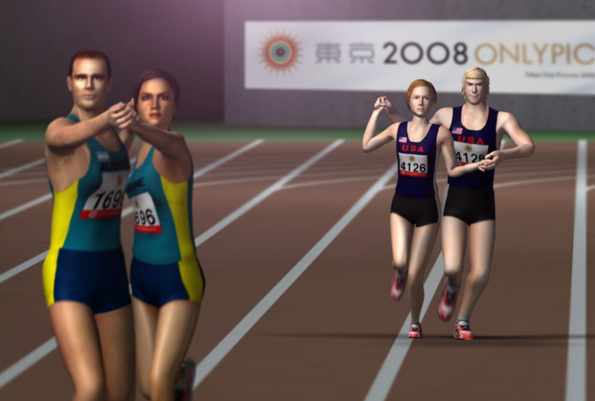
Tonally closer to "Monty Python's The Meaning of Life" than any other Japanese omnibus project of recent memory, "Tokyo Onlypic" is a collection of shorts and skits spoofing the Olympics as we know them, while suggesting alternative-and more entertaining-competitions. As with any anthology the quality is uneven, but the highs here more than compensate for the occasionally sluggish pace and repetitive nature of the lows. I was fortunate enough to see this with an audience of about 200 people, and none of us knew what we were in for; "Tokyo Onlypic" was one of the wild cards in the Fantastic Fest line-up and it went over like gangbusters, from the howling laughter during the screening to the re-enacted 'Samurai Call' competition on 'Meet the Japanese' night. 'Samurai Call' is a sort of performance art wherein contestants scream "SAMURAAAAIIIIIIIII!" with gusto and accompanying flailing movements, to be judged by a panel as if they were figure skaters. That should give you a feel for the movie as a whole.

The shorts are interstitially bound together by repeat visits to the broadcast booth and our hosts, led by Japan's favorite otaku-ette, Shoko Nakagawa. Her faux enthusiasm for event after event is increasingly funny as the film progresses, really selling the sometimes--hell, always--ridiculous nature of the games. The events themselves are also called by voiceover commentators in complete deadpan and scripted as if they were staples of the Olympic Games;
Tongues are planted so firmly in cheek that, during the live-action segments, you could pass off the work as legit sport to the uninitiated. Each director uses whatever storytelling technique they prefer, from the animated caricatures of Bill Plympton (don't ask me how he got involved) in '1,000 Character SMS' to the low-tech combination of live action and remedial CG in 'Mother Tossing.' There's a wild range of work on display and segues from style to style are often abrupt, but the spirit of the thing eliminates any concerns the filmmakers might have had about low budgets or lower brows. After seeing a live-action man greet his mother, then pick her up and carry her to a javelin-like field of measure, the suspension of disbelief necessary to get past the suddenly-CG sight of him grasping her by the ankles, spinning her over his head three times and hurling her 70+ feet away as he screams "Mama!" is easy to muster.

"Tokyo Onlypic" gleefully skewers all nationalities, but saves special venom for Japan and the United States. In the film's bombastic and hysterically funny CG opening ceremony sequence, host city Tokyo pulls out all the self-parodying stops by unleashing gigantic robots representing pop-culture touchstones: A massive robo-gyaru whose booming voice repeats "KAWAII!" ad nauseum; An equally large Hachiko statue that zooms around banging into things like a Roomba; Parade-float sized sushi on wheels that zip around the stadium chased by the Onlypic mascot, a huge animatronic cross-eyed pigeon. (I would have described the spectacle as absurd satire, but the giant maple leaves of the recent Vancouver Olympic closing ceremonies recalled the Onlypic goofiness so closely that such observations were rendered moot.) Even seemingly pedestrian segments are fantastical; 'Sandal Tossing' features people on a playground swing who, at the apex of their swing height, kick off their shoe to see who can achieve the greatest distance. Nothing special until one contestant kicks off a sandal with such force that it circumnavigates the globe, appearing behind the kicker a few minutes after it is flipped into the horizon, Warner Brothers cartoon-style. Often the contestants have names which pun or recall something about their nationality. For example, the American sandal kicker is named Michael Starbucks, Jr., whose poor showing is revealed (in slow motion, no less) to be the result of his mid-swing craving for a Snickers bar, distracting him from the task at hand. Leave it to the American to be caught eating chocolate during competition, then throwing a hissyfit at his poor result!

"Tokyo Onlypic" is essentially unreviewable--you'll either be in the mood for a two-hour-plus spoof of the Olympics or you won't; The fewer specifics you have going in, the better off you might be. The omnibus film hasn't received a region 1 DVD release, but there is a website with a multitude of clips (http://www.onlypic.org/sports/) and YouTube is littered with sometimes lengthy excerpts, including all of the opening ceremony and enough of the 'Samurai Call' to give you an idea of the proceedings (http://www.youtube.com/watch?v=UNqr6Oxz0NM). There's a Japanese 4-DVD "Tokyo Onlypic" boxset including the theatrical release and many additional events priced at a shockingly reasonable US$40, but that might be too much of a good thing…

George Akiyama's controversial manga "Ashura" to be truned into a feature film by Toei

by Chris MaGee

In August of 1970 an edition of the long-running Weekly Shōnen Magazine was banned in various cities in Japan due to the debut of George Akiyama's manga "Ashura". Set in medieval Japan "Ashura" tells the story of a boy trying to survive during a brutal famine. How brutal? Brutal enough that Ashura's mother has been reduced to cannibalism in order to stay alive, and besides a grizzly scene showing this in the debut of "Ashura" what really got people upset was the fact that the mother even tries to eat her own son to stave off hunger. Although Akiyama would continue to produce provocative manga - 1971's "Kokuhaku (Confessions)" that featured such chapters as "I am a murderer" and "I was a child of mixed blood" and 2005's "An Introduction to China: A Study of Our Bothersome Neighbors" which attempted to debunk the Nanking Massacre - it was his controversial debut in Weekly Shōnen that has defined his controversial career. Now word comes from Anime News Network that the folks at Toei are currently in the process of bringing "Ashura" to the big screen.

Apparently a poster image for this in-the-works adaptation was displayed at Toei's booth at this year's Tokyo International Anime Fair; but besides the drawing of Ashura leaving bloody footprints as he drags an axe out of a ramshackle hut (click the link above to take a look) there has been no additional details on the project from Toei. Will this be an animated film or live-action? Who will be tagged to direct "Ashura"? Will it end up inspiring the controversy that the original manga did nearly 40-years ago? It's all speculation at this point, but hopefully we'll be getting more details on "Ashura" soon.

Radiohead's Jonny Greenwood brings the music to "Norwegian Wood"

by Chris MaGee
  
I have to admit I'm getting old. I used to promise myself that I would never get to a point where I wasn't interested in new bands and music coming out, that I would never be that boring old fart that said "Aw, that's just crappy noise!" Well, that time has come... at least when it comes to pop music. One band that has carried over from my obsessive listening days, though, is Radiohead, so it was with great excitement that I read this piece of news over at Twitch this week.
 
Jonny Greenwood, the guitarist from the post-rock quintet, will be providing the soundtrack to a film that we've been pretty excited about here at the Pow-Wow - Tran Anh Hung's adaptation of Haruki Murakami's "Norwegian Wood" (read our previous coverage here. The story of the life and loves of a Tokyo university student starring Ken'ichi Matsuyama and Rinko Kikuchi... and now with music by Jonny Greenwood? What's not to get excited about?

Greenwood has actually worked with Tran Anh Hung before. Radiohead tag teamed with composer Gustavo Santaolalla for the soundtrack to the Vietnamese-French director's 2009 film "I Come with the Rain"; but Greenwood himself is no stranger to film composing. He was responsible for the pitch perfect mood encapsulating score for Paul Thomas Anderson's 2007 film "There Will Be Blood".

"Norwegian Wood" is due out in December.

REVIEW: Kagero-za


陽炎座 (Kagero-za)

Released: 1981

Director:
Seijun Suzuki

Starring:
Yusaku Matsuda
Michiyo Okusu

Katsuo Nakamura
Mariko Kaga
Eriko Kusuda

Running time: 139 min.


Reviewed by Bob Turnbull


"Your lips look delicious. I like festivals. Fireworks excite me."

I love films that play in the surreal - that dream-like space that disorients the viewer and leaves them a bit confused as to what they've just seen. Used effectively, it can evoke mood and subtly impart information by taking advantage of the visual medium in many creative ways. So I looked forward to "Kagero-za", Seijun Suzuki's 1981 middle film of his Taishi Trilogy, since it had been described as quite surreal. That doesn't cover the half of it - it's a downright fever dream.

I make the distinction because the film is more than just dreamlike or slightly disconnected from reality. "Kagero-za" is full-on delusional, doesn't process or provide information in a normal fashion and shouldn't be trusted with sharp objects. Since this isn't a narrative film, those aren't necessarily objections or criticisms. There is actually an underlying story and concept being put across (based on a short story by Kyoka Izumi), but you can't process it linearly. Instead, as with many Suzuki films but even more pronounced here, you let it drift over you, react to images and moments and then attempt to reassemble things later. Is that the same woman from an earlier scene? Is this a flashback or the next day? Who's that guy? What the hell does that mean (e.g. the quote that leads off this review)? These are all questions that jumped out at me while watching the strange and beautiful images pile up on top of each other. Even if most of them didn't get answered immediately, I found myself fascinated by the journey of the central character and caught up in what sometimes felt like random images and shot choices. But the mood of that journey - the increasingly disturbing, slightly creepy and always unsure feelings - is realized in splendid fashion.

That mood and tone is set early on...While trying to find a letter he has dropped, the playwright Matsuzaki meets a woman who asks him to accompany her to the hospital. She wants to visit a friend, but had run across a vendor selling bladder cherries (the fruit of the Chinese Lantern plant) which are purported to be women's souls. The scene suddenly cuts from outside to inside a building (if it's the hospital, it's a pretty empty and quiet one) where Matsuzaki assures her he hasn't seen any vendors and that she may continue by herself. Instead she decides not to visit her friend and begins to throw several of her flowers to the floor. Another sharp cut back to an outside staircase where petals seem to be spilling from her arms. Matsuzaki tells her that he feels that someone evil has picked up his lost letter. Cut to her basket with a letter hanging out. Cut to a two-shot of them where she tells him that he is a sinful man since it is a love letter from a married woman. She hands him a cherry from her mouth and he asks if he should consider it her soul. In a single shot, we see her leave around a corner and the camera pulls back to Matsuzaki as he tells his rich patron Tamawaki that this all happened three months ago. Things only get stranger as we see his other encounters with the woman, his growing obsessions with her, how Tamawaki fits into all this and his eventual trek to meet her in the countryside.

The characters he comes across may be real, imagined or possibly even ghostly in nature, but we're never quite sure. Suzuki uses many lighting tricks, camera angles and editing techniques to give you the perspective of Matsuzaki and keep you just as in limbo as he is. "Kagero-za" had twice the budget of its precursor "Zigeunerweisen" (due to that previous film being a commercial success as well as winner of four Japanese Academy Awards) and it shows in the care taken with the visuals and the feeling of 1926 Tokyo brought to the screen (the Taisho period the trilogy is named for coincided with the beginning of an increase in liberal, democratic and Western ideas entering the culture). More than once my eyes widened and my jaw dropped at compositions, scenes and images and I admit that this was my favorite thing about the film - its moments that at first didn't seem to make sense either in context or even as standalone. Especially as the film moves towards its conclusion (and Matsuzaki's fate) with scenes using dolls, a children's kabuki theatre and stunning wall paintings. It's roughly translated titled of "Heat-Haze Theatre" feels incredibly accurate.

Read more from Bob Turnbull at his blog. 

Weekly Trailers


Chonmage Purin - Yoshihiro Nakamura (2010)


Yoshihiro Nakamura, the man who brought us "The Glorious Team Batista" and "Fish Story" directs what could be the most absurd film coming out of Japan in 2010, "Chonmage Purin (Topknot Pudding)". Pop star Ryo Nishikido stars as a samurai who travels through time to present day Tokyo where he meets and falls in love with a single mother (Rie Tomosaka)... and becomes a pastry chef. [shaking head in disbelief] "Chonmage Purin" is due out in Japanese theatres this summer.


Jekyll and Hyde - Hideo Gosha (1969)

Not a trailer for a film, but the opening sequence and trailer for the 1969 13-episode Fuji TV series "Jekyll and Hyde" based on the Robert Louis Stevenson classic about a man whose personality has been split right down the middle into pure ego and pure id. Japanese screen veteran Tetsuro Tamba stars as the good doctor and his evil alter ego.

Japan Film Festival Los Angeles announces their full 2010 line-up

by Chris MaGee

With all the flurry of activity and anticipation surrounding the 10th anniversary of Frankfurt's Nippon Connection it's easy to forget that there is another Japanese film festival taking place next month, and right here in North America to boot. The Japan Film Festival Los Angeles announced their line-up this past week, and they deserve a big pat on the back for bringing together films that really would not get showcased on this side of the Pacific normally. Yes there are mainstream hits like Takashi Miike's "Yatterman" and Tetsuya Nakashima's "Paco and the Magical Picture Book", but there are also films like Toru Ichikawa's "Sakura, Sakura" (above) that tells the true-life story of biochemist Jokichi Takamine (1854-1922), Tetsuo Shinohara's comedy/ drama "The Night of Whirlwind Restaurant" that was featured in the Japanese Eyes programme at last year's Tokyo IFF, and Nobuyuki Miyake's "Lost and Found" about the lives of commuters at a rural train station.

This year's Japan Film Festival Los Angeles will run from April 10th to 25th at three theatres in the Los Angeles area. To get details on tickets and to get a look at their full line-up visit their official website here.

REVIEW: Perfect Blue


パーフェクトブルー(Pāfekuto Burū)

Released: 1998

Director:
Satoshi Kon

Starring (voice talent):
Junko Iwao
Rica Matsumoto
Shinpachi Tsuji

Masaaki Okura
Akio Suyama

Running time: 80 min.

Reviewed by Marc Saint-Cyr


Satoshi Kon’s acclaimed “Perfect Blue” is one of the more unconventional critiques of popular culture viewers are likely to encounter – and not only because it is an anime. It follows young Mima Kirigoe, a minor pop star who decides to leave her girl group CHAM and music career for acting instead. As she makes the transition into “Double Bind,” a television series about a serial killer, she discovers a web site called “Mima’s Room” which contains disturbingly detailed diary entries describing her daily activities and inner thoughts regarding her doubts about the show. As her part becomes more prominent, she is tormented by both a sinister fan and a fantasy version of her former pop idol self.

“Perfect Blue”’s most impressive feature is the narrative complexity that is intricately exercised by Kon. He begins right away within the film’s opening moments when he intercuts Mima’s last stage performance with scenes of her shopping in a grocery store. Eventually, you realize that the grocery store scenes occur later in the evening after the concert, but it takes some time and thought to make proper sense of the initially disorienting sequence. From there, Kon only builds upon the ambiguous nature of the film, cleverly mirroring Mima’s mind frame as she becomes less certain of what exactly constitutes reality. Her perception of her own identity is significantly complicated by a number of factors – the mysterious diary entries on the site; the show’s script, which eerily begins to resemble real life; the fantasy Mima who plants feelings of guilt for her having left her pop career. The lines between fantasy and reality become more and more blurred for both Mima and the viewer in a disorienting Chinese box pattern of rehearsals and awakenings. The events presented to the viewer could be dreams, scenes from the show or reality – what the “truth” is is deliberately made ambiguous, inviting (if not demanding) viewer engagement in ways similar to such other mind benders as “ Mulholland Drive ,” “Synecdoche, New York ” and “ Shutter Island .” Mima’s fantasies are made all the more psychologically dense and perplexing by the film’s animated format.

The consistent theme that lies beneath Mima’s breakdown and “Perfect Blue”’s resulting mind games is the phenomenon of fame. The film’s first scene is significantly set at a convention, and groups of fan boys are occasionally featured as they follow Mima and voice their wavering feelings regarding her career trajectory. The darker side of celebrity obsession is represented not only through the intimidating, Quasimodo-esque fan and stalker-ish web site, but also the string of incidents triggered by Mima’s decision, which include threatening messages, a letter bomb and, eventually, brutal murders. Even beyond these troubling events, the film conducts a chilling critique of fame. Mima is immersed in interviews, concerts, photo shoots and the show’s filming, her image constantly being molded and adjusted. Her exploitation reaches grotesque proportions when she is required to film a rape scene for the show, which is somehow made all the more disturbing by the pauses between takes. The way in which the simulated rape is depicted and prolonged makes all too clear the metaphorical implications of the act. Later, Mima sheds her clothes for a photo shoot which only deepens her degradation for the sake of celebrity.

By making “Perfect Blue” as an anime, Kon is able to create a detailed and impressive visual style. Befitting the important role of pop culture in the film, its Tokyo is filled with signs, billboards and stores, but not overwhelmingly so, as frequently seen in futuristic depictions of the city in sci-fi animes. Instead, it quite accurately reflects the contemporary urban landscape that society has built around itself. Other locations like Mima’s apartment and the show business-oriented spaces she lives and works in all solidly establish her world – even as she grows more unsure about whether it is real or not. The more threatening and violent events that occur around her are given a chillingly vivid quality by the animation, allowing for some memorably imaginative images without tipping too far into the realm of full-out phantasmagoria. It is this partial, careful adherence to realism and “reality” that especially helps make “Perfect Blue” so layered and rewarding. Bound to reveal more – or perhaps just raise more questions – upon repeated viewings, it is one of those rare, elegantly crafted, magnificently befuddling puzzle films that demands contemplation and appreciation in equal measure.

Read more by Marc Saint-Cyr at his blog. 

Tuesday, March 23, 2010

Happy 100th Birthday, Akira Kurosawa!

by Chris MaGee

It was a century ago today, March 23rd, 1910, that a boy was born to Isamu and Shima Kurosawa in Tokyo. Isamu was a director of a junior high school and head of the Japanese Amateur Sports Association and he and Shima were already the proud parents of four daughters and three sons. They named this new addition to their family Akira. As a boy Akira liked to draw (he won various school competitions for his work), but his real love was motion pictures. He was introduced to the movies through his older brother Heigo who was a benshi, a narrator of silent films. Heigo's suicide in 1933 devastated Akira, but in honour of his brother and in keeping with his love of films he enrolled as an assistant director at PCL Studios. PCL would eventually change its name to Toho and produce such monumental films as "Stray Dog", "Seven Samurai", "Ikiru", "Yojimbo", "Sanjuro" and "Ran"... all directed by Akira Kurosawa.

Kurosawa gifted us with 30 films over a 50-year filmmaking career, defined Japanese cinema for Western audiences, and his influence has been acknowledged by directors as diverse as Sergio Leone, George Lucas, Bernardo Bertolucci, Steven Spielberg, and John Woo. The lives of all of us here at the Toronto J-Film Pow-Wow would be very different and far less rich without the films of Akira Kurosawa, so today we ask that you all raise a glass for a kampai in honour of what would have been the 100th birthday of Kurosawa-kantoku, The Emperor. Then make sure to pop your favorite Kurosawa film into the DVD player!

TJSFF'10 REVIEW: Ichigo and Ringo Programs

by Chris MaGee

This past Sunday saw the 7th annual Toronto Japanese Short Film Festival wrap up in the city, but we've still got reviews of this year's films coming your way. Check out our coverage of the Momo and Mikan Programs here as well as the reviews for the Ichigo and Ringo Programs below. Please note that unforeseen circumstances took me out of the Ringo Program for a period of time so I've highlighted the films I was able to catch. 


Ichigo Program


R25 Movie Dictionary - Yuji Mitsuhashi (2009)

Ever wanted to throw a pie in the face of a yakuza? Search out the spirit of the forest? Or encounter a pornographic math tutor? Within 2-minutes you can do all this and shampoo your hair multiple times by watching Yuji Mitsuhashi's totally off the wall "R25 Movie Dictionary". Doesn't make sense? You;re right, it doesn't, but it's funny as hell. This one had the audience at Innis Town Hall Theatre rolling with laughter.


A Wolf Loves Pork - Takeuchi Taijin (2007)

There's not much to "A Wolf Loves Pork" than a young man with a wolf hat on following a papier mache pig through city streets, at least in terms of narrative, but this 4-minute short is about style not substance. Filmmaker Takeuchi Taijin takes umpteenth amounts of photographs of our hungry wolf stalking his pig and then printed them up and pasted them to the walls of his room to create a simple and ingenious stop motion effect. There were more than a few audience members who were puzzling just how much it cost to get all those hundreds of photographs developed!


Mr. Bubblegum - Shoh Kataoka (2009)

Shoh Kataoka's "Mr. Bubblegum" is a film that's been slowly but surely generating buzz online for the past few months with a hilarious trailer popping up at a number of websites. The basic premise - a man is writing a suicide note in a public park when he's interrupted by a young high school girl who first critiques it then helps him rewrite it. The concept is indeed funny, but the full film has an added element of pathos and a touch of unwelcome flirtation from the suicidal man that takes "Mr. Bubblegum" up a few narrative notches. Watching the film I couldn't help but think of the numerous pairings of a slacker male and his female teenage sidekick that appears again and again in the stories and novels of Haruki Murakami. While "Mr. Bubblegum" never gets as surreal as Murakami's work it does manage to tweak tragedy into comedy by shifting our usual perspective.


Tokyo Arirang - Miwha Park (2008)

Filmmaker Miwha Park is a third generation zainichi, or Japanese-Korean who bravely made the trip to Toronto for the festival despite the death of her grandmother. Her film "Tokyo Arirang" is not only an exploration of her roots growing up different in Japan, but it also ends up being a loving tribute to her late grandmother. A young zainichi girl makes friends with other Japanese of Korean ancestry, celebrating their heritage through food and song, while at the same time the matriarch of the family passes away. Unlike so many of the films programmed at TJSFF "Tokyo Arirang" was shot on film as opposed to hi-def video and Park's choice gives her film an almost timeless quality.


Bloody Date - Takena Nagao (2006) (above)

One of the audience favorites at the 6th Toronto Japanese Short Film Festival (and YouTube viral hit) was Takena Nagao's ultra-violent claymation film "Chainsaw Maid", and this year Nagao returns with another splatter fest, "Bloody Date". Yup, you got it - an innocent young couple heads out for a date in the park... and he gets his head smashed in with an axe by a maniac. When the girlfriend begs for help at a nearby house little does she realize that its gothic inhabitants are connected to the murder and that far worse things await her inside. This would be torture porn at its worst if it weren't for the fact that it was made up of crude stop-motion plasticine animation. Way too harsh for "Sesame Street" for sure, but someone from "Wonder Showzen" needs to get Nagao's contact information and get him making short films for them.


A Third Skin - Kotaro Wajima (2009)

I managed to catch Tsuki Inoue's "A Woman Who is Beating the Earth" at the 6th annual Toronto Japanese Short Film Fest and I was so impressed with it that I gave it a full review despite its roughly 20-minute run time. This year Kotaro Wajima's "A Third Skin" had a similar impact on me, so check back this Friday for a full review of this 30-minute mini-masterpiece.


Ringo Program
 

La Maison en Petits Cubes - Kunio Kato (2008)

It's gotten to the point that Kunio Kato's "Domo arigato, Mr. Roboto" Oscar acceptance speech is better known than the film that he actually won the Oscar for. Thankfully TJSFF gave Toronto audiences a chance to see for themselves why Kato took the coveted Best Animated Short Oscar home last year. An old man lives in a cottage that he must continually build on top of in order to keep it above sea level. When he accidentally drops his pipe into the water while moving from the house built below his new one he has to do some deep sea diving in order to retrieve it. In the process he goes through a series of his old homes and reminisces about his life, his family and his late wife. Anyone who had a hard time getting through the memory montages of Pixar's "Up" will have an equally hard time holding back the tears with "La Maison en Petits Cubes". Kato is a masterful animator, but its his keen but gentle insight into the impermanence of life makes this film a true gem.


Komaneko The Curious Cat: The First Step - Tsuneo Goda (2003)

Created by the same team who brought us our ubiquitous toothy friend Domo "Komaneko The Curious Cat: The First Step" feels like a blanket fresh out of the dryer and a steaming cup of coco on a brisk winter day, not that it's set in winter, but its simple story conveys the womb-like comforts of childhood when our imaginations, some stuffed toys (and a warm cup of coco) could easily shut out every care and worry. Komaneko is spending the day in his cozy attic room making a stop-motion film of two toys meeting and falling in love. After hours of work our Curious Cat nods off and his toys finish the job themselves. Japan continues to show us that CGI isn't the only way to go when it comes to animation, and in the case of "Komaneko" director Tsuneo Goda accomplishes this by taking us through the stop-motion animation process right in his film.
 

Fit Song - Koichiro Tsujikawa (2006)

An empty room comes to life in the music video for Japanese electronic artist Cornelius' single "Fit Song". Directed by Koichiro Tsujikawa a baseball bouncing out of a box, starting a chain reaction that has sugar cubes, light bulbs, matches and toothbrushes dancing on tabletops and through the air. At first the video give you a feeling like you're watching one of the elaborate domino set-ups that fall into intricate designs with the flick of a finger, but very quickly things go zero gravity and a normal apartment becomes a galaxy of everyday items. Clever? Absolutely! But thankfully it's only 4-minutes long. Anything longer would have induced vertigo.
 

Peeping Life - Ryouichi Mori (2009) (above)

Director Ryouichi Mori has got a comedy goldmine with his "Peeping Life" series of animated shorts. tape an everyday conversation, animate characters around it and voila! Instant laughs! Animator Nick Park uses the same formula for his hilarious "Wallace and Gromit" films, but with "Peeping Life" Mori verges on Samuel Beckett territory with the absurdity and repetitiveness of his conversations. The episode featured at TJSFF, "Fiddle Faddle Couple", takes place between a boyfriend and girlfriend, the latter angered and annoyed that her beau isn't as enthusiastic about her new kawaii outfit as she thinks he should be. Any guy who ever had to dig himself out of a hole with his girlfriend will find this short a little too close for comfort, but in the end that's what makes this so funny.

Shunji Iwai to return to the directing chair for a vampire film shot in Vancouver

by Chris MaGee

I went to one of those big box bookstores with my nieces and nephews recently and marveled at how many spin-offs, rip-offs, tie-ins, and general vampires related young adult novels were piled on the shelves. I say spin-offs because this tsunami of vampire kids-lit comes on the heels of the massive success of author Stephenie Meyer's series of "Twilight" books. I'm not even mentioning the cross over products like t-shirts, book bags, dolls, etc. they had in stock. Between "Twilight" and the adult TV series "True Blood" vampires have been enjoying the kind of popularity that's eluded them since Ann Rice's books were published in the 70's and 80's. Of course the vampire phenomena has shifted from the printed page to the movie screen and now art house distributors Fortissimo Films (along with Convergence Entertainment) will be jumping on the vampire bandwagon with a new film directed by a filmmaker we were doubtful would ever helm a feature again.

Screen Daily (via Nippon Cinema) is reporting that Shunji Iwai will be directing an English-language vampire film set to begin production in Vancouver this May. No title for the film has been announced yet, nor has there ben an indication as to who is writing the screenplay, but apparently Japanese actress Yu Aoi, who previously starred in Iwai's films "All About Lily Chou-Chou" and "Hana and Alice", will be starring alongside Amanda Plummer and Kevin Zegers (Trans America). Zegers is actually still in negotiations for the role of the vampire, a shy young man who trolls the internet chatting up lonely women in an attempt to win them over before he drains their blood.

This project will be the second English-language film for Iwai who previously directed Orlando Bloom and Christina Ricci in a segment for last year's omnibus film "New York, I Love You". Given that that film did poorly at the box office and that Iwai has been involved with some artistically dodgy projects as of late like a music video by girl super group AKB48 and a possible "The Fast and the Furious"-style film with Ryuhei Kitamura this news comes as a light at the end of the tunnel. Iwai has an eye for the moody and the lush, so the idea of him applying his talents to an art house spin on the vampire genre (involving boys that don't sparkle, thank you) could actually work really well. More news on this as it comes out.

No zombies or lesbians for Koji Kawano's "Hoshi no Furu Machi"

by Chris MaGee

Just last night I had the, shall I say distinct pleasure, of watching Koji Kawano's 2007 boobs and blood extravaganza "Attack Girls' Swim Team Versus the Undead" at a friends house. I'd obviously read Matt Hardstaff's review of the film, but nothing could really have prepared me for the utterly tongue-in-cheek shlock factor of what could be the worst film made in years, or the best if you're a connoisseur of busting a gut laughing and cat-calling the screen, which we did a lot of during the film. So with "Attack Girls" fresh in my mind the news posted over at Tokyograph today jumped out at me.

Apparently Kawano (above left), who also helmed the horror film "Cruel Restaurant" and the low-budget lesbian drama "Love My Life" will be shedding his V-Cinema roots for a screen adaptation of Hidenori Hara's manga "Hoshi no Furu Machi". The manga follows a young man who settles in Toyama Prefecture after flunking out of high school in Tokyo. 19-year-old actor Aoi Nakamura (above right) will portray the lead character as he discovers that what first looked like a failure has led him to a new purpose in life. I wonder if Kawano can squeeze any lesbian zombies into this new film...

Aaron Gerow shines a spotlight on the early years of Japanese film in his upcoming book

by Chris MaGee

One amazing thing about Japanese cinema is it's long history. Motion pictures came to the country only a year after their creation in France in 1895 and although many of Japan's earliest films are now lost to us we do know that Japan almost immediately began to use this new technology from Europe. These first few decades of film in Japan is a fascinating era and one that Prof. Aaron Gerow is shining the spotlight on in his upcoming book "Visions of Japanese Modernity: Articulations of Cinema, Nation, and Spectatorship, 1895-1925". Gerow, Professor of Film Studies and East Asian Languages and Literatures at Yale University, has already published an insightful study of the films and career of Takeshi Kitano; but now with "Visions of Japanese Modernity" he'll give us a clearer picture of how the Japanese incorporated motion picture technology into their already existing narrative traditions. Specifically he explores the role of the Pure Film Movement, which advocated a more natural and less theatrical cinema, in the formation of Japanese feature films in the early 20th-century. Fascinating stuff. We can look forward to Prof. Gerow's book being released on May 10th from the University of California Press. Thanks to Aaron Gerow's blog for the word on this.