Wednesday, June 30, 2010

Fantasia Fest 2010 brings a bounty of Japanese films to Montreal this summer

by Chris MaGee

I was out with a group of Toronto film blogger friends last night and one of the hot topics of conversation was the line-up for Montreal's Fantasia Fest. "Didn't Fantasia announce their line-up today?" was repeated a few times around the table. It turns out they did, but shortly thereafter their website crashed. That's how anxious folks in North America were to see what Fantasia Fest had in store for Montreal during its three week run, July 8th to 28th. The site is back up and running and Japanese film fans will instantly see that Fantasia (as usual) has a virtual cinematic horn of plenty of films to catch. There's no need to say anymore, just check out this list:

Air Doll, Alien vs. Ninja, Boys on the Run, Shonen Merikensakku, Crows Zero 2, Evangelion: 2.0 You Can (Not) Advance, Fish Story, Golden Slumber, Higanjima, Mai Mai Miracle, Mutant Girls Squad, Oblivion Island: Haruka and the Magic Mirror, Sawako Decides, Space Battleship Yamato: Resurrection, Summer Wars, Symbol

Wow! And add to that two special screenings of classic film - Ishiro Honda's 1959 scifi adventure "Battle In Outer Space" and Kaneto Shindo's 1968 horror classic "Kuroneko".

You can browse all the films that will be screening at Fantasia Fest 2010 by visiting their website here.

Montreal World Film Festival to host the North American Premiere of "Hisshiken Torisashi"

by Chris MaGee
 
While Montreal's Fantasia Fest will be taking care of bringing the best Japanese genre films to the city this summer the 34th Montreal World Film Festival will be taking care of bringing a brand new jidai-geki epic to La Belle Provence in August. MWFF will be hosting the North American Premiere of Hideyuki Hirayama's "Hisshiken Torisashi" in its World Competition programme.

Like Yoji Yamada's wonderful Samurai Trilogy, "Hisshiken Torisashi" is based on samurai stories of author Shuhei Fujisawa. Actor Etsushi Toyokawa stars in the film as Kanemi Sanzaemon, a samurai who finds himself fighting for his life after he kills the mistress of a high-ranking lord who was using her influence to advance her own political agenda. "Hisshiken Torisashi" is being billed as a "hard-boiled samurai film", and if the trailer below is any indication then Hideyuki Hirayama has brought together epic storytelling and some amazing swordplay to wow audiences.

You can check out more about the 34th Montreal World Film Festival, running from August 26th to September 6th, by checking their official website here. Thanks to Tokyograph for this news story and to Sankei Sports for the above promo still from the film.

Art animation comes to DVD with new label CALF

by Chris MaGee

Some very good news for fans of Japanese art animation came out this past week. For so many of you tracked down the work of animators like Koji Yamamura, Kei Oyama, Maya Yonesho, and Atsushi Wada (amongst others) is very difficult to downright impossible. It looks as if that situation will be changing with the founding of brand new DVD Label CALF.

Established by Nobuaki Doi CALF will be bringing a series of DVDs to the market that will feature the work of some of the best and most influential art animators. CALF has already announced their first two DVDs, one featuring the work of animator Mirai Mizue (above left) and the other featuring the work of art collective Tochka (above right). Both these DVDs are set to be released on August 31st with more DVDs to follow thereafter.

Check out CALF's official website here to see how you can purchase these two DVDs and get more info on this great new label. To whet your appetites here's a short clip of Tochka creating on of their mid-air light and colour animations.

Mamoru Oshii brings his Tetsujin-28 stage robot out of moth balls for new movie

by Chris MaGee

It was in January of last year that we reported on how "Ghost in the Shell" director Masmoru Oshii was directing a high-tech stage play based on Mitsuteru Yokoyama's seminal "Tetsujin-28" manga. The play, which ran at the Galaxy Theater Tennozu in Osaka, told the story of of a boy and his 3 storey tall remote controlled robot known as the Tetsujin-28 (better known in North America as "Gigantor"), and featured a huge animatronic model of the robot center stage. Now, when you go to that much trouble to build a detailed, moving robot you must think, "What else can we do with this thing?" That's what Mamoru Oshii's done.

Todd Brown at Twitch is reporting that Oshii is following up his live-action sci-fi feature "Assault Girls" with another live-action sci-fi film titled "28 1/2: Mousou no Kyojin" based around "Tetsujin-28". Twitch has posted a handful of stills from the film, which definitely looks like it carries through sepia-toned aesthetic of "Assault Girls", and that's not all it carries through. It looks like the animatronic model from Oshii's stage play is making an appearance as well.

According to the official website for "28 1/2: Mousou no Kyojin" it will be released in select Japanese theatres on July 31st. This will mark the second time "Tetsujin-28" has been adapted into a live-action film. In 2005 director Shin Togashi brought Mitsuteru Yokoyama's manga to life in a film that starred Hiroshi Abe, Yu Aoi, Teruyuki Kagawa and Akira Emoto.

TV announcer by day/ Secret agent by night in new manga adaptation

by Chris MaGee

It's Wednesday so there must be another manga-to-movie adaptation to announce. This week that honour goes to Kimio Yanagisawa's "Special Mission Female Announcer Yōko Namino". The original manga ran from 2007 to 2008 chronicled the adventures of Yōko Namino,a TV news announcer by day and a deadly (and beautiful) secret agent by night. The manga definitely wasn't Shakespeare, but it was adapted to the screen last year and now its producers have deemed it worthy to bring us a second screen installment - "Special Mission Female Announcer Yōko Namino: LOve is Over". This time out Yōko Namino is being portrayed by model-turned-actress Maki Tamura, and once again, we're not talking Shakespeare here, folks.

If you want a tongue in cheek cloak and dagger adventure with a decent amount of Maki Tamura looking cute and sultry then check out the trailer below. If you're in Japan you can catch " "Special Mission Female Announcer Yōko Namino: Love is Over" when it gets a limited theatrical release August 7th. If you want a film on par with Orson Welles' "Citizen Kane"... well, you may want to look elsewhere. Thanks to Anime News Network for this piece of news.

Japanese Weekend Box Office, June 26th to June 27th


1. Confessions* (Toho)
2. Masked Rider Den-o Trilogy: The Movie - Episode Yellow* (Toei)
3. Iron Man 2 (Paramount)
4. Sex and the City 2 (Warner)
5. The Book of Eli (Kadokawa/Shochiku)
6. Outrage* (Warner/ Office Kitano)
7. Alice in Wonderland (Disney)
8. Flowers* (Toho)
9. Alone Scalpel* (Toei)
10. Piecing Me Back Together* (SDP)

* Japanese film

Courtesy of Box Office Japan.

Friday, June 25, 2010

REVIEW: Passion


Passion

Released: 2008

Director:
Ryusuke Hamaguchi

Starring:
Aoba Kawai
Ryuta Okamoto
Kiyohiko Shibukawa

Fusako Urabe
Nao Okabe

Running time: 115 min.


Reviewed by Chris MaGee


So many people come to Japanese film through such violent films as Kinji Fukasaku's "Battle Royale" and Takashi Miike's "Audition" and "Ichi the Killer". If you were to ask a random selection of film fans what they think of when they hear "contemporary Japanese cinema" most would name check these titles and their infinitely ingenious ways of depicting man's inhumanity to man. There couldn't be a film that is further from "Battle Royale" and "Ichi the Killer" than Ryusuke Hamaguchi's debut feature "Passion", or at least on the surface it bears no resemblance to these hyper-violent spectacles, but if you look past the polite faces and domestic interiors of this quiet relationship drama you'll find just as much, if not more, cruelty than anything Fukasaku or Miike could or can muster, albeit cruelty of the emotional variety. "Passion" should, and hopefully will, become just as well known in the coming years as these other more flashy explorations of violence as it is easily one of the best Japanese films I've had the pleasure of seeing in the past decade.

"Passion" begins with very little passion. Math teacher Kaho (Aoba Kawai) and her boyfriend Tomoya (Ryuta Okamoto), a handsome academic are going to a dinner to celebrate Kaho's 29th birthday. At the restaurant they meet their friends Kenichiro (Nao Okabe) and his girlfriend Sanae and Takeshi (Kiyohiko Shibukawa) and his pregnant wife Marie. It's all smiles and cake, a little bit of trepidation about nearing the Big 3-0, but mostly it's the kind of pleasant night out that we've all shared at one time or another with our close friends... that is until Kaho and Tomoya make an announcement. The two plan to marry and the reactions of those around the table are the first indication that things aren't entirely right with this group. While Takeshi and his wife seem happy for their friends the colour drains out of Kenichiro's face when he hears the news. His girlfriend breaks into tears and leaves the tabel, but the most interesting reactions come from Kaho and Tomoya themselves. Neither seem convinced of or comforatable with their decision to be man and wife. The emotional tremors following their announcement give way to more merrymaking though and soon Tomoya, Takeshi and Kenichiro head out for some male-bonding while their wives and girlfriends head home. They end up at the apartment of Kenichiro's msitress Takako (Fusako Urabe) and her roommate Hana. It seems that there's not just Kenichiro's affair with Takako at play here as Tomoya was once involved with her as well and Takeshi's idea of himself as a happy husband and expectant father are shaken when he meets the bohemian Hana.

What appears to be the set up to a fine domestic drama, one of the many that was released in 2008 (Kiyoshi Kurosawa's "Tokyo Sonata", Ryosuke Hashiguchi's "All Around Us" and Hirokazu Koreeda's "Still Walking" being the best known of these) takes a dark psychological turn after Tomoya, Takeshi, and Kenichiro stumble home after their night out. Hamaguchi cuts to a scene of Kaho standing in front of her class of junior high school students. One space is empty and a vase of flowers sits on its desktop. It turns out that a student has committed suicide after suffering from prolonged bullying. Kaho goes on an extended lecture about "violence" that occurs between people, but she's not just talking about punching, kicking and general bodily injury. While her example of raising her hand to one of her students and nearly slapping him across the face is shocking it's "People are not transparent. We can't see through them." She explains that it's the opaqueness of people, their hidden intentions and feelings, that are the root cause of violence. Does her student think his teacher will slap him? He says he doesn't, but how can he be sure when he it is impossible to be inside the head of this "other" and see what their true intentions are?

Kaho's lecture to her students is delivered by actress Aoba Kawai in fascinatingly brittle and nearly panicked way, and once Hamaguchi takes us back to her life and the lives of Tomoya, Kenichiro, Takeshi and Takako all the unspoken tensions, the hidden desires, the petty grievances and the cruel slips in fidelity all become magnified. It's revealed that Kenichiro has loved Kaho for years, but his feelings have never been reciprocated, and that Takako dreams that Kenichiro could lover her the way she does him. Takeshi's meeting with Hana makes him question just how good a husband, father and person he really is. As for Tomoya, well, is this handsome, socially distinguished man capable of loving Kaho or anyone at all? Hamaguchi, who also wrote the screenplay for "Passion", expertly weaves these webs of love and deceit together and ends up creating a film unlike any coming out of Japan at the moment.

While there is cruelty and violence around every corner in "Passion" it isn't, as I mentioned at the top, the kind that has been celebrated in bloody displays in the films of Fukasaku, Miike or Takeshi Kitano and Shinya Tsukamoto. It seems Hamaguchi isn't concerned with the visual pyrotechnics and arterial spray utilized by these filmmakers, but instead hearkens back to the masters of social tragedy like Kenji Mizoguchi and Mikio Naruse. I could easily see the scene where Kaho and Kenichiro quietly walk along the waterfront at dawn as coming directly from a Naruse film of the late 50's. But there's an added sting mixed in with all these classic elements. Any fan of the films of John Cassavetes, a filmmaker who Hamaguchi has called one of his cinematic heroes in interviews, and most especially Mike Nichols screen adaptation of Patrick Marber's vicious stage play "Closer" will easily be able to draw comparisons with "Passion". One need only watch as Tomoya, Takeshi and Takako indulge in one hour of pure honesty to see the near Roman Coliseum level of emotional savagery that Cassavetes and Nichols brought to their films.

There are times when the conversations go on a bit too long during "Passion", times when the camera stares a hole through his characters a few seconds longer than maybe it should, although the long unbroken wide angle landscape that slowly morph into intimate close-ups are indeed something to see. If you consider that this was the graduating film by writer/ director Ryusuke Hamaguchi, who graduated from Tokyo's School of the Arts in 2008, then these technical and narrative missteps end up being minor quibbles in what is a genuinely remarkable film. I can only hope that despite the fact that it is already a couple of years old at this point that "Passion" gets some form of North American exposure (festival screenings, DVD release) as it's as this emotionally violent tale is as close to a classic Japanese film as has been released in the past few years.

Line-up for the 32nd annual Pia Film Festival announced

by Chris MaGee

I have to admit it's been hard to keep my eyes and ears open for new Japanese film fest news when I've been busy with my head down working to get the 2nd annual Shinsedai Cinema Festival ready for next month. One piece of news that came out this past week that was way to big not to notice though was the first films announced for the 32nd Pia Film Festival. Here's just a sampling of what the organizers have planned when the fest kicks off next month.

- The international premiere of "Megane (Glasses) director Naoko Ogigami's the shot in Toronto comedy "Toilet" starring Canadian actors Alex House, Tatinana Maslany and David Rendall as siblings who discover their real mother (played by Masako Motai) might actually be Japanese. Check out the trailer for "Toilet" below.

- (As we reported earlier this week) The biopic of of "GeGeGe no Kitaro" creator Shigeru Mizuni and his wife of over four decades Nunoe Mura directed by Takuji Suzuki and titled "GeGeGe no Nyōbō".

- Takashi Hisahi's over 4 and a half hour film "Heaven's Story" about the murder of a family and the revenge and redemption that follows in its wake.

- Koji Wakamatsu Special - a retrospective of nine of the godfather of pinku eiga's including 1970's "Sex Jack", 1975's "Shinjuku Mary", and 1967's "Sex Wanderer" (above).

- A lecture by world famous animator Koji Yamamura whose 2002 film "Atama-yama (Mt. Head)"was nominated for an Oscar for Best Animated Short.

Plus for fans of film in general audiences at this year's Pia Film Festival will be able to catch a trio of films by American indie pioneer John Cassavetes, plus three films by Korean filmmaker Lee Sang-Woo.

This being the Pia Film Festival there are also a ton of brand new indie filmmakers who are having their work screened for the very first time. One of the filmmaking newcomers included in this year's line-up who has already had sucess on the festival circuit is Shoh Kataoka whose "Jellyfish Boy" will be part of this year's line-up. (It'll also be screened right here in Toronto as part of the 2nd annual Shinsedai Cinema Festival too!)

You can take a look at all the films that this year's Pia Film Festival, which runs from July 16th to 30th in Tokyo, has lined up by visiting their official website here.

Isshin Inudo and Shinji Higuchi co-direct historical epic "Nobou no Shiro"

by Chris MaGee
 
Isshin Inudo and Shinji Higuchi may not be Japanese film auteurs, but they are certainly busy and marketable journeymen filmmakers. Inudo is best known for films such as 2005's "La Maison de Himiko", 2008's "Gu Gu the Cat" and most recently the remake of Yoshitaro Nomura's "Zero Focus". Higuchi is best known for for such big budget films as 2005's "Lorelei: The Witch of the Pacific Ocean" and 2006's "Doomsday: The Sinking of Japan". So what do these two men have in common. Up until now not much, but a news report over at Tokyograph this week has changed all that.

The 50-year-old Inudo and the 45-year-old Higuchi have been tagged to co-direct an upcoming historical drama. "Nobou no Shiro", which is based on the novel by Ryo Wada (above right), will chronicle the battle waged by Narita Nagachika, a medieval samurai lord who lived during Japan's Sengoku, or Warring States Period, to defend Oshi Castle in Saitama Prefecture from the onslaught of Toyotomi Hideyoshi and his troops.

"Nobou no Shiro" will star 44-year-old actor Mansai Nomura (above left), best known for his role in both of Yojiro Takita's "Onmyoji" films, as Nagachika, while the rest of the cast will be rounded out by Koichi Sato, Tomomitsu Yamaguchi, and Hiroki Narimiya. Watch for "Nobou no Shiro" to get a Japanese theatrical release next year. Thanks to Oricon Style for the above image.

REVIEW: Floating Clouds


浮雲 (Ukigumo)

Released: 1955

Director:
Mikio Naruse

Starring:
Mariko Okada
Masayuki Mori

Hideko Takamine
Chieko Nakakita
Sadako Ka

Running time: 123 min.


Reviewed by Bob Turnbull


"The life of a flower is so brief, yet it must suffer much grief."

Hideko Takamine's lovely, heart-shaped face dominates just about every square inch of Mikio Naruse's 1955 film "Floating Clouds". Based upon the novel by Fumuki Hayashi (a frequent source of inspiration for Naruse), the film delicately paints a portrayal of a slightly timid woman who grows in strength as well as cynicism. Though her plight, amidst a post war landscape of selfish characters, does not necessarily deserve the greatest of sympathy (since some of it is self-inflicted), it is no less affecting and tragic.

Before diving headlong into the melodramatic life events of Yukiko (Takamine), Naruse sets up the story line by providing the background. Yukiko has escaped a family situation and goes to Indochina during the war to work for the forestry department. There she meets Kengo Tomioka, a fairly dour and rude older man who seems at best ambivalent about her arrival. The beginning of the film effectively cuts between these languid moments where their love affair starts in Indochina (specifically Vietnam in this case) to post-war Japan in the winter of 1946 where Yukiko discovers that when her lover returned to his country, he went back to his wife as well. Though it's not immediately apparent why Yukiko falls for Kengo, we gradually recognize that all the men in her life (without a single exception) are completely concerned about their own welfare and look to take advantage of her. Perhaps his indifference and backhanded compliments ("but you look older so you aren't stupid") are enough to have him stand out as someone special. Of course, he isn't - he's just another of the many men trying to cope with life after the war (desperately trying to start his own business after being in a position of power in Indochina) and not all that different than the fraudulent owner of the House Of The Sun God healing centre or the vengeful husband of a young barmaid. Only an American soldier shows any sort of kindness to her.

Whenever Yukiko and Kengo meet and converse throughout the film, their musical theme pulses in the background. It isn't sweeping or overly romantic, but reminds one a bit of a bolero written for the Indian subcontinent. It's appropriate since the two engage in what is almost a dance back and forth whenever they meet - not in a romantic or seductive sense, but in the way they move around their own feelings. Yukiko is obsessively in love with Kengo and desperately wants to recapture their days during the war, but knows she can't ("for us the past is our own reality"). When he rebukes her or is indifferent to the idea, she attacks him. Kengo, on the other hand, always dances around his own culpability - he had previously promised that they would be together after the war - and tries to raise sympathy for his own situation. While she is barely scraping by as a prostitute and living in drab and dirty quarters, he enters and claims that she is "doing well" and thinks that she looks happy. Meanwhile, he's still a philanderer and even takes up with a younger woman named Osei that he meets while he and Yukiko are away together.

Naruse's approach to the story is carefully considered as evidenced by the use of music (other musical themes help heighten the melodrama) and lighting (their time in Indochina is bright while much of their life in Tokyo is dark and dingy). There isn't much flashy technique in the style of the film, but there is a deliberate and very well thought out approach to staging scenes. One particular usage of technique early on is very impressive though - it's possibly one of the earliest occurrences I've seen of an edit to a different time period (a short flashback Yukiko has) while the audio from the current time period continues. It's a completely effective way for the filmmaker to show us how Yukiko is remembering the events as she relates them. The film does slow down somewhat after the halfway mark and bogs down a bit in Yukiko's despair at not having Kengo, but with its engaging central character, repeated themes and expertly constructed story, the film is obviously deserving of the many Japanese film awards it won 55 years ago.

Read more from Bob Turnbull at his blog.

Upcoming documentary "Hafu" explores what it means to be half-Japanese in Japan

by Chris MaGee

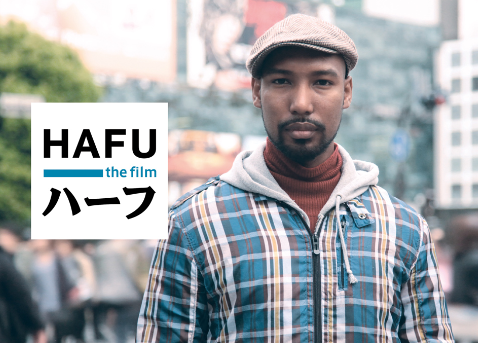
This past week The Japan Times reported on what sounds like a fascinating documentary currently being produced. Titled "Hafu" it explores just what it means to be half-Japanese in Japan, one of the most culturally homogeneous nations in the world. Directed by Lara Perez Takagi and Megumi Nishikura "Hafu" follows the lives of half-Ghanian/ half-Japanese entertainer and TV presenter David Yano (above) and Tetsuya Oi, his Mexican wife Gabriela and their two half-Japanese children, Alex and Sara. What happens to these people who are both Japanese, but also viewed by pure blood Japanese as "gaijin"?

Besides Perez Takagi and Nishikura half-Japanese/ half-Italian-American researcher Marcia Yumi Lise has been with the project from its inception in 2008. "There are a few TV programs on the older generation of half-Japanese people in Japan who were born as offspring of the Second World War — the American GIs and Japanese," Lise explains in the Japan Times article written by Nooshin Navidi, "but nothing on recent mixed race half-Japanese people. It's a really under-discussed area."

It's important to stress that "Hafu" is still in production and the fact that it's being independently produced means that it's been a struggle for the filmmakers to put the funds together to complete it. There have been fund-raising events occurring in Japan for the film, but you can help get the film finished wherever you live just by visiting the films official website and clicking on "Support Us".

You can read more about "Hafu" by reading the full Japan Times article here as well as checking out these interview clips from the project below.

Japan's Greta Garbo, Setsuko Hara turns 90

by Chris MaGee

A very important milestone nearly slipped under our radar last week, so we definitely wanted to make a point to mention it this week. On June 17th Masae Aida celebrated her 90th birthday. "Who's Masae Aida?" you might be asking. Well, you probably know her better as Setsuko Hara. Hara was the star of such Golden Age Japanese classics as Akira Kurosawa's "No Regrets for Our Youth", Kozaburo Yoshimura's "A Ball at the Anjo House" and of course a slew of Yasujiro Ozu's films including "Late Spring", "Early Summer" and "Tokyo Story". Her gentle presence and stunning beauty runs through the Japanese film history from the 1930's when she started out in propaganda films until the early 60's and her final film, Hiroshi Inagaki's "Chushingura: 47 Samurai". It was what happened after that film that has made Hara a legend though.

In 1963 she called a press conference during which she graciously, but suddenly retired not only from acting, but from public life as well. Her reason for retiring? Basically, she never really loved acting and had basically made movies as a way to help support her family. At that point, at the age of 43, she had simply had enough. From that point on she lived a quiet life in Kamakura, the location of many of Yasujiro Ozu's films. She reverted to her birth name, Masae Aida, and refused all requests from the media for interviews or photo ops. In Japan this sudden disappearance from public life preserved Hara as Japanese film's "Eternal Virgin", an unaging image of Japan's Golden Age films, while in the West she has been compared to Greta Garbo, who also became a recluse in her later years.

47 years after she dropped out of acting and the film industry Hara still lives in Kamakura, and even though many members of Japan's media know where she lives they respect her wishes and let her lead her life as she wishes - quietly, privately and with dignity. All of us can (and do) remember the cinematic Setsuko Hara to this day though. And as a way to celebrate that legacy we leave you with scenes from one of Hara's, and Yasujiro Ozu's, greatest films, 1949's "Late Spring".

REVIEW: After School


アフタースクール (Afuta Sukuru )

Released: 2008

Director:
Kenji Uchida

Starring:
Yo Oizumi
Takako Tokiwa
Masato Sakai

Kuranosuke Sasaki
Tomoko Tabata

Running time:


Reviewed by Eric Evans


There are a few ways you can make your film stand out if you have no budget for splashy effects, exotic travel, or surefire-hit movie stars. The Tarantino route is to write sharp dialogue and direct with a bag of tried-and-true tricks perfected in other films, combined in unexpected ways; The Raimi route is to use your budgetary restrictions to their best advantage through innovative camera work and actors who are up for anything; The Coen/Soderbergh route is to craft a clever story that engages the viewer in a way which few blockbusters can. The latter route has proven especially fruitful for Japanese filmmakers who have no shortage of talent, but meager budgets at best.

Like fest favorite Kenji Uchida's previous film "A Stranger of Mine", "After School" more or less follows the Coen brothers/Steven Soderbergh model in that it has its share of twists and turns and subverts the audience's expectations in a detective story of sorts. It's the kind of movie Soderbergh makes in between his more commercial fare: a smart, small-scale whodunwhat with a cast full of likeable, whip-smart actors. The plot is more or less synopsis proof, but for brevity's sake boils down to the desperate search for a missing accountant who may or may not be blackmailing his boss (and his boss's mob connections) over… something, perhaps his relationship with a club hostess who also happens to be a favorite of the local Yakuza boss. The plot provides multiple points of intersection between Japan's seedy pornshop and Yakuza underbelly, big business, the Shanghai mob and a local high school.

Uchida scores a hat trick with a main cast of Yo Oizumi, Kuranosuke Sasaki and Masato Sakai. Sasaki and Sakai usually play the smartest guy in whatever film they're in, so pitting them against one another as a seedy private eye and an MIA accountant playing hookie with a yakuza moll is inspired. Oizumi especially thrives in one of his meatiest roles. Despite having seen his supporting work here and there (he plays a small but vital role in this year's Taiga drama "Ryomaden"), I was unprepared for him to command the screen as he does side by side with Sasaki for the better part of the film. Movies like this can succeed or fail in the casting stage, and I imagine all the good will Uchida generated with "Stranger" got him this trio of talent. With three leading men playing three primary roles, it's impossible to guess who's right, who's wrong, and who's pulling the wool over who's eyes.

The film falls just shy of really clicking. Elements of it work very well, especially the longish portion with Sasaki and Oizumi using any means at their disposal to track down Sakai. It's certainly a compelling story, and only near the end did I realize how crafty the first reel was. Uchida takes advantage of common movie shorthand to establish situations and relationships which are then subverted by what we subsequently learn, a trick that stays just this side of too clever; Many of the final reel's twists and turns are face-palm moments, as you realize that your assumptions about the who and what were, in fact, just that—assumptions. So Uchida the director has only Uchida the screenwriter to blame when the end finally arrives and there's no sense of tidiness or closure. The finale is not as playfully random as that of "Cheerful Gang Turns the Earth", nor is it as snug and neat as "Fish Story"'s cherry-on-top denouement. The end we get is low-key and half open—not a bad thing, but definitely lacking the wit and zip that marks the best of the Coens' or Soderbergh's capers. I wonder if audiences will be willing to give Uchida another chance.

Weekly Trailers


Hate, Hallelujah! - Yoshiyuki Itakura (2006)


A young man named Hirota thinks he's left his past behind him. A decade before he lost his parents in the the Great Hanshin Earthquake of 1995 that devastated Kobe, but Hirota has blocked the memories of that horrible day from his mind. His determination to move on is shaken when his grandmother tells him that he had a sister named Saki. Could this be the young girl named Saki who he met wandering around downtown?


Gorath - Ishiro Honda (1962)

You thought that Michael Bay invented the giant asteroid film with "Armageddon"? Think again. In 1962 "Godzilla" director helmed a film about a rogue star that is on a collision course with Earth and it's up to a group of scientists to find a way to move our home planet out of the way of this interstellar wrecking ball. Michael Bay might have better special effects, but Honda's the man that launched the kaiju genre.

We're proud to present the song stylings of Zatoichi... we mean Shintaro Katsu

by Chris MaGee

Every once and awhile we like to highlight the singing talents of a Japanese actor and actress, well, who we never really could picture singing. There's plenty of them - Takeshi Kitano, Jo Odagiri, Tadanobu Asano, Rie Miyazawa, Yoshio Harada... the list goes on and one. In the Japanese entertainment industry it's often not enough that you're a talented actor or actress, you have to be able to sing and dance and be an all around entertainer. A recent wander through YouTube offered up a wealth of songs sung by none other than Zatoichi himself. Yes, that's right Shintaro Katsu. he not only gave life to Zatoichi, The Blind Swordsman, but he cut a few albums as well. Here's just a sampling of his musical talent. Make sure to check out the last video where (if you read Japanese) you can do a little karaoke singing along with Katsu. Enjoy!


Akiko Song


Yoru wa Bossanova


Iki na Wakare

REVIEW: The Castle of Cagliostro

ルパン三世 カリオストロの城
(Rupan Sansei: Kariosutoro no Shiro)

Released: 1979

Director:
Hayao Miyazaki

Starring (voice talent):
Yasuo Yamada
Kiyoshi Kobayashi
Makio Inoue

Eiko Masuyama
Goro Naya

Running time: 100 min.

Reviewed by Marc Saint-Cyr


When I first sought out “The Castle of Cagliostro,” I was hardly aware that the anime is but one part of a considerable multi-media franchise centered on the dashing thief Arsène Lupin III, who first appeared in a manga in 1967 by Kazuhiko Kato (AKA Monkey Punch) and is the grandson of the Sherlock Holmes-ian Arsène Lupin of Maurice Leblanc’s novels. Featured in multiple manga, television series, films, video games and even an on-stage musical, he is surely one of the most well-known characters in Japanese pop culture. “The Castle of Cagliostro ” is in fact the third Lupin III film, after the live-action “Strange Psychokinetic Strategy” (1974) and the anime “The Secret of Mamo” (1978).

“The Castle of Cagliostro ” begins in a burst of action with Lupin robbing a casino in Europe with his regular right-hand man Jigen and fleeing with the loot in his car while his pursuers are left behind in their sabotaged vehicles. They eventually find themselves in the Duchy of Cagliostro, which Lupin respectfully refers to as “the black hole of the counterfeiting world.” However, it isn’t long before he and Jigen are swept up in another adventure, this time by an exciting car chase in which a girl in a wedding dress and flowing veil is being pursued by a bunch of sinister, trenchcoat-clad thugs. She is safely rescued, only to be recaptured and taken away to the castle of Count Cagliostro , which supposedly holds the secret of the famous “Goat” counterfeit bills. Years earlier, Lupin tried to break into it, only to make a hasty retreat. The girl is revealed to be Lady Clarisse, the daughter of a Grand Duke, who is being forced to marry the villainous, mustachioed Count so that he can discover the location of a hidden treasure. Lupin and Jigen soon begin forming a rescue plan and are eventually joined by familiar characters of the Lupin III series: the solemn samurai Goemon; femme fatale Fujiko and Inspector Zenigata, an INTERPOL agent who constantly attempts to capture Lupin and his gang.

“The Castle of Cagliostro ” marks the feature film debut of Hayao Miyazaki, who had previously directed episodes of the Lupin III anime series “Rupan sansei” from the early 1970s. He was then not yet part of Studio Ghibli, in which he would later make such career landmarks as “Castle in the Sky” and “My Neighbor Totoro.” However, there are easily apparent signs of promise in “Cagliostro,” and the world of Lupin III provides a welcome playground for Miyazaki to flex his imaginative muscles in. The film contains plenty of fun and exciting set pieces, including the aforementioned car chase sequence, which is packed with grenades, gun fights and reckless driving; Lupin and Jigen’s elaborate plan to break into the castle; clashes between the Count’s guards and Zenigata’s Japanese policemen and the climax in a clock tower full of dangerous spinning gears. Yet in-between all the wacky mayhem, Miyazaki makes sure to include some quiet, lyrical moments, such as when several counterfeit bills are shown fluttering through the air before the opening credits and the touching scene in which Lupin visits and befriends Lady Clarisse as she is being held prisoner.

Though the animation style of “The Castle of Cagliostro” is a little rougher than what one would expect from a more recent Miyazaki film, it is still well done and visually appealing. Similarly, while the infiltration-and-rescue storyline doesn’t allow as much freedom or creativity as Miyazaki ’s more fantastical works, it is still a highly enjoyable and engaging excursion from reality. Being my first Lupin III adventure, the film served as a warm welcome to the character’s world, and I will be quite eager to discover what else it and its iconic, sharply-dressed thief have to offer.

Read more by Marc Saint-Cyr at his blog.

Tuesday, June 22, 2010

Kankuro Kudo and Kazue Fukiishi star in big screen "GeGeGe no Nyōbō"

by Chris MaGee
 
It was last spring when news came out that a biopioc about the lives of "Gegege no Kitaro" creator Shigeru Mizuki and his wife of 48-years Nunoe Mura was going to be coming to the screen. What many of us thought was going to be one project ended up being two - the first a TV drama series that aired last year on NHK and that starred Osamu Mukai as legendary manga artist Mizuki and Nao Matsushita as his wife. That TV drama ended up doing very poorly in the ratings, but that hasn't deterred producers (one of which is longtime Pow-Wow friend Atsuko Ohno) from bringing the feature film adaptation of Nunoe Mura's autobiography "GeGeGe no Nyōbō (Spooky Wife)" to the big screen.

Nippon Cinema is reporting that director Takuji Suzuki's take on "GeGeGe no Nyōbō" is getting ready for its international premiere at the 32nd annual Pia Film Festival next month. This time around Mura will be portrayed by 27-year-old actress Kazue Fukiishi (above right) and that Shigeru Mizuki will be portrayed by... can you guess by looking at that man on the left? You might not recognize him without his usual floppy beah hat, but that is "Ping Pong" and "Zebraman" screenwriter Kankuro Kudo.

After it's premiere at PFF next month Japanese audiences can expect to see Suzuki's "GeGeGe no Nyōbō" in theatres in November. Check back this Friday for more news on this year's Pia Film Festival, but for now here's an interview with the actual Shigeru Mizuki and Nunoe Mura from Japanese TV.

Life of gag manga legend Fujio Akatsuka coming to the big screen with new biopic

by Chris MaGee

There's not just news about the life of "GeGeGe no Kitaro" creator Shigeru Mizuki coming to the screen today. Nippon Cinema also has word that the life of another iconic manga artist will also be turned into a feature film this year.

In 2008 the world of manga lost one of its most famed artists. Fujio Akatsuka was the creator of some of the best loved gag manga in Japanese comics history. These included "Tensai Bakabon", the story of a dysfunctional but lovable family, "Osomatsu-kun", about a goof set of sextuplets, and the shōjo manga "Himitsu no Akko-chan". When Akatsuka passed away two years ago at the age of 72 it seemed like the end of an era. Now his life will be brought to the screen in a feature film written by "Bayside Shakedown" screenerwriter Ryoichi Kimizuka and directed by Hideaki Sato. It's title "Korede Iinoda! Eiga: Akatsuka Fujio" comes from the phrase often repeated by the father in "Tensai Bakabon", which translates to "It'll be alright!" There's no word yet on who will be portraying Akatsuka, but if you follow the link above to Nippon Cinema you can get details on casting calls for extras for the film.

Expect to see "Korede Iinoda! Eiga: Akatsuka Fujio" in Japanese theatres next spring. For now check out this short film from NHK TV of the original gag manga "Tensai Bakabon".

Controversial Oscar-winning documentary "The Cove" to finally get a Japanese theatrical release

by Chris MaGee

There's probably been a few of you out there wondering why we haven't been reporting on the storm of controversy surrounding the attempted Japanese theatrical release of Louie Psihoyos'(above) Oscar-winning documentary "the Cove". No we have not been ignoring the story, in fact I've been keeping an eye on the story for a couple weeks now. It just seemed that every time I found myself about to write a post on it though the situation changed or there were further developments. First a handful of theatres in Osaka were going to screen it, then they weren't. Dolphin rights activist was never going to get a travel visa to enter Japan and then he's taking actress Daryl Hannah to Taiji to protest the annual dolphin slaughter. Then "The Cove" was going to be screened... and then it wasn't. The story seemed less like a news item and more like an ever evolving weather report. Well, I'm finally going to report on the potential release of "The Cove" although it may not be the most up to date information by the time it gets posted on the blog. Here goes...

Unplugged Inc., the Japanese theatrical distributor for the controversial documentary, had originally planned to release "The Cove" at Tokyo's Theater N Shibuya on June 26th in advance of a wider theatrical release across Japan. As Japanese film blogger Jason Gray had reported, though, an influx of phone calls and emails demanding that the film not be screened ended up having the desired effect. On June 3rd the screening at Theater N Shibuya was canceled and the whole Japanese theatrical release was put into extreme doubt.

The argument by those opposing the release of "The Cove" in japan was that it portrays a one-sided view of the dolphin hunt/ slaughter in Taiji, Wakayama Prefecture, and that it is just an extension on the anti-whaling movement. Not all Japanese agree with this point of view, in fact a petition was started and signed by dozens of prominent Japanese journalists, scholars and filmmakers such as Hirokazu Kore-eda, Yoichi Sai, Tatsuya Mori and Kazuhiro Soda. (Read the whole list in Japanese here).

Now after much back and forth it looks (at least at this moment) that "The Cove will be getting a theatrical release in Japan starting on July 3rd. According to Japan Today "The Cove" will finally be screened at theatres in Osaka, Sendai, Yokohama, Kyoto and Hachinohe. This change of plan was mostly due to the influence of the petitioners who see the banning of the film in Japan to be an issue of free speech."We will create a situation in which people can express their approval or disapproval of this film after they first watch it,’’ said Unplugged Inc. representative Takeshi Kato at a recent news conference.

So, while I agree with a lot of what is put forward in "The Cove", we at the Pow-Wow are interested to hear your opinion. Have your say in the comments - Do you think "The Cove" should screen in Japanese theatres?

Actor Shido Nakamura subs for Robert Downey Jr. in japanese ad for "Iron Man 2"

by Chris MaGee

If you had to find a Japanese celebrity look-a-like of Robert Downey Jr. who would you pick? I'll tell you who the folks at Paramount picked. In a new Japanese TV commercial for "Iron Man 2" Paramount has enlisted kabuki actor and star of "Red Cliff" and "Neighbor No. 13", Shido Nakamura to act as their Japanese Iron Man. The commercial is short to begin with, only 14-seconds, and it mostly consists of fans wearing Iron Man masks and clips of the movie, but there's Nakamura at the end with an energetic "Oi yoroshiku!!!"

Take a look at the ad by visiting Japan Probe here.

Japanese Weekend Box Office, June 20th to June 21st


1. Confessions* (Toho)
2. Masked Rider Den-o Trilogy The Movie Episode Yellow* (Toei)
3. Iron Man 2 (Paramount)
4. Sex and the City 2 (Warner)
5. The Book of Eli (Kadokawa/Shochiku)
6. Outrage* (Warner/ Office Kitano)
7. Alice in Wonderland (Disney)
8. Flowers* (Toho)
9. Piecing Me Back Together* (SDP)
10. Alone Scalpel* (Toei)

*Japanese film

Courtesy of Box Office Japan.

Friday, June 18, 2010

The 2nd annual Shinsedai Cinema Festival announces full line-up!

by Chris MaGee

Well, the anticipation has been building for the past few weeks (and so has the mountain of work), but now I am very proud to announce the full line-up and screening schedule for the 2nd annual Shinsedai Cinema Festival taking place at the Japanese Canadian Cultural Centre in Toronto. As many of you already know this is a fest that was started by author and Midnight Eye co-founder Jasper Sharp, and it's our mandate to highlight new, young, and independent filmmaker coming from Japan. Joining the already announced screenings of Kenji Mizoguchi's silent classic (and independently produced) "The Water Magician" (with live musical accompaniment by Toronto's Vowls), the Canadian Premiere of Gen Takahashi's police epic "Confessions of a Dog" and the Toronto Premiere of the ward-winning concert documentary "Live Tape" are:

KAKERA: A PIECE OF OUR LIFE (Toronto Premiere/ Opening Night Film): Haru (Hikari Mitsushima) is a university student with a less than ideal boyfriend whose life is turned upside down after meeting a young woman named Riko (Eriko Nakamura). the two women fall for each otehr and embark on a rocky and romantic relationship. First time director Momoko Ando goes well beyond tired old lesbian chic with this magical and absurdly comic film. We are pleased to announce that director Momoko Ando will be in attendance at this screening!

YURIKO'S AROMA (Canadian Premiere/ Closing Night Film): Massage therapist Yuriko (Noriko Eguchi) is a master of scent. She whips up aromatherapy lotions to slather into her clients at her friends massage spa, but Yuriko isn't prepared when she catches a whiff of the the salon owner's sweaty 17-year-old soccer-playing nephew Takeshi (Shota Someya) and is immediately overcome with desire... or love... or possibly both in this sexy black comedy by Koya Yoshida.

A NORMAL LIFE, PLEASE! (North American Premiere): 37-year-old cement truck driver Nobukazu Kaikura kept up a hellish work schedule during the spring of 2006 - 552 hours in a single month. When Kaikura seeks the protection of a labour union he incurs the wrath of his bosses and the thugs they hire to intimidate Kaikura and his family day and night. Tokachi Tsuchiya's A Normal Life, Please! has won Best Documentary at the 2009 Dubai International Film Festival, and Best Documentary at the 17th annual Raindance Film Festival in London.

OUR BRIEF ETERNITY (Canadian Premiere): A mysterious virus is infecting the population in Takuya Fukushima's Our Brief Eternity. Those afflicted suddenly fall into a coma and when they recover they have lost their memories of the person closest and dearest to them. During this epidemic irresponsible playboy Teru (Kouta Kusano) runs into his old girlfriend Mio (Romi), but she doesn't remember him. Mio has fallen victim to the virus. The two must start their relationship from scratch, but Teru's case of cold feet causes him to make a drastic decision - to risk infection and his memory.

LOCKED OUT (Canadian Premiere): Six-year-old Ketia (Takeru Shimada) gets lost in a mall parking lot and accidentally gets into the car of a young man named Hiroshi (Kiichi Sonobe). Hiroshi has a bloody pick axe in the trunk of his car and is haunted by a violent, demonic doppelgänger, but is he what he appears to be - a psychotic killer, or is there a different story to be told? Yasunobu Takahashi's Locked Out is equal parts edge-of-your-seat psychological thriller and life affirming road movie.

OFF HIGHWAY 20 (Canadian Premiere): Route 20 is a highway that runs west out of Tokyo as far Shiojiri in Nagano. About 130 kilometres from the highway's starting point is Kofu City. This is the birth place of director Katsuya Tomita and his film Off Highway 20 shows us a side of Japan that many people never see one populated by yakuza, small time street thugs who huff solvents, gambling addicts and speed freaks. Gritty and blackly comic like Jim Jarmusch crossed with Trainspotting, Off Highway 20 takes us on a walk on the wild side of contemporary Japan.

KIHACHIRO KAWAMOTO: JAPAN'S MASTER PUPPETEER: Born in 1925 in Tokyo Kihachiro Kawamoto orginally wanted to pursue a career in architecture while taking up doll-making as a hobby, but in 1950 he embarked on what is now a legendary career in animation. Kawamoto has spent the last five plus decades creating exquisite stop-motion puppet animation that has won him praise worldwide. In a special programme curated by Jasper Sharp audiences will get to see a sampling of some of Kawamoto's best known short films including 1970's The Demon, 1973's The Trip, 1976's Dojoji Temple, 1979's House of Flame, 1988's To Shoot Without Shooting and 1990's Briar-Rose, or the Sleeping Beauty.

OH! OTSUKA DRUGSTORE: (Canadian Premiere): An off kilter comedy about a curmudgeonly woman who runs a drugstore and one of her regular customers - young high school girl she takes under her wing. It turns out this girl has a crush on a certain boy but is too shy to make the leap and speak to him. Can the drugstore owner help her young friend find true love? And if so will her crazy methods actually work? Romantic comedy meets bizarre friendship tale, and all set to music by Japanese pop sensation AKB48.

DOME ANIMATION SPECIAL: (Presented in partnership with Nippon Connection) Tokyo's Image Forum is the most respected producer of experimental film, video and animation in Japan, as well as one of the most important sources for experimental visual culture in the world. DOME Animation collects 15 short animated films by 15 of Image Forum's most promising young animators.

NN-891102 (Toronto Premiere): A survivor of the bombing of Nagasaki has in his possession an astounding document of that tragic day –the sound of the "Fat Man" atomic bomb detonating on August 9th, 1945 at 11:02AM. At first he is appalled by this recording, but as time goes by he becomes obsessed with recreating this terrifying sound… a process that will jeopardize his sanity and his life. The debut feature film by Late Bloomer and Doman Seman director Osaka’s Go Shibata presents a gripping portrait of grief, memory, madness, and dangerous personal obsession.

If those films aren't enough to get you excited the Shinsedai Cinema Festival is also proud to announce a great selection of shorts that will be screening with our feature selections: sugarmountain's zany "Gunman Champion", Satoshi Nagano's black comedy "Finishing Touch", Shoh Kataoka's sweet look at childhood "Jellyfish Boy", Reiko Tahara's experimental short documentary "Remnants", Kotaru Wajima's mini-family drama, "Invitation" and Hiroshi Iwanaga's meditative coming-of-age story "That's All".

Tickets and passes for Shinsedai 2010 go on sale this coming Wednesday, June 23rd, so to get additional details on the fest an how you can see all of these great films just head over to the official site

REVIEW: Yellow Kid


イエローキッド (Ireoo Kiddo)

Released: 2010

Ditrector:
Tetsuya Mariko

Starring:
Kaname Endo

Ryo Iwase
Marie Machida
Kazuki Namioka
Hideki Tamai

Running time: 111 min.


Reviewed by Chris MaGee


"You just haven't earned it yet, baby. You must suffer and cry for a long, long time..." It was that chorus from late 80s Smiths song that kept going through my head as I watched Tetsuya Mariko's 2010ilm "Yellow Kid". That's in no way a slight against the 29-year-old director who shows real promise as a filmmaker. That chorus does, at least for me, capture the mood and predicaments of "Yellow Kids" two main characters perfectly, two men who have hammered away at their dreams while using legendary characters and archetypes as fuel for their fire. It ends up being these two men's own human shortcomings that may stop them from ever equaling up to these lofty examples.

Tamura (Kaname Endo) has wanted to be a professional fighter since he read a manga titled "The Yellow Kid". This manga updates the classic Richard F. Outcalt drawn character Yellow Kid from the late 19th-century comic "Hogan's Alley" and takes the scruffy street urchin into adulthood and a career as a boxer. The image at the end of this manga in which the Yellow Kid stands alone in the center of the ring was what first sent Tamura to the gym. Once there he encounters lightweight champ Mikuni (Kazuki Namioka) and suddenly he has not one but two heroes. The only problem is that Mikuni and the other boxers at the gym are more like petty thugs than heroes. While Tamura must deal with their antagonism the Yellow Kid remains silent. It's hard for a manga character to offer advice or guidance to a troubled young man.

Meanwhile manga artist Hattori (Ryo Iwase), the man who drew the updated Yellow Kid that Tamura admires so much, is stepping back into the ring to bring a new Yellow Kid adventure to the page. It's obvious that Hattori is just scraping by as a manga artist and his dreams of success are riding on this new comic. At first he wants to base this new Yellow Kid on his boyhood friend Mikuni, but Mikuni's involvement with Hattori's former girlfriend Mana (Mari Machida) complicates this. Ultimately Hattori meets Tamura and makes him his artistic muse, his idealized superhero boxer who takes on the forces of evil in his new manga. But Tamura, an orphan who lives with his senile grandmother and can't hold down a job because of his fiery temper, isn't what you would call a hero. Despite this Hattori begins drawing his manga and Mariko uses ingenious editing and a rich colour palate to combine the comic book world of clearly defined right and wrong with Tamura's bleak and destructive reality.

Yes, "Yellow Kid" is definitely an underdog story. This is true not only for Tamura but for Hattori as well; but Tetsuya Mariko, who previously directed segments in the omnibus films "Reckless" and "Lush Life", plays with our expectations of the underdog boxer genre right from the start. Instead of the scrappy street fighter who becomes a star formula that powered the "Rocky" franchise Mariko gives us something more complex. If I must find thematic equivalents to other boxing films I would put "Yellow Kid" in the same camp as Martin Scorsese's "Raging Bull" or Shinya Tsukamoto's "Tokyo Fist". While Mariko's vision isn't as explosive or dark as those two classics "Yellow Kid" shares their themes of what happens to a life that has violence at its center. What happens when it's your fists and not your brains that do the decision-making? Mariko, who also wrote the screenplay for "Yellow Kid", adds an interesting philosophical query to these questions though. What happens when people like Tamura and Hattori create idealized heroes where none exist. Their unrealistic expectations of comic book heroes, retired prize fighters and each other end up creating doomed dreams, hurt feelings, desperation and ultimately ruin for both of them.

"Yellow Kid" combines dark insights into human nature with first rate film craftsmanship. While the characters lives may have had the refrain from The Smiths' song "You just haven't earned it yet, baby," repeating in my head it's obvious that Tetsuya Mariko has earned his title of filmmaker with this debut feature film.

Legendary cinematographer Christopher Doyle to lens a pink film musical for Shinji Imaoka

by Chris MaGee
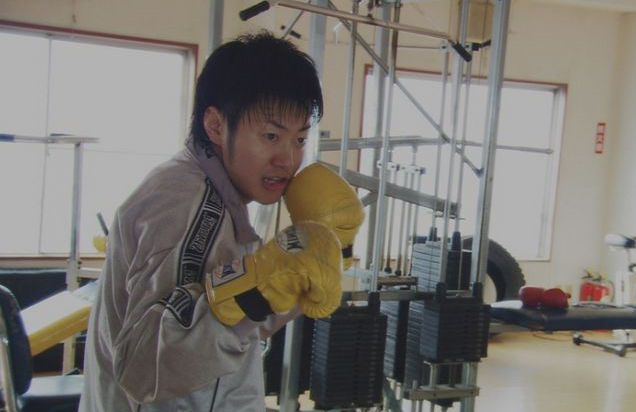
There are very few cinematographers who can sell a film simply by their involvement. The one man working right now who can do that again and again is Christopher Doyle. The 59-year-old expat Australian has established a reputation as a cinematic genius with his camera work on the films of Wong Kar Wai. His use of brilliant saturated colours and eccentric use of focus and lighting has been used as a marketing tool for films such as Gus Van Sant's "Paranoid Park", Pen-Ek Ratanaruang's "Last Life in the Universe" and M. Night Shyamalan's "Lady in the Water". Now Doyle is apparently teaming up with a Japanese film legend to bring a very odd project to the screen,

Japanese film blogger and industry insider Jason Gray is reporting that Doyle has signed on to shoot an upcoming pinku eiga musical in Tokyo with pink film director Shinji Imaoka. Tentatively titled "Underwater Love" the film marks the first time German DVD distributor Rapid Eye will be producing a film. Imaoka is of course known for being on of the "Seven Lucky Gods of Pink" and has given us such classic pink films as "Lunch Box" and "Frog Song".

Besides Doyle's high profile involvement in this project Gray is reminding us that some folks well know in the Japanese films circuit, namely Nippon Connection programmer Alex Zahlten and Midnight Eye co-founder Tom Mes, have had a crack at translating and polishing the script. This will definitely be a project we'll be keeping our eye on.

REVIEW: Japanese Girls at the Harbor


港の日本娘 (Minato no Nihon musume)

Released: 1933

Director:
Hiroshi Shimizu

Starring:
Yumeko Aizome
Uero Egawa

Yukiko Inoue
Tatsuo Saito
Ranko Sawa

Running time: 72 min.

Reviewed by Bob Turnbull


"Love must be generous or it's nothing at all"

A story revolving around two young girls vying for the attention of one young man is as old as the hills. Hiroshi Shimizu's 1933 silent film "Japanese Girls At The Harbor" may begin with this shopworn initial premise, but uses it to build a lovely story of the relationship between trust and love. The change in moral values within Japanese society and the lure of Western culture is certainly present within the film given the time frame (after all the main male character's name is the very Western "Henry"), but its focus is on how the girls approach their relationships and their expectations about what love is. Shimizu's gentle touch to the pace of the story along with some outstanding (and very innovative for the time) camerawork and editing make this a wonderful treasure.

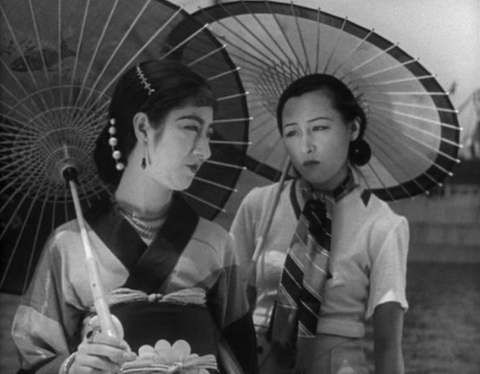
Sunako and Dora are two school age friends who promise that they will always be together. Until, of course, a boy enters the picture. Not a boy really, but a young man named Henry who rides in on a motorcycle and shows hoodlum tendencies. Sunako runs to him when we first meet him (leaving a dejected Dora behind), but Henry leaves Sunako by his bike to walk over to Dora. Just as the two of them begin their chat, Sunako counters by yelling back to Henry asking for a ride home. He gladly agrees and they leave Dora on her own. The girls settle their differences the next day, but the tone of their approaches has been set - Sunako is aggressive and jealous, while Dora is patient and believes that love will win out in the end. Soon after, when Sunako discovers that Henry has also been seeing an older woman named Yoko, Dora counsels her that she should accept Henry's faults and let things play out. Dora also confronts Henry and tells him he shouldn't be hanging around with his buddies when Sunako is waiting for him. This is how she shows her own love - by being generous to Henry and hoping that he will find his way to her by allowing him to work things out. Sunako, on the other hand, finds Henry with Yoko in a church and as her rival jokes about getting married takes her own drastic steps to prevent that. After Sunako reacts in this jealous manner, she runs away from Yokohama and begins a life of drifting as a geisha. Eventually she returns, but is now cynical and beaten down. She's allowed an artist to follow her back and lives with him, but shows no real concern or affection for him while struggling to come to terms with what she left behind.

Though the DVD (part of the "Travels with Hiroshi Shimizu" 4 disc set from Eclipse) comes with an optional musical score, I found the film worked best in complete silence. That's not a criticism of the music itself - a fine new score written by noted silent film composer Donald Sosin - just a statement that the film doesn't need the additional backing of music to shape its tone or emotions. It's all expressed via the visuals. Shimizu's camera stays with the characters via several long strolling tracking shots to allow us time with them, links them between scenes and frames them in different relationships to each other. In the aesthetics of the film, there's a strong resemblance in look and feel to the "poetic realism" approach to filmmaking from France (which began a bit more in earnest a year or so after this film). Whether it was the lovely use of shadows during key moments (presaging film noir), dreamlike transitions or simply the softer, quieter acting style, I found numerous linkages between the two styles even though there are also some quite definite departures in other aspects. Also of particular note is the effective use of editing in several scenes. When Sunako is about to take her measures against Yoko, the camera cuts to closer and closer zooms on her face that heighten the feeling that something is about to occur - it's unexpected and terribly effective. Shimizu uses this tactic again later in the film as a way of conveying a character's dawning realization. Also effective are the slow fades of characters to denote a passage of time. Like ghosts receding from a room to appear again somewhere else far off, the characters sometimes exit a scene by simply slowly disappearing.

The subtlety of the acting is also a strength of the film - particularly from Michiko Oikawa as Sunako. She has the widest set of emotions in her character arc and goes from early scenes of happiness and jealousy to later ones of resigned sadness and attempts at covering her real emotions. Her fake "professional" smiles directed at Henry while she works as a geisha are perfect - she's trying to push him away by asking him to be a customer, but at the same time still loves him. The entire film feels so modern in many ways via its acting, the camerawork and the crispness of so many of the scenes thàt it's hard to believe at times this is from 1933. Regardless of when it was made and the context of its innovations, it's a simple, beautifully told and emotionally resonating story.

Read more from Bob Turnbull at his blog.

Hirokazu Koreeda produces new environemntal documentary "Beautiful Islands"

by Chris MaGee

It was way back in October of 2008 that we reported on how Hirokazu Koreeda had made a concert documentary with Japanese singer Cocco. The film, titled "Daijobu de aru yo ni - Cocco: Owaranai Tabi" took its inspiration from a song penned by Cocco about about a pair of dugong that appeared in the waters near a planned U.S. naval base. Cocco's environmental concerns were at the center of the film, and now almost two years later we have word of Koreeda getting involved in a new environmental documentary.

The 49-year-old director of such films as "After Life" and "Air Doll" is acting as the executive producer of Tomoko Kana's new documentary "Beautiful Islands". The documentary chronicles the lives of people on three very different islands - the South Pacific island of Tuvalu, Venice, Italy and the Alasakan island Shishmaref north of the Bering Strait. The one thing that unites these three radically different locales is that they are all sinking into the sea. With the slow and seemingly unstoppable melting of the polar ice cap is raising ocean levels and threatening to turn these three islands into aquatic mountain tops.

38-year-old Kana, the woman behind "Beautiful Islands" got her start in the film world by starring in an early TV documentary of Koreeda's and it's obvious that a connection has remained between the two filmmakers all thee years later. Kana went on from that early appearance in front of the camera to directing a series of documentaries from behind the camera - the 2001 film about Indonesian comfort women during WW2 "Mardiyem" and "From the Land of Bitter Tears", the 2004 look at Chinese people dealing with the chemical weapons left in their country from the Japanese occupation during the war.

The trailer for "Beautiful Islands" is online, but has the dreaded "Embedding disabled by request" tag on YouTube, so click here to take a look at it. It has some truly stunning cinematography. Also while you're at it visit Tomoko Kana's personal website for more details on her work. "Beautiful Islands" is being released next month in Japan by Eleven Arts.

BOOK REVIEW: No Borders, No Limits: Nikkatsu Action Cinema


No Borders, No Limits: Nikkatsu Action Cinema

Author: Mark Schilling

Publisher: FAB Press

160 pages

ISBN: 1903254434

Published: 2007


Reviewed by Eric Evans


Hands up if you own Criterion's excellent "Nikkatsu Noir" box set. Well done! Now you owe it to yourself to pick up Mark Schilling's "No Borders, No Limits: Nikkatsu Action Cinema" as the supplement Criterion would have included had the release been through the main label and not the Eclipse imprint. Fab Press—prized publisher of such absolute necessities as Jasper Sharp's "Behind the Pink Curtain" and Robin Bougie's "Cinema Sewer" collections—has even sized the book just so; it will fit handsomely alongside the set on your DVD shelf.

For the few years in the late '50s through early '60s, Nikkatsu studios enabled its stable of directors and stars to do something weird and great and memorable: They made films which were distinctly of their time yet timeless, movies that brazenly projected their Japanese origins yet transcended such real-world limitations as genre and border. "No Borders, No Limits" functions as a highly readable yet appropriately scholarly gazetteer to these films, a combination of cultural overview, film history, and filmmaker guide.

It's true: As a big fan of Nikkatsu's, from the Stray Cat Rock series to "Red Quay" to anything with Joe Shishido, I am predisposed to enjoy a book that examines those films and filmmakers. But anyone with an interest in Japanese film should be curious about this particular period in J-film history. Japan was just coming into it's own after the post-war rebuilding years, TV was about to supplant cinema as the primary entertainment vehicle, and films were still shot in black and white based on budget. Nikkatsu's output during this period was fairly astonishing, and Schilling breaks it down film by film, key actor by key director. The book is invaluable as a tool to better understand how these films came to be made.

"No Borders, No Limits" also features some side-splittingly funny and insightful stuff. There's a candid gem of an interview with Shishido in which the actor is as charmingly blunt as any of his characters, sharing anecdotes about, among other things, a blind-drunk Toshiro Mifune shooting dogs by moonlight. I learned that leading man Hideaki Nitani was given the unfortunate nickname of 'Dump Guy', "for his supposed dump-truck-like power." There's more, including enough production stills and other photos to warrant the purchase on purely visual grounds. The book is a compelling read, and had me grabbing DVDs off the shelf and scrambling to find copies of films I didn't have. Schilling's enthusiasm for the material is infectious, yet never crosses over into fanboy adoration. He brings the levelheaded critical tone of his reviews to the book, and the result is an essential addition to your J-film library.

Mark Schilling is known to J-film aficionados as first among equals of the film reviewers at the best of the English-language Japanese news outlets, The Japan Times [ http://www.japantimes.co.jp/entertainment/film.html ]. His reviews can also be found on his homepage [ http://japanesemovies.homestead.com/ ], and his books can be purchased from most any reputable online or brick-and-mortar bookshop.

Weekly Trailers


Lost in Tokyo - Kotaro Ikawa (2006)


Two friends, Takkun (actor/ director Takuya Fukushima) and Taka-chan (Takahiro Iwasaki) come together after the funeral of a friend. They, along with Kanna (Tomomi) reminisce about their days together in an indie band with their late friend and wander through Tokyo questioning where their lives will go now that he is gone.


Cops Vs. Thugs - Kinji Fukasaku (1975)


After he had redefined the yakuza film genre with his groundbreaking "Battles Without Honor and Humanity" director Kinji Fukasaku brought us this story of what happens when the lines between gangsters and law enforcement blurs. When the last two yakuza gangs on the street battle over turf police detective Kuno (Bunta Sugawara) doesn't know where his allegiences lay - with his bosses in the police department or his friends in the underworld.

REVIEW: Lady Ninja Kaede


Lady Ninja Kaede

Released: 2007

Director:
Hiroyuki Kawasaki

Starring:
Mai Nadasaka
Yume Imano

Miyoko Sakura
Masato Takaoka
Masamitsu Tonai

Running time: 76 min.


Reviewed by Matthew Hardstaff


Wow. If I was to give a one word review of "Lady Ninja Kaede", it would be a dry and sarcastic ‘Wow’. Going into this film, I was fairly excited. Why? Well for one, I have a soft spot for ninjas. It also looked like goofy fun. And because it features AV stars, there was a chance you’d see some boobs (and you do). However, this was not the fun boob ninja movie I had hoped for. I’m not sure what director Hiroyuki Kawasaki had done before this, but it must have involved learning the ancient art of cinematic dim mak, giving him the ability to drain all life from potentially great ideas.

Kaede seeks revenge when her older sister is raped and then shamed into her hanging herself. With the help of her widowed brother in-law, she discovers that two men are responsible: a wandering ronin and his sex crazed side kick. However things aren’t as simple as they appear, and with the help of a lady ninja nun and her carpet haired male counterpart, a web of deceit and a twisted sexual underbelly is revealed!!

Before we begin: I can deal with low budget films shot on video. What I can’t deal with is poorly shot low budget films shot on video, because man, those flaws really stand out. Someone really had trouble balancing the contrast between light and dark in some frames, and it looks pretty blown out, to the point where it pierces your skull. This is painfully obvious low budget film making. Most of the time, they are able to use it to their advantage. Other times, not so much. And it hurts. Physically.

This film is a film built on promises. There are an awful lot of running gags in the film that are made to keep our wandering attention, and hint at the promise of ninjas. What should have been the best thing about the film but ends up being completely underwhelming is what I will call the ‘Kaede ninja intermissions’: quick, 30 second flashes of pink glammer, as Kaede names some zany ninja move, and then performs it for us. This could be amazing, if it wasn’t for the fact that the AV star playing Kaede is a vapid emotional shell. She exudes zero charisma. Not only does she exude zero charisma, you get the feeling like she isn’t even trying, that she really doesn’t care. These moves are far more entertaining when the older, and obviously more experienced actress playing the ninja nun performs some magical ninja sex powers on people. Yes, the FX are really, really bad, but at least she makes it look fun. There’s also far too little ninja action. The sexual ninja powers are pretty funny, but it’s not enough. There were times I got the feeling I was watching a bad live action version of "Ninja Scroll". Most of the sexual escapes are obviously rapes and magical ninja doings. However this film lacks the ninjas, insane action and demons to be a bad live action Ninja Scroll. On a side note, there is some action, but it’s for the most part poorly done.

You’ve also got a completely unrelated side story with a raconteur who seems to be creating the world’s first newspapers, all hand written. However when no one seems to pay him, he resorts to what can only be described as the unprecedented quintuple take. It’s funny and amusing, but the lead up to it really isn’t.

And that unfortunately is how this film plays out: a series of mildly amusing climaxes (no pun intended) that have drab and lifeless build-ups. Some is mildly amusing, but most is the opposite. Which is really sad, because that’s just plain lazy film making, and Hiroyuki Kawasaki owes it to ninja fans everywhere to not ruin such solid material. It’s not bad because its low budget, it’s bad because it seems like most of the people involved really didn’t care. They knew people like me would be drawn to a film with ninja’s, some zany gags, and the promise of boobs, and then feed them an uninspired ruse. Which I fell for. I learned my lesson.

Read more by Matthew Hardstaff at his blog.

Tuesday, June 15, 2010

"Merry Christmas, Mr. Lawrence" added to the Criterion Collection

by Chris MaGee

It was at the beginning of this month that a a maddening tease was dropped on the Criterion Collection's Twitter feed. In response to the question "When can we see Mr. Christmas Mr. Lawrence on Criterion?", the answer from Criterion was "This year..." Only a couple weeks later and Criterion has come through for us all. On the heels of the Eclipse "Oshima's Outlaw Sixties" set that was released in May the Collection has just announced that Nagisa Oshima's 1983 WW2 drama starring David Bowie, Tom Conti, Ryuichi Sakamoto and Takeshi Kitano is finally making its way to DVD. Fans of Oshima can pick up "Merry Christmas. Mr. Lawrence" on September 28th.

While this release is very good news some folks are a bit peeved that Nobuhiko Obayashi's "House", that was supposed to be released on September 7th was not announced for the Criterion Collection's September releases. I guess we'll have to have a bit more patience before we get everything on our 2010 Criterion wish list. For now let's console ourselves with the trailer for Nagisa Oshima's "Merry Christmas, Mr. Lawrence".