Thursday, March 31, 2011

"Confessions of a Dog" director shoots documentary about political "Anti-Hero"

by Chris MaGee

Now that Third Window Films has begun distributing the police epic "Confessions of a Dog" on UK Region 2 DVD the work of its director, Gen Takahashi, may finally get the attention it so richly deserves. It will also hopefully help raise the profile of new work by the 46-year-old director. Case in point, a new documentary that Takahashi has just completed, a film, like "Confessions of a Dog", that highlights the efforts of an outsider against the Japanese system.

"Anti-Hero" chronicles the life and work of Shinichi Takehara, the former mayor of the coastal town of Akune, Kagoshima Prefecture. Takehara, a former member of Japan's Self Defense Forces, ran afoul of the prefectural government when he appointed Toshiro Semba as Akune's deputy mayor without gaining the approval of the city assembly. Takehara also ended up hiring three members of the city's Education Committee without approval and at one point locked himself in the city's council chambers, and locking out his detractors. Before you say, "This isn't a very sympathetic subject for a documentary," consider that Takehara has also made it a mission to expose the back room dealings that would see local politicians giving themselves huge salary increases and perks. Definitely an anti-hero.

"Anti-Hero" isn't set for release in Japan until next year, but you can check out the trailer that has been cut together by Takahashi and his production company Grand Café Pictures below.

Japanese film and culture coming to Toronto courtesy Sprockets and Hot Docs

by Chris MaGee

Toronto is one of the film capitals of the world, what with over 40 film festivals taking place annually. That's over 40 opportunities for films made in Japan and films about Japan to get screened here and in the next month that's just what will happen. Two festivals will be bringing two great features to Toronto audiences to enjoy.

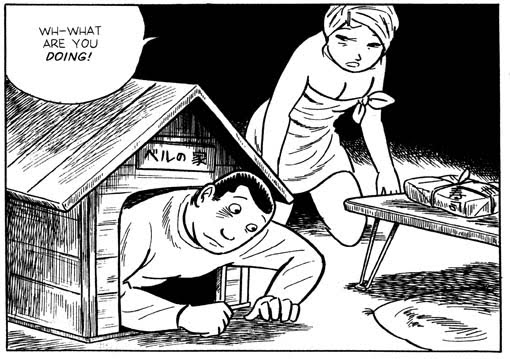
First up, something for the kids. The 2011 Sprockets Toronto International Film Festival for Children and Youth, running from April 5th to 17th, will be screening Tetsuo Hirakawa's 2009 animated feature "Light of the River" (above), a film that follows in the tradition of Isao Takahata's "Pom Poko". When a family of rats have their home in the country destroyed by developers they flee to the city where they must learn to navigate their new urban home. You can check out screening times and ticket details at the official Sprockets website here.

Meanwhile the programmers of this year's Hot Docs Festival, running from April 28th to May 8th, will be screening Jessica Oreck's documentary "Beetle Queen Conquers Tokyo", an indepth look at Japan's national obsession with bugs. Through its exploration of all things entomological the film acts as a primer on Japanese philosophies of nature, and how the Japanese use entomology as a way to escape from their daily lives. You can check out the trailer for "Beetle Queen Conquers Tokyo" below, and get screening times and ticket details for this year's Hot Docs Festival here.

Japan's obsession with food and small town nostalgia combine in "Ramen Samurai"

by Chris MaGee

It isn't just Japanese film that loves milking a tried-and-true formula, far from it, but we fans of Japanese film can see when the same old scenarios are getting trotted out, or in some cases being recombined to give the illusion of something new. The latest case of this is a new film directed by Naoki Segi that just finished shooting in Kurume, Fukuoka Prefecture.

Titled "Ramen Samurai" the story follows actor Dai Watanabe as as a big city ad man who return to Fukuoka after his father's death. It turns out his father ran his own ramen restaurant and now it is up to his son to learn the ways of his father's kitchen and take over the family business. In a bit of trick casting Watanbe also portrays his late father in a series of flashbacks, while actress Sayaka Yamaguchi plays the dual role of the wife of Watanabe's ad man and Watanabe's mother.

So with "Ramen Samurai" we not only have the formula of the Japanese obsession with cuisine that we've seen all the way back to Juzo Itami's "Tampopo", but we have the formula of the prodigal son from the big city returning to simple small town life after the death of a parent, and/ or after being recently laid off that we've seen before in Yojiro Takita's "Departures" and Yoshinari Nishikori's "Railways". Of course a formula can make a good film if done well, but there's always the danger of telling the same story over and over again. We'll have to wait until October 22nd when the film will get a release in Japanese theatres to see what the case is with "Ramen Samurai".

Thanks to Tokyograph for this news item.

Japanese Weekend Box Office, March 26th to March 27th


1. Sp: The Motion Picture II* (Toho)
2. Doraemon The Movie: Nobita And The Steel Troops: The New Age (Toho)
3. Tangled (Disney)
4. Pretty Cure All Stars 3 Deliver To The Future! The Rainbow Flower Of The Worlds* (Toei)
5. The Tourist (SPE)
6. The Chronicles of Narnia: The Voyage of the Dawn Treader (Fox)
7. Slapstick Brothers* (Kadokawa)
8. Shonen Jump Heroes Film One Piece 3D -Mugiwara Chase- Toriko 3D -Begin! The Gourmet Adventure!! (Toei)
9. The King's Speech (Gaga)
10. Macross Frontier The Movie 2011* (Klock Worx)
* Japanese film

Courtesy of Box Office Japan.

Sunday, March 27, 2011

REVIEW: Sleepy Eyes of Death 1: the Chinese Jade

眠狂四郎殺法帖 (Nemuri Kyoshiro: Sappocho)

Released: 1963

Director:
Takuzo Tanaka

Starring:
Raizo Ichikawa
Tamao Nakamura
Shinobu Araki
Saburo Date
Jun Fujikawa

Running time: 82 mins.


Reviewed by Matthew Hardstaff


“Ninja eh?”

A flurry of fire tipped shuriken fly through the air, and within moments, Nemuri Kyoshiro, played by the great Raizo Ichikawa, dispatches a handful of ninja. Its 1963, and Ichikawa has already made three of the popular ninja films "Shinobi No Mono", and so what better what to start his new samurai anti-hero series than have him treat ninja like they were little more than cannon fodder!

"Nemuri Kyoshiro: Sappocho", a.k.a. "Sleepy Eyes of Death 1: the Chinese Jade" is the first in Ichikawa’s 12 film series. Based on the very popular character created by Renzahuro Shibata in the early 1950’s, Nemuri Kyoshiro is a nihilistic outlaw samurai who is hell bent on traveling the country, battling other twisted samurai until he dies in a bloody duel. Of course, his full moon cut technique proves too powerful for all he faces, and those duels usually end with the opposing samurai lying dead with his head several feet from his torso.

Rather than jumping straight into the Nemuri Kyoshiro mythology, immediately depicting Kyoshiro as the bastard samurai he is, writer Seiji Hoshikawa and Daiei studios decided to take a less evasive approach. Here, Nemuri is not quite the jaded nihilist he becomes. In fact, there is very little back story at all for him, save a brief flashback. The Japanese title itself, roughly translated to Enter Kyoshiro Nemuri the Swordsman is probably a far better title than "Sleepy Eyes of Death 1: the Chinese Jade", because this is a very basic, entry level introduction to the character. He’s not nearly as rough around the edges as he later becomes, nor as he ought to be depicted, but we’re presented with an evolution of his character, for as the film ends in its depressing glory, it’s quickly apparent that the Kyoshiro in the following films won’t the same one depicted here. If anything, the "Sleepy Eyes of Death" title eludes only to the often emotionless look in his eye as he trudges through his opponents, dispatching them with little more than an after thought.

After the introductory ninja are slaughtered, we’re quickly thrown into a political scheme that involves the hunt for a jade statue that holds the key to bringing about the end of the Kaga fief and its ruler Lord Maeda. Kyoshiro forms an uneasy truce with Chen Sun, played by Tomisaburo Wakayama (then credited as Jyo Kenzaburo), a 13th descendent of Chen Gen-Ping, a Chinese practitioner of kung fu who traveled to Japan during the Tensho Era and helped to establish Shorinji Kempo, which Chen Sun himself is a practitioner of. And so we are treated to a series of battles that involve Kyoshiro dispatching people with his Musou Masamune blade (Masamune being a 14th century sword smith famous for his artistry) and Chen Sun laying some beat downs with his fists and feet.

Whilst this film exists only to lay the groundwork for the Kyoshiro character and the rest of the series, director Tokuzo Tanaka, who directed films in the "Zatoichi" and "Shinobi No Mono" series, creates a visually simplistic yet efficient film, filled with bold, deep focus compositions. His use of camera movement is precise and disciplined, and his staging equally so. There is nothing about this film that’s overwrought or flamboyant, everything exists with an exacting purpose, from the subtle use of colour to which highlights the imagery of the jade statue and the restrained use of blood, to the use of horizontal and vertical lines that break up the frame. Tanaka and cinematographer Chishi Makiura (who would continue to work in this series, as well as "Zatoichi" and "Lone Wolf and Cub") are craftsman and artists. It’s important to note that unlike the "Shinobi No Mono" series which was shot during the same time period, the Nemuri Kyoshiro series is shot in colour, not black and white, and yet this fact never calls attention to itself.

This film is simple and effective. It presents you with a character you know very little about, and the only clues to whom he is are shown through his actions, creating a burning desire within you to continue with the series.

Read more by Matthew Hardstaff at his blog.

The life and work of Yoshihiro Tatsumi comes to life via the work of Eric Khoo

by Chris MaGee

One of the highlights of my 2009 was meeting manga artist Yoshihiro Tatsumi at the Toronto Comic Arts Festival. His visit to the city came on the heels of the English release of his mammoth autobiographical manga "A Drifting Life" and Tatsumi patiently and graciously not only signed copies of books for people like me at the festival, but also drew lovely drawings in each copy, all of them different from the last. It was shortly thereafter that I became a fan of this remarkable artist's work.

It was back at the end of 2009 that we reported on how "A Drifting Life" was going to be adapted, like so many other manga, into a film. It turns out, though, that this won;t be a libe-action film, but an animated adaptation, and one that will be entirely faithful to the visual aesthetic of Tatsumi's original manga... or in this case Tasumi's entire body of manga work.

Singaporean film-maker Eric Khoo (Symphony 92.4, Home VDO) is going to great lengths to maintain the integrity of "Tastumi- sensei" as he calls him in the YouTube video below. This means that Khoo's "Tatsumi" will be picking up where Yoshihiro Tatsumi's sometimes painfully personal comics left off. Of all the behind-the-scenes peeks that we've shared with you over the years this is one of the most enlightening. No word on a firm release date for "tatsumi" yet, but take this video as a great way to tide you over. Thanks to Wildgrounds for pointing this out to us.

Big Acting Names Emerge for U.S. Re-Make of "Akira"

by Marc Saint-Cyr

As "Sucker Punch" gets pulverized by critics and grimace-inducing trailers for "The Smurfs" and Mr. Popper's Penguins" hits the inter-webs, what little hope there remains in Hollywood films seems to dissolve by the minute. One piece of news that won't make matters in this area any better is the recent emergence of a list of big-name stars that are curently circling the long-rumored American remake of the beloved 1988 anime classic "Akira." This project is being put together by Warner Bros. and Legendary Pictures, will be based upon a re-written script by Steve Kloves and directed by Albert Hughes and is expected to begin production this upcoming August. Now for the actors: Robert Pattinson, Andrew Garfield and Jamesw McAvoy are among the names circling around the character of Tetsuo, while the role of Kaneda is expected to go to one actor out of a group that consists of Garrett Hedlund, Chris Pine, Justin Timberlake, Joaquin Phoenix and Michael Fassbender. It's somewhat reassuring to see that some interesting actors might become involved in this film - but not too reassuring. With a premise that relocates the original storyline to "New Manhattan" and the almost-definite probability that the end product will be a watered-down, piss-poor product that does little to no justice to the original film, it's hard to say that we at the Pow-Wow are actually enthusiastic about this thing happening. Morbidly intrigued, maybe - but even that might be pushing things too far. In the meantime, we'll just provide you with this information and leave you to form your own expectations about this latest desperate Hollywood enterprise.

Many thanks to the folks over at Deadline for the info on this story.

REVIEW: Babin

BABIN

Released: 2008

Director:
Isamua Hirabayashi

Starring:
Keisuke Horibe
Naoto Nojima
Satoshi Takahashi


Running time: 30 mins.


Reviewed by Chris MaGee

"When you're up to your neck in shit, all you can do is sing." That one of the most oft-repeated quotes from Irish author and playwright Samuel Beckett, and it was one that kept coming to mind as I watched Isamu Hirabayashi's 2008 30-minute film "BABIN". In the case of the stationary protagonist in "BABIN" though it's not just singing that goes on. He also talks and talks... and talks, but never is he not entertaining, which is a testament to Hirabayashi's very unique and absurd sense of humour.

Anyone who has been exposed to the stage work of Beckett will twig at the start of "BABIN". Like Winnie, the heroine from his 1960 play "Happy Days", the main character, in "BABIN" is buried up to his waist in the middle of a forest. Instead of Winnie's obsession with reliving past memories Keisuke Horibe's character simply talks and sings and preens for an audience of millipedes, garter snakes, rabbits and the occasional violent bear who crawl around and nose through the undebrush. We're not sure if he's entertaining them or himself, or both. One thing we're also not sure of is if Horibe's half-buried character is named Babin, or if the title of the film simply refers to the word that he ominously chants when he is hit, poked, or in one case, hit by lightning -- "BABIN... BABIN... BABIN... BABIN..." Regardless of having a name or being nameless Horibe's character is a joy to watch and listen to. Not only does he bring to mind Beckett's Winnie, but he also bears a striking resemblance to Edward Scissorhands with his white bondage-style top and thatch of wild black hair. Horibe brings wonderful campiness to his character as well. His reminiscence of nearly being run over by a marauding bear goes from frightening to funny as he recalls the strong woodsmen who kills the beast and then strips down to just a fundoshi. He licks his lips remembering this hunk.

Regardless of how entertaining Horibe makes his character, no one can truly live in a vacuum. Soon others join him in the woods and quickly add to the strangeness and absurdity of the proceedings. First a small boy (Naoto Nojima) runs in and relieves himself by pissing into Horibe's mouth. Yes, it's a pretty scatological moment followed later when the boy poops beside him, but "BABIN" isn't some scat fantasy pic. The boy visits this half-buried man each day, decorating him with rushes and flowers and slowly they go from being enemies to friends. The boy is eventually followed by a man (Satoshi Takahashi) who must be a scientist -- his bright orange jumpsuit (which pops wonderfully from amongst the green on green of the film), measuring instruments and the stethoscope that he uses to probe the delighted buried man all lead to the fact that he's researching something in the woods. "He's just my type!" enthuses Horibe's character while the scientist/ researcher gravely states that the woods are "decaying". This researcher also gives us the first clue to this strange buried man's identity (although you may have guessed it already). Probing around Horibe's waist the scientist finds a tag - "No. 4923". (Here's a clue: Watch Kiyoshi Kurosawa's "Charisma"...)

38-year-old Isamu Hirabayshi, who graduated from Tokyo's Musashino Art University as a graphic designer and then went onto a career shooting commercials has, like film-maker Yoshihiro Ito, made a body of films that revel in the absurd, the surreal and the blackly humorous. It's hard to forget such Hirabayashi films as 2006's "Doron" where an actor auditions for a role playing a piece of crumpled paper, a cardboard box and eventually a bomb, and 2007's "A Story Constructed of 17 Pieces of Space and 1 Maggot" in which an artist is reincarnated as a maggot and goes about contemplating his fate. With "BABIN" though, which Hirabayashi shot for the New Directions in Japanese Film program of Japan's Agency for Cultural Affairs, he brings us a story that at first confounds us, but eventually makes us laugh and then charms us like the very best children's story books... although this book has a lot of pee and poo between its covers. It was fantastic to see "BABIN" make its way to Toronto recently as part of the retrospective of Hirabayshi's work at the 2011 Toronto Japanese Short Film Festival, but we need to see these films on DVD... sooner than later, thank you very much.

Weekly Trailers


Children Who Chase Lost Voices from Deep Below - Makoto Shinkai (2011)


The "next Miyazaki", Makoto Shinkai, returns with a new animated feature, "Children Who Chase Lost Voices from Deep Below". Asuna has a unique hobby -- listening to strange music that she picks up using her homemade crystal radio set. One day she sets out to find the source of the music and to meet a special boy.


Love Letter - Shunji Iwai (1995)

1995's "Love Letter" was the film that ignited Shunji Iwai fever across Asia. Miho Nakayama stars in this supernatural romance as a woman grieving her dead fiancé who on a whim writes a ltter to him and sends it to his old address. Her world changes when she actually gets a response...

REVIEW: Yakuza Deka

やくざ刑事 (Yakuza Deka)

Released: 1970

Director:
Yukio Noda

Starring:
Sonny Chiba
Tetsuro Tamba
Bin Amatsu
Ryoji Hayama
Ryohei Uchida

Running time: 89 mins.


Reviewed by Bob Turnbull


It doesn't take long to figure out what kind of movie "Yakuza Deka" is. The film opens in a pachinko parlour where Sonny Chiba's character Hayata Shiro helps out gangster Asai when the cops come to hassle him. Within minutes, it devolves into a full-fledged street fight between the two and a swarm of cops - complete with freeze frames on exaggerated facial expressions as Chiba bashes one cop after another. The two end up in jail together and just as they begin to form a bond, Hayata reveals that he is a cop. The two do battle together and before you know it, Hayata has quit the police force, joined up with a yakuza gang and then meets Asai back on the outside where they proceed to bond again. And THEN, we find out that Hayata is still a cop and he's going deep under cover. Or is he?

The key to the film is that it centers around Chiba. His charming good looks and tussled hair share the screen with his goofy twisted face (especially after being punched) and his broad and wild looks as he engages in battle after battle. The comedy doesn't always work, the post-recorded dialog doesn't always mesh with the images and the story has a willingness to be nonsensical at the drop of a hat. Fortunately, there's an energy to the proceedings that carries you through it as Chiba cranks it up fight after fight. If Chiba's having fun on screen, why shouldn't you have fun watching him? After Hayata has left the force and Asai is out of jail they decide to meet out in the middle of nowhere to settle their differences - while driving straight towards each other (Hayata in a bright blue dune buggy), each holds a rose in their mouth and attempts to shoot off the flower of the other person's stem. They both succeed and, of course, immediately rebond together. That's not bordering on silly, that's gaining full citizenship. However, within the context of the film as it bounces between its James-Bond-by-way-of-Fukasaku-and-Suzuki set pieces, it fits.

Unfortunately, that's part of the problem too. As energetic as Fukasaku's and Suzuki's yakuza films are, they never sacrifice character. Short of Chiba's Hayata, we never get a feel for any other character in the film short of fairly standard templates for their roles. Even Hayata, excepting Chiba's on screen presence and magnetism, doesn't give us much to go on. Sure, he's tough as nails, sensitive to the drug addicted moll he beds down and an expert marksman, but there's no further detail. He has infiltrated the Yashiro gang (the main target of his undercover operation) and takes on the task of assassinating rival boss Okura. Meanwhile, one of Yashiro's henchmen is brokering a deal of some kind with two recently arrived Americans (who fit the standard 60s/70s roles of Americans in war and yakuza movies - bland, monotone and unconcerned about Japan itself in the least) and Hayata follows that trail as well. Without many transitions between the different set pieces, though, you can never quite decide if Hayata is following a plan or making things up as he goes along.

"If you're born poor, your only choice is to be a yakuza like you or a cop like me. In a way, we're family. Right?" Hayata says this to Asai early in the picture and it sets up what you might expect to be a blood brother type relationship between the two. The film decides not to pursue that angle though and mostly discards Asai from any major plot points. The push-pull between cop and yakuza is left to essentially happen within Hayata himself (the translated title of the film is "Gangster Cop"), though without any real characters for him to work with, there never really feels like any particular reason for that internal struggle. Of course, none of that is required in order to simply be entertained by inventively staged brawls, brightly coloured sets and Chiba giving it his all. It is a fun movie, but it could've been more than that.

Read more from Bob Turnbull at his blog.

Sneak peeks of "Underwater Love" and a fantastic "13 Assassins" poster show up online

by Chris MaGee

We're still playing catch up here at the Pow-Wow since the recent disasters in Japan. It's seemed at times like following the world of the movies has taken second place to the obviously much more important struggles of the people in Tohoku and Tokyo. Still there have been a couple of interesting visual tidbits that have leaked online in the past couple of weeks. So, to make sure all of you out there didn't miss these...

In the few days after the March 11th earthquake and tsunami the folks behind Shinji Imaoka's upcoming pink film "Underwater Love" (lensed by none other than Christopher Doyle) went public with an image of the female kappa (above right) at the centre of the semi-supernatural storyline. No telling what's going on inside the tub that this kappa is hiding in... although being an Imaoka film we're assuming she's a comely... turtle woman(?) You can check out the full image here at Twitch.

While this peek from "Underwater Love" was making its way online, so was an immensely cool promotional poster for Magnet Releasing's VOD release of Takashi Miike's recent award-winning remake of Eiichi Kudo's 1963 chanbara adventure "13 Assassins". The folks at Affenheimtheater

REVIEW: The Negotiator

交渉人 (Koshonin)

Released: 2003

Director:
Takashi Miike

Starring:
Hiroshi Mikami
Masato Ibu
Renji Ishibashi
Mayu Tsuruta
Kenichi Endo

Running time: 107 mins.


Reviewed by Marc Saint-Cyr

Three suspicious men enter a convenience store wearing different colored motorcycle helmets. They proceed to hold the clerks at gunpoint and empty the till before making a swift exit in a blue pickup truck. Moments later, the same truck is found in a hospital parking lot with a flat tire. The building’s lights are shut off, and it rapidly becomes apparent that the people inside are now being held as hostages. A swarm of flashing red police lights gathers outside, and a tense standoff begins.

At the centre of Takashi Miike’s "The Negotiator" are Ishida (Hiroshi Mikami) and Tono (Mayu Tsuruta), a police inspector and captain, respectively, who were once thought to be having an affair together. However, as a discussion between two of their colleagues about the matter reveals, Ishida’s involvement in an affair is made unlikely by he and his wife’s (Kumi Nakamura) drawn-out struggle to conceive a child together. They eventually had a son who, at the age of four, sadly passed away due to poor health. Despite the rumors, Ishida and Tono are brought together once more to serve as negotiators with the armed captors. Among the patients being held inside the hospital is Ishida’s wife who was originally admitted for cancer treatment, making the situation all the more dire.

As a tense police procedural, "The Negotiator" delivers the goods in a reliable, straightforward fashion. The film’s attention remains tightly focused on the police as they converse with the criminals and form strategies for safely getting the hostages out. Both Tono and Ishida maintain extremely polite manners in their negotiations, ensuring that the crooks’ demands are met and ignoring the grumbles of protest from their colleagues in favor of maintaining good terms. As the situation develops, the police learn more about their opponents, eventually concluding that they are foreigners, with their leader (referred to as “Black” for the color of his helmet) possibly being Chinese.

Yet the film cleverly begins to explore surprising possibilities in its second half that suggest that the case is far more complex than what was originally assumed. Thus, "The Negotiator" turns out to be more of a mystery than a thriller, disclosing the layers of its plot with patience and intrigue. Viewers are given small pieces of the puzzle a few steps ahead of the police, allowing them to try and figure out the whole scheme in motion. Along the way, Ishida and Tono’s relationship becomes more fully developed through fleeting flashbacks that eventually explain the hidden bond they share – and how it may in fact be linked to the hostage case.

Contrary to what one might expect from the same filmmaker who made "The Bird People in China," "Dead or Alive" and "Audition" (all before this film), "The Negotiator"’s style is, for the most part, more slick and functional than anything else. Miike maintains a noticeably muted color palette throughout and smoothly portrays the negotiators’ attempts to figure out what is happening and free hostages with a no-nonsense efficiency. Both Mikami and Tsuruta are solid in the main roles, but there is little room for them to display a whole lot of range, so professional and formal are their characters. Similarly, regular Miike collaborator Renji Ishibashi turns up in a supporting role, but is mostly relegated to the background. However, towards the end, when the perpetrators’ motivations are fully explored, Miike is able to slow down and offer a few, pleasantly nuanced character moments. The final scene, which consists of a long take from outside a restaurant on a quiet winter night, is so calmly presented that it almost doesn’t feel like it’s part of the stoic crime drama that came before it.

A successful exercise in restraint from Miike, "The Negotiator" makes for a reliably entertaining excursion that comes with a healthy amount of twists and suspense to satisfy the curious viewer.

Read more by Marc Saint-Cyr at his blog

Tuesday, March 22, 2011

Benefit screenings for earthquake/ tsunami relief planned for Toronto and Montreal

by Chris MaGee

There seems to be more and more benefit events and screenings popping up everyday to help aid the victims of the March 11th earthquake and tsunami that devastated large parts of Tohoku and sparked a crisis at the Fukushima Dai-ichi nuclear plant. All we at the Pow-Wow can say is, thank god! Japan needs as much help as it can get right now, so from hundreds of thousands of dollars of aid from relief organizations to kids selling cookies in their driveway we need more events like this. With this in mind here are two screening events coming up for people near Toronto and Montreal.

First up is an event in Toronto presented by us here at the J-Film Pow-Wow. On Tuesday, April 5th at 7:00PM at The Revue Cinema (400 Roncesvalles Avenue) we will be presenting the Toronto Premiere of Yosuke Fujita's comedy "Fine Totally Fine" (above) with 100% of the proceeds going to the Support Japan - GAMBARE relief fund set uo by Pictures Dept. president Yuko Shiomkaki. Donations to this fiund will be distributed by Japanese aid organization JustGiving and go to help those fighting to put their lives back together. A pretty good night for only $8.00!

For those of you in or near Montreal the folks at Fantaisa Fest will be holding the event the Solidarity with Japan Fundraiser on Saturday, March 26th from 4:00pm at Concordia University Hall Theatre. This event won't bring you just one film to enjoy, it'll be bringing you a triple bill! Attendees can see Satoshi Miki's "Adrift in Tokyo", Tetsuya Nakashima's "Kamikaze Girls" and Gen Sekiguchi's "Survive Style 5+"! All for $10.00! What's best is that 100% of the proceeds will be donated to the Canadian Red Cross, Japan Earthquake/Asia-Pacific Tsunami Fund. Donors of $20.00 and more will get a receipt for tax credits.

Here's hoping that we see J-Film Pow-Wow readers at both these events, not only to enjoy great films, but to help. That's what's most important. Check out the trailer for "Adrift in Tokyo" below to get yourself psyched for this weekend's Montreal benefit.

Nippon Connection 2011 programme announced!

by Chris MaGee

It was last week that we reported that after much deliberation that the Nippon Connection Japanese Film Festival in Frankfurt am Main, Germany has decided to go ahead with their 11th year of programming despite the recent earthquake/ tsunami/ nuclear crisis in Japan, in fact as the statement on their official website states "Now more than ever, it is important to strengthen the existing bonds of friendship by a deeper understanding, by bringing the Japanese culture closer to the public mind in all its richness." With that in mind a press release was recently emailed out announcing almost the entire line-up for this year's festival, and once again it's a feast for any lover of Japanese film. Here are some of the newly announced highlights:

The previously announced Sushi Typhoon film "Helldriver" will now be joined by Noboru Iguchi's zany reboot "Karate-Robo Zaborgar". Go Shibata's latest film "Doman Seman" will up the insanity bracket (and the volume!) when it screens at the fest. I have to say it again, my favorite film of 2010, Linda Hoaglund's "ANPO" will be screening for audiences in Frankfurt. And last but not least fans of wild films like "Taste of Tea" and "Survive Style 5+" will not want to miss "Dum Beast" directed by former music video helmer Hideaki Hosono, but also the feature directorial debut of "Vermilion Pleasure Nights" creator Yoshimasa Ishibashi, "Milocrorze: A Love Story". Another reason those attending the fest won't want to miss these last two films is because some guy named Chris MaGee (that's me!) will be moderating a discussion with these two visually and comedically daring film-makers.

The folks at Affenheimtheater have the full list of films for this year's Nippon Connection Japanese Film Festival posted. If there's any way you can get to Frankfurt between April 27th and May 1st then do so!

Zakka Films brings the documentary films of Noriaki Tsuchimoto to DVD

by Chris MaGee

So many of the giants of Japanese documentary film-making are woefully under-represented on DVD here in North America. Currently the best that you can get on DVD are the films of Kazuo Hara through Tidepoint Pictures and the first two films, "Campaign" and "Mental" through director Kazuhiro Soda himself. Therse films are great, but so many have other grteat documentaries have never made it across the pond to these shores. That's changing now that Zakka Films, who previously released the wonderful collection "The Roots of Japanese Anime: Until the End of WW2", are now releasing four of the best known films by Japanese documentary film-maker Noriaki Tsuchimoto.

Tsuchimoto came to fame, or some may say infamy, in the 1970's with his 1973 documentary "Minamata: The Victims and Their World", which chronicled the posioning of of local townsfolk around the Chisshu Chemical Plant in Minamata, Kyushu. The neurological disorder caused by mercury contamination of the surrounding groundwater was disputed by Chisshu, but Tsuchimoto's film helped to communicate the plight of the disease's sufferers to a wider world. Tsuchimoto would go on to direct, amongst many films, "On the Road: A Document", "Traces: The Kabul Museum 1988" and "Another Afghanistan: Kabul Diary 1985" all of which are now available through Zakka Films and can be purchased through Film Baby.

Check out the trailer for "Minamata: The Victims and Their World" below and make sure to add these amazing discs to your collection.

Japanese Weekend Box Office, March 19th to March 20th


1. Sp: The Motion Picture II* (Toho)
2. Doraemon The Movie: Nobita And The Steel Troops: The New Age* (Toho)
3. Pretty Cure All Stars 3 Deliver To The Future! The Rainbow Flower Of The Worlds* (Toei)
4. Tangled (Disney)
5. The Tourist (SPE)
6. The Chronicles of Narnia: The Voyage of the Dawn Treader (Fox)
7. Shonen Jump Heroes Film One Piece 3D -Mugiwara Chase- Toriko 3D -Begin! The Gourmet Adventure!!* (Toei)
8. Slapstick Brothers* (Kadokawa)
9. The King's Speech (Gaga)
10. Gantz* (Toho)

* Japanese film

Courtesy of Box Office Japan

Saturday, March 19, 2011

Top Ten Most Influential Women in Japanese Film

by Chris MaGee

We all know that Japanese film history has a whole pantheon of iconic female stars - Setsuko Hara, Hideko Takamine, Machiko Kyo, Meiko Kaji, Yoshiko Kuga, Keiko Matsuzaka and Rinko Kikuchi to name only a few. All these actresses have given life to female characters who have inspired us with their resilience and hope in the face of adversity, their good humour and their deceptively fragile femininity. Their performances have inspired women in Japan and around the world, but this month we wanted to turn our attention from the women in front of the camera to the women behind the camera and give you our list of the top ten most influential women in Japanese film. There will probably be a few names that you don;t recognize on this list, but without their contributions to Japanese film we not only wouldn't have the successes of the actresses listed above, but we also wouldn't have been able to enjoy some of our most beloved classic films or the work of a whole new generation of female directors. So, read on and hopefully you'll learn a few things you didn't know about the pioneering women of Japanese film.


10) Takiko Mizunoe (1915 - 2009)

The name Takiko Mizunoe may not leap to mind, but we are certain that these film titles will - "Crazed Fruit", "I Am Waiting", "Branded to Kill", "Rusty Knife". These Nikkatsu releases were some of the most representative films of the 1960's and Mizunoe was responsible for bringing them to the screen. Mizunoe was born Ume Miura in 1915 in the northern Hokkaido city of Otaru, but as a young woman she moved to Tokyo and began her career as a member of the SKD, the Shochiku Kagekidan, a popular opera and theatre company operated by Shochiku. In 1933 she led a strike of female performers of the company and during the war she helped manage the troupe. It was in 1955 that she joined Nikkatsu, which had only recently started film production again since the war. It was here that she shifted gears from performer to producer, one of the first female producers working at a major studio. During her 15-year tenure at Nikkatsu Mizunoe was responsible for the production of 76 films, including the groundbreaking films above. Leaving Nikkatsu in 1970 she would go on to star in Kei Kumai's "Sandakan 8" and produce a musical about her life in the Shochiku Kagekidan, but her greatest contribution to Japanese film is bringing us some of the most exciting films of the 60's.


9) Sachi Hamano (1948 - )

The world of pink films seems to breed prolific directors whose output includes dozens of provocative titles such as "Rope and Breasts", "Widow's Perverted Hell" and "Subway Serial Rape: Lover Hunting". With those kind of titles you would think that the world of pink film would be the last place where you'd find not only one of the most prolific female pink film-makers, but undoubtedly the most prolific female film-maker in Japanese cinema. Born Sachiko Suzuki in Tokushima Prefecture Hamano originally studied broadcasting at the Tokyo Photo Professional School, but dropped out in 1968 after discovering the films of Koji Wakamatsu. Hamano would work as an assistant director at Wakamatsu Productions before heading out on her own in 1972, making her directorial debut with "17-Year-Old Free Love Tribe". Honing her film-making skills throughout the 70's Hamano eventually founded her own independent film company, Tantansha, in 1984. Throughout her 40-year career Hamano has directed and produced over 300 films, from straight ahead pink fare such as "Heaven Tease: Horny Married Women" to the still sensual comedy drama "The Lily Festival" about the reignited passions of residents of a retirement home. Hamano has been honoured with Japan's 4th Women's Culture Prize in 2000, made a film on the life of Midori Osaki by getting financial backing from women around Japan and is currently working on a biopic of Japanese feminist activist Yuriko Miyamoto.


8) Natto Wada (1920 - 1983)

What's that often repeated adage about "Behind every great man there's a great woman?" Well, it's so often repeated because it so often ends up being true. There are two examples of this one our list, with the first being Natto Wada, the screenwriter of 37 of the films of director Kon Ichikawa... and Mrs. Ichikawa as well. Born Yumiko Mogi in 1920 in Himeji, Wada would study English Literature at Tokyo Woman's Christian University and eventually land a job at Toho working as a translator. It was here that she met Ichikawa, who was at that point working on his feature directorial debut "A Thousand and One Nights with Toho". The two married on April 10th, 1948 and Ichikawa knew almost immediately that his new bride was a lot more than just a housewife. "Natto has such an ear for dialogue," Ichikawa said, and Mogi, working under her new pen name of Natto Wada, was soon either co-writing screenplays or single-handedly writing screenplays for the majority of her husband's projects. These included such representative Ichikawa films as "Fires on the Plain" and "Odd Obsession", both of which won Wada Best Screenplay honours at the 1960 Kinema Jumpo Awards. After Ichikawa's 1965 documentary "Tokyo Olympiad" Wada retired from screenwriting, but she would help her husband one last time, writing the end of his 1983 screen adaptation of Junichiro Tanizaki's "The Makioka Sisters". Shortly thereafter Wada would die of breast cancer.


7) Sumiko Haneda (1926 - )

One area of Japanese cinema that is not well known in North America is documentary film-making. So very few of the landmarks of Japanese documentary are available in the U.S. and Canada so that names like Shinsuke Ogawa, Noriaki Tsuchimoto and Shoichiro Sasaki are little known beyond a group of small documentary film experts. One name that is finally being known in North America is one the most important documentary film-makers from Japan in the past 30 years, Sumiko Haneda. Born in 1926, Haneda would begin her career in the early 1950's working as an assistant director and writer on a number of industrial training films. These films laid the foundations for Haneda who then took her film-making skills in an entirely new direction, making her directorial debut in 1957 with the documentary "Women's College in the Village". Since then Haneda has made over 90 films dealing with a variety of subjects - Japanese folk dance ("Ode to Mt. Hayachine") and modern dance ("Akiko: Portrait of a Dancer "), old age care ("How to Care for the Senile") and four-century old emaki picture scrolls ("Into the Picture Scroll: The Tale of Yamanaka Tokiwa"). Haneda's six-part 1994 documentary series on the revered kabuki actor Kataoka Nizaemon titled "Kabuki Actor Nizaemon" has won her special acclaim at home in Japan, but it was the inclusion of a number of her films in the 2008 touring programme of Japanese films, "Cinema Japan: A Wreath for Madame Kawakita" that made stops across the U.S. and Canada that has gained Sumiko Haneda a whole new crop of admirers overseas.


6) Teruyo Nogami (1927 - )

Here is our second example of the old adage "Behind every great man there's a great woman", but in this case it doesn't refer to a married couple. Akira Kurosawa has to be the most recognized Japanese film-maker in the world. His films "Rashomon", "Ikiru", "Seven Samurai" and "Yojimbo" have been many people's first contact with Japanese cinema, but many do not know that there was a very special woman beside Kurosawa during the production of these and so many of his best known works. That woman was Kurosawa's long-time script supervisor Teruyo Nogami. Born in 1927 in Tokyo, the daughter of a Professor of German Literature, Nogami got her start at Daiei Studios in 1949 working as a clerk. She had just been on the job for three months when she was given the chance to work as a script supervisor on a strange film that Akira Kurosawa was shooting in the woods called "Rashomon". This film introduced Japanese cinema to the world and it marked the beginning of a 30-year collaboration that saw Nogami become one of Kurosawa's most trusted confidants, so much so that she is listed on the credits of Kurosawa's 1975 film "Dersu Uzala" as an associate director. Many today will known Nogami from her memoir of those years working with Kurosawa, "Waiting on the Weather", but many more will know about her hard upbringing through her autobiography "Kabei: Our Mother" which was adapted to the screen in by Yoji Yamada in 2008.


5) Takako Irie (1911 - 1995)

Very few women in the Japanese film industry wield the kind of power that actress Takako Irie did, and even fewer do so at such a young age. Born in 1911 in Shinjuku into the noble Higahshibojo family that traced its lineage all the way back to the Muromachi Period, Irie attended Tokyo's prestigious Bunka Gakuin. It wasn't her aristocratic background that ultimately led to her power though, it was her talent as an actress. Irie's brother Yasunaga Higashibojo had been working at Nikkatsu as a director and screenwriter and he convinced the studio execs to give his sister a shot in front of the cameras. Irie's acting talents immediately shone through and through the next five years she would star in a series of successful pictures for Nikkatsu that earned her the nickname "Miss Nippon". By 1932 Irie's film's had brought her such wealth, prestige and influence that, at the tender of age of only 21, she founded her own production company, Irie Productions. It would be one of the first independent production companies and the very first production company to be founded by a woman. Irie Productions would give the young Kenji Mizoguchi a huge break when Irie personally selected him to direct her in the 1933 silent classic "The Water Magician", but years later he would not extend to her the same courtesy. Mizoguchi had originally cast Irie in his 1955 film "Princess Yang Kwei Fei", but he unceremoniously dropped her from the production. Irie would then go on to star in a number of roles in the "Ghost Cat" horror films being produced by Daiei. These small roles and ill health would have Irie become a shadow of her former greatness by the time of her death in 1995.


4) Tatsuko Sakane (1904 - 1975)

Mizoguchi may not have treated Takako Irie very well in the 1950's, but the film master worked remarkably well with Tatsuko Sakane. Born in 1904 Sakane began her career at Nikkatsu in 1929 and very soon began to work as an editor under Kenji Mizoguchi. Sakane would edit 15 of Mizoguchi's films, including "Osaka Elegy" and "The Water Magician", employing the rough-and-ready method of measuring film along her forearm and then actually cutting the negative, something unheard of today. She would go on to play a much more important role behind the camera though. Sakane would act as assistant director under Mizoguchi on some of his best known films including "The Story of the Last Chrysanthemums", "Aa, Furusato" and "Gion Matsuri". Sakane would finally be given the chance to direct by Mizoguchi in 1936 with the film "Hatsusugata". Mizoguchi is credited as "guidance director" on the film, but it is Sakane who was calling the shots. Unfortunately Sakane's claim to being the first female director in Japanese film history has often been overshadowed by actress Kinuyo Tanaka (more on that in a bit), and Sakane's legacy as the right hand woman to one of Japanese film's greatest masters is in danger of being forgotten.


3) Harumi Hanayagi (1896 - 1962)

Prior to 1919 all female roles in films were performed by men. It sounds strange, but these onnagata, or men playing women, was a hold over from the days of kabuki theatre, a major influence on the very first films shot in Japan. Motion pictures had been a part of the lives of Many Japanese since the beginning of the 20th-century, but women, growing more and more sophisticated in such city centers as Tokyo and Osaka, could not see themselves represented on screen. For that they would have to go to the theatre, especially the left-leaning, progressive shingeki or "new theatre". Here women starred alongside men in productions of plays by Anton Chekov and Maxim Gorki. One film-maker< style="font-style: italic;">shingeki's honesty and purity to the screen. He did this with his 1919 film "Glow of Life" which featured 23-year-old shingeki theatre actress Harumi Hanayagi in the lead female role, the very first time a real woman appeared on the Japanese screen. She would also star in another Kaeriyama film from that same year, "Maid of the Deep Mountains". Hanayagi's career was not a long one, and by the late 1920's she had returned to the theatre and eventually would leave acting entirely to marry businessman Eiji Takita. Still it's her roles in Kaeriyama's two films that changed Japanese film forever.


2) Kashiko Kawakita (1908 - 1993)

So many of the classic films that we hold dear may never have come to our attention or to our shores if it wasn't for the tireless work of one woman, Kashiko Kawakita. Born in Osaka in 1908 the young Kawakita would study English at the Ferris Girls' School in Yokohama. After losing her businessman father in the Great Kanto Earthquake Kawakita would join the Towa Trading Company run by Nagamasa Kawakita, who would eventually be Kashiko's husband. Towa's job was to import films from Europe into Japan and Kashiko would accompany her husband on his frequent trips abroad. For many years the masterworks of European cinema made their way to Japanese audiences via Nagamasa and Kashiko Kawakita, but in 1955 Kashiko began to make frequent trips to the Cinémathèque Française and the British Film Institute and found that there was a desire to have Japanese films screen in France and Britain. To facilitate this Kashiko Kawakita helped establish the The Japan Film Library Council that would house and make available prints of Japanese films for screening overseas. Kashiko Kawakita would also be instrumentalk in founding the Art Theater Guild which at first held screenings of European art house films in Japan and then began to produce films by a whole new generation of film-makers such as Nagisa Oshima, Masahiro Shinoda and Shuji Terayama. After Nagamasa's death in 1982 Kashiko doubled her efforts and founded the Kawakita Memorial Film Institute which would tour retrospectives of Japanese films around the globe, creating news audiences and new fans wherever they would screen.


1) Kinuyo Tanaka (1909 - 1977)

We've introduced you to some truly pioneering women thus far, but one woman in the Japanese film industry stands as a shining example, both in front of the camera, but most importantly for this list, behind the camera as well. That is Kinuyo Tanaka. Tanaka was born in Shimonoseki, Yamaguchi Prefecture in 1909 and joined Shochiku Studios at the young age of 15. During her early years on screen Tanaka would work with some of Japan's most legendary directors - Yasujiro Ozu, Yasujiro Shimazu, Hiroshi Shimizu and Heinosuke Gosho who directed Tanaka in Japan's very first "talkie", 1931's "My Neighbor's Wife and Mine". One director that Tanaka would have a special collaboration with was Kenji Mizoguchi. Tanaka became the embodiment of the quintessential downtrodden Mizoguchi woman in films such as "Utamaro and His Five Women", "Women of the Night", "The Life of Oharu" and "Sansho the Bailiff"; but by the 1950's Tanaka was becoming her own woman with influence and talent. Tanaka was named the first post-war Japanese Good Will Ambassador to the United States in 1950, plus she would travel to Italy and France with Mizoguchi in 1953 as he attended a number of international film festivals. This period opened Tanaka's eyes and she very quickly shifted her focus from acting to directing. She made her directorial debut in 1953 with "Love Letter". There is some controversy as to who is the first female director in Japanese film history. While in terms of date that honour goes to Tatsuko Sakane, but in terms of a woman making multiple films many side with Tanaka. Tanaka would go on to direct five more films between 1953 and 1962. Tanaka made an even greater contribution to the world of Japanese film when she helped found Tokyo National Film Center, and donated many rare films and pieces of memorabilia to its collection. Although Tanaka passed away in 1977 her influence lives on at the National Film Center and through the Tanaka Kinuyo Prize which honours the best female performances annually as part of the Mainichi Film Concours.

TJSFF '11 REVIEW: Palm-of-the-Hand Stories

掌の小説 (Tenohira no shosetsu)

Released: 2009

Director(s):
Tsukasa Kishimoto
Nobuyuki Miyake
Takushi Tsubokawa
Yuya Takahashi


Running time: 80 mins.


Reviewed by Chris MaGee


Nobel Prize-winning author Yasunari Kawabata (1899-1972) wrote some of Japan's best known novels - "Snow Country", "The Old Capital", "Thousand Cranes", to name just three, but for me his literary genius shone through in a slim book of 70 short stories taken from throughout Kawabata's 50-year writing career titled "Palm-of-the-Hand Stories". There may be a few of you out there asking, "How can a book made up of 70 short stories be slim?" It's a fair question if you're used to reading short stories that clock in at the usual two dozen pages or so, but "Palm-of-the-Hand Stories" came by its title honestly. Kawabata elicits the shinkankakuha, or "new perceptions" that he so famously talked about, by paring down the narratives in his short stories so that none of them exceed more than four pages in length, in fact many of the tales in "Palm-of-the-Hand Stories" play out in little more than one page of text. It's the deceptively simple, densely packed, often stream of consciousness style that made "Palm-of-the-Hand Stories not only one of my favorite books of all time, but the favorite of many Japanese and international film-makers as well (just ask our friend and film-maker Edmund Yeo who has adapted some of these stories into his own award-winning short films). In 2009 a quartet of film-makers decided that they would take on the challenge of bringing these little literary gems to the big screen, but the four short films that make up "Palm-of-the-Hand Stories" only sometimes meet the level of surreal slight of hand that Kawabata brought to the page.

Tsukasa Kishimoto starts off the film strong with his interpretation of "The Unsmiling Man". The story chronicles the relationship between a writer and his consumptive wife, but does sop through memory and momentary reverie. Kishimoto captures this feeling perfectly by having his film jump around in an intuitive, non-linear fashion where one second the writer's wife is coughing up blood in the adjoining room and the next second she and the writer are dancing to a phonograph record, obviously in happier and healthier times. Our protagonist is obviously strained by his partner's illness, but he approaches it with as much good humour as he can muster. The wife goes even further, playing practical jokes on her husband using the Noh mask he has bought to inspire the story he is writing. It's smiling porcelain visage not only becomes a running gag, but a repeated reference to a death mask, one that wife will one day inevitably wear. Kishimoto blends this, as well as scenes where the writer plays swordfighting with a neighbourhood boy, and sexually loaded moments where the wife begs her husband to rub her cold legs, perfectly, setting the bar for the rest of the "Palm-of-the-Hand Stories" very high.

Luckily Nobuyuki Miyake keeps going strong with his adaptation of "Thank You", a story that many fans of Japanese film will recognize through its previous adaptation by Hiroshi Shimizu in his 1936 feature film "Mr. Thank You". Miyake's take on Kawabata's story is much darker and much more in keeping with the original. The story here shares the basic theme of Shimizu's film - a young girl is taken on the bus from their rural home to the city to sell the daughter into prostitution, and the bus driver, a handsome kind man who calls out "Arigato!" to people who make way for his bus, eases the gloom of the situation. Miyake goes where Shimizu dared not to though. In his "Thank You" we see the young girl sitting silently in her seat behind the driver as he calls out "Arigato!", but we also see her many years after, grown and a seasoned professional working in a brothel who uses memories of that trip (as well as an upcoming marriage which may or may not be real) to help her cope with sleeping with strangers for hours and days on end. The sadness in "Thank You" is palpable, but like the young prostitute's memories Miyake brings enough gorgeous imagery to the tale to transform the tragedy of this woman's life into a classic example of Japanese mono no aware, or the bittersweet nature of life.

With these two episodes of the film being so strong it's a little disappointing that the latter half of "Palm-of-the-Hand Stories" doesn't hold up as well. Takushi Tsubokawa adapts "Japanese Anna" next and he brings his usual obsession with the early days of Japanese motion pictures and jazz and klezmer music to bare on its story of a Japanese man who has his wallet stolen by a beautiful Russian girl. The man follows her to a ryokan, takes the next room to hers and slowly builds a fantasy world around her. I've liked Tsubokawa's previous two feature films, "Clouds of Yesterday" and "Aria", but here I felt that the silent films aspect and the musical number at the end of the film (Tsubokawa plays in a wonderful jazz band by day) seemed a little tacked on. The way he mixes the protagonists fantasies surrounding the girl and the reality of his life using faux silent film footage works very well at times, but as this ends up being the longest of the episodes in "Palm-of-the-Hand Stroies" its 27-minute running time seems like it could have used a bit of a trim. It's also hard to believe that this man has become so obsessed with this Russian girl when the actress portraying her is so lacking in screen charisma.

Very sadly, the last episode in the film is its weakest, and I say this with particular regret as it is an adaptation of one of my favorite stories from the original book. Yuya Takahashi brings us "Immortality", the story of an old man who visits an old sakura tree with the ghost of an old girlfriend to meet his final end. The original story is a masterwork of fiction with Kawabata never letting us know exactly what is happening until exactly when he wants us to. For all we know this is just the story of a grandfather taking a walk with his granddaughter... that is until she passes through objects and their conversation turns to death. The elderly man in Takahashi's "Immortality" is shown wandering through the other three episodes that make up the film and by the time we see him tottering in t6his last ten-minute segment we know that he doesn't have long for this world. Had he been left out until the end and the mood of Takahashi's direction wasn't so nostalgic and otherworldly this could have been the strongest film of the bunch. Instead it just feels maudlin, and even the gorgeous sakura tree they found as a locale and the wonderful music used to back up the cation can save it. It's too bad because if "Palm-of-the-Hand Stories" had just been three episodes - Kishimoto's, Miyake's and Tsubokawa's (the latter with a bit of an edit and casting change) this could have been an adaptation that nearly reached the heights of its source material.

Benefit screenings abound to help Japan

by Chris MaGee

Everyone I know is trying to help post-quake/ tsunami Japan in the best ways they know how. My friends in bands are planning benefit concerts. My friends who are amazing cooks are planning bake sales and BBQs with all procceds going to Japan relief. Of course my friends in and around that Japanese film industry are doping what they know how to do best - screen films. Here are just a few of the benefit screening that friends of the Pow-Wow are planning for the very near future.

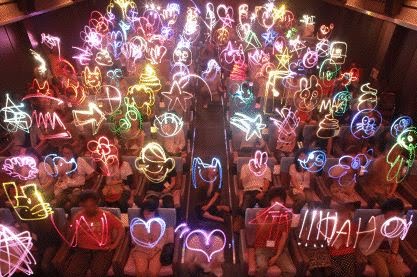
Jasper Sharp and the folks at Zipangu Fest have already set up a benefit screening of the animated films of the CALF collective that will take place at the ROXY Bar and Screen in London on April 3rd at 6:00PM. Titled Beyond Anime: CALF Animation the programme will bring together the best of the animators released by the indie DVD label including films by Atsushi Wada, Mirai Mizue and light artists TOCHKA (above). For more details on Zipangu Fest's "Beyond Anime" benefit click here.

Meanwhile Yuko Shiomaki, the president of Pictures Dept. has gone the extra step of not just setting up benefit screenings but also founding her own relief fund, Support Japan - GAMBARE, which is being run through JustGiving Japan. Shiomaki has already set up a benefit screening of Masaaki Taniguchi's "Time Traveller: The Girl Who Leapt Through Time" at this year's Hong Kong Film Mart on March 24th at noon. All the proceeds will go to Support Japan - GAMBARE/ JustGiving.

It looks like Shiomaki-san has also spilled the beans on a Toronto benefit screening being put on... well, being put on by us, the J-Film Pow-Wow. We have been in talks with Pictures Dept this week to screen Yosuke Fujita's 2008 comedy "Fine, Totally Fine" here in the city. The film itself is locked, and that's probably why she mentioned it to Jason Gray who mentioned it on his blog. That's totally fine! (In keeping with the film's title.) We still have not locked a theatre for the event though, but we hope to make the announcement with the name of the venue by the beginning of next week. Suffice to say that it's a great film and that all the proceeds from the screening will be going to Support Japan - GAMBARE/ JustGiving... not just a portion, but ALL of the proceeds.

Check back next week for more details, but until then check out the trailer for "Fine, Totally Fine" below.

REVIEW: Lupin the Third: Strange Psychokinetic Strategy

ルパン三世 念力珍作戦 (Rupan Sansei: Nenrikichan Sakusen)

Released: 1974

Director:
Takashi Tsuboshima

Starring:
Kunie Tanaka
Yuki Meguro
Hideko Ezaki
Shiro Ito
Kiyoshi Maekawa

Running time: 81 mins.

Reviewed by Marc Saint-Cyr


As far as Japanese popular culture goes, Arsène Lupin III is easily one of the most prominent and beloved characters out there. First realized in a manga series created in 1967 by Kazuhiko Kato (also known as Monkey Punch) and released through “Weekly Manga Action,” he has since appeared in a proliferation of media, including television series, video games and animated and live action films. Lupin III is a devilishly charming gentleman thief descended from French writer Maurice Leblanc’s character Arsène Lupin, his grandfather. Those who dip into the feature-length anime films that chronicle the legendary criminal’s adventures will certainly notice that there are just as many comedic elements as there are action-oriented ones, if not more. The broad wackiness of the character and his various antics, which are almost always driven by his considerable lust for wealth and women, definitely add to the films’ appeal and are extremely well-suited to the animated format – which made me all the more curious (and slightly doubtful) about the live action "Lupin the Third: Strange Psychokinetic Strategy" from 1974.

The film works quite well as an introduction to the world of Lupin III, as it focuses on his first encounters with the fedora-wearing Daisuke Jigen and alluring Fujiko Mine, who regularly appear as his helpful sidekick and elusive love interest, respectively. However, the samurai warrior Goemon, who is also included in Lupin’s small circle of allies, is absent from this outing.

"Strange Psychokinetic Strategy" begins with Lupin (Yuki Meguro) spotting a beautiful woman (Eiko Ezaki) in a prison van. Immediately infatuated with her, he breaks her out of jail – only to discover that she is Fujiko Mine, a notorious lady thief. As Lupin attempts to collaborate with and seduce her, he also encounters Jigen (Kunie Tanaka), who wants him to restore the once-great Lupin empire, and the bumbling Inspector Zenigata (Shiro Ito), who doggedly pursues the young thief, hell-bent on arresting him.

Heavily consisting of chase scenes and elaborate capers, "Strange Psychokinetic Strategy" admirably keeps up a high level of energy throughout its whole running time, with each scene offering up a delicious bounty of comedic gags and stunts. The old-fashioned piano music that starts up every now and then provides a clue towards the type of screen humor the film is aiming for – being the broad, physical type fashioned by the silent legends Charlie Chaplin, Buster Keaton and Harold Lloyd. Rules of logic are tossed out the window and replaced with a gleefully cartoonish mentality, allowing Lupin to escape capture and succeed in his schemes time and time again. Along with physical effects and props, the filmmakers deploy an extraordinary arsenal of inventive cinematic devices that include fast and slow motion (at one point used at the same time in which Lupin shows how fast he is in disarming an opponent), animated censorship of a sex scene (with MPAA-type regulations popping onscreen), trick editing and more. Throw in such great details as Zenigata’s two hopelessly clumsy subordinates, playing cards that can slice through tree branches, self-destructing recordings, a jetpack, a crazily-tilting set, an out-of-nowhere musical number and a POV shot showing a bullet rushing towards the screen and you still only have a portion of the many jokes and flashes of absurdity that make the film so fun. Surprisingly, the anime films didn’t have to stray too far to emulate the same spirit of all-around goofiness.

At one point in "Strange Psychokinetic Strategy," Lupin says to Jigen, “Being alive sure is fun, isn’t it? We eat when we’re hungry, sleep when we’re sleepy, and fall in love when we want to fall in love. What else do ya need?” Such a philosophy might fall a little too far on the side of naïve simplicity for some to swallow. But then again, that’s what makes it so oddly poignant – and the character who utters it so incredibly appealing. The adventures of Lupin III revel in the sort of child-like, innocent joy that stems from pure entertainment, embodied in things like car chases, jewel heists and prison breaks. Lead actor Yuki Meguro and the rest of the cast throw themselves into the film with enthusiasm and charisma, making it all the more irresistible while setting an example for audience members: give yourself over fully to the silly humor and over-the-top behavior and you’re sure to have a ball.

Read more by Marc Saint-Cyr at his blog

Artist Kazuhiko Hachiya explains the Fukushima Dai-ichi crisis to kids with "Nuclear Boy"

by Chris MaGee

Will this video elicit laughs in the future. Most probably. Will it get people laughing now. Mosy likely, but is that okay under the present circumstances. Probably not. Still this animated video that has been doing the rounds this week isn't for us grown ups. It's for kids, and Japanese kids specifically. Media artist Kazuhiko Hachiya made this animated short as a way to help young Japanese children understand exactly what is going on at the crippled Fukushima Dai-ichi Nuclear. While it may seem wrong to chuckle at the comparison between uranium and poop and radioactive exhaust and farts you know that this will immediately stick in youngsters' heads. Watch the whole short below... and find yourself wish that the situation with the plant was as easily fixed as slapping a diaper on it.

REVIEW: Gozu

極道恐怖大劇場 牛頭 GOZU (Gokudō kyōfu dai-gekijō: Gozu)

Released: 2003

Director:
Takashi Miike

Starring:
Yuta Sone
Sho Aikawa
Kimika Yoshino
Renji Ishibashi
Shohei Hino

Running time: 130 mins.

Reviewed by David Lam


Takashi Miike’s “Gozu” is so seeped in strangeness that it defies explanation. The only thing certain is that it manages to out-weird David Lynch in the weird department.

Now that’s saying something.

What begins as a B-level yakuza story quickly descends into the realm of the bizarre. Minami (Hidek Sone) is a low-level yakuza given the task of killing Ozaki (Sho Aikawa), a loose cannon prone to violent but hilarious outbursts. When the film begins, we see Ozaki interrupting a meeting in a restaurant by telling the boss ( Renji Ishibashi) that the barking Chihuahua outside is in fact a trained assassin out to get yakuzas. Needless to say, everyone in the clan thinks it’s about time Ozaki is put down for good. So the plan is for Minami, one of Ozaki’s loyal followers to accompany him out to Nagoya on a bogus assignment and take him out and then dispose of the body. Things unfold accordingly until Minami decides to calm his nerves by stopping at a local coffee shop while leaving Ozaki’s dead body in the car. In the coffee shop, Minami is greeted by a host of the odd characters that include a trio of transvestites and a sake seller that delivers his lines verbatim off of cue cards. From then on, things manage to get even weirder, starting with Ozaki’s body mysteriously disappearing from the car.

There’s no shortage of weirdoes in this small town. First off, there’s the man with the Yin Yang face. He claims that he suffers from some sort of pigment deficiency syndrome but it’s obvious that half of his face is covered in white paint that is starting to peel. This odd little fellow serves as Minami’s guide around town and finds him an inn to stay for the night, more craziness ensues! The keepers of this inn are deranged siblings that just add to the mounting confusion. He’s a man-child that may or may not be able to commune with spirits while she’s an emotionally vacant woman in her 50s who is obsessed with her lactating breasts. They run the inn together during the day and a secret venture at night. The siblings bottle the sacred breast milk and sell it to the locals.

With “Gozu”, Miike once again proves that he can take any generic story and infuse it with his vivid imagination to create something fresh and compelling. The film begins as a standard yakuza story then switches to a gothic nightmare, before finally morphing into a supernatural tale. The tonal shifts can make for a confusing viewing experience but that’s part of the fun. As soon as you become invested in the storyline, the film switches gears and ups the ante by introducing something unexpected. This is one of those rare cases where the budgetary constraint actually added to the film. There’s a seediness to the look of the film that makes it even more unnerving to watch. Another plus is the great makeup work on the film, it’s cheap and over the top; as a result, it gives a surreal sheen to everything. Lastly, the cast is probably the biggest asset of the film. All the actors fully commit to their roles no matter how outlandish. But the one actor that truly stands out is Hidek Sone. He manages to hold his own against all the madness. When surrounded by such insanity, it would have been easily for Sone to overact but he never does. His understated performance is the emotional anchor that keeps the film from going off the rails.

As strange as the film is, it does manage to calm down for a second to delve into Minami and Ozaki’s relationship. Throughout the film, Miike drops in brief flashbacks to show the strong bond that exist between the two characters. We see them laugh and bicker like a couple who’s grown used to one another’s company. Traditionally in yakuza films, the theme of homosexuality is thinly disguised as camaraderie but what Miike does is bring it to the forefront in the final act of the film by introducing a mysterious female character. She inexplicably knows all of Minami’s secrets, ones he has only shared with Ozaki. By the time the film reaches its infamous end scene, it becomes apparent that this mysterious woman is a vessel for the buried desire that both men have for one another.

“Gozu” is quite an achievement. It manages to be an utterly baffling but fascinating watch. You’ll either laugh at the absurdity of it all or be truly disturbed by it, or both.

And that, I guess, is the point.

Read more by David Lam at his blog