Saturday, December 18, 2010

Happy Holidays from all of us at the Toronto J-Film Pow-Wow! See you on Januray 4th!


It seems like 2010 just started, but lo and behold we're on the eve of 2011. It's been a busy year of globetrotting, film fest organizing and attending, writing and of course a whole lot of movie watching! Now it's time for everyone here at the Toronto J-Film Pow-Wow - Chris MaGee, Bob Turnbull, Marc Saint-Cyr, Matthew Hardstaff and Eric Evans - to take a bit of a holiday break. We'll be back to regular posts on January 4th, 2011, but until then we'd like to wish all of our regular readers a very Merry Christmas メリークリスマス, Happy Hanukkah, and a very Happy New Year 謹賀新年! We'd also like to take this opportunity to thank a few folks who have made 2010 a great year for the Toronto J-Film Pow-Wow...

Jasper Sharp, Tom Mes and the crew at Midnight Eye, Masayuki Suzuki, Toshi Aoyagi, Kate Scullin and the Japan Foundation Toronto, Marty Gross and Lalu Danzker, James Heron and the staff at the Japanese Canadian Cultural Centre, Gen Takahashi, Yukie Kito, Keiko Kusakabe, Samuel Jamier and the staff of the Japan Society New York, Kayoko Nakanishi, Emi Ueyama, Miho Toda and Hogaholic, Jon Jung, and Josh Samford at the V-Cinema Podcast, Adam Lopez and the crew of the After Dark Film Festival, Sonia Jog, Chris Chin and the crew of the Toronto Reel Asian International Film Festival, Maria Klomfass, Petra Palmer, and the crew at Nippon Connection, Kanako Hayashi and the staff at Tokyo Filmex, Akiko Ohata and the staff of the Toronto Japanese Short Film Festival, Daniel Hanna and the staff at Eyesore Cinema, Adam Torel and Third Window Films, Nobuaki Doi and CALF, Don Brown, Yuka Mizuno, Karen Severns and the Foreign Correspondents Club of Japan, Kanai Katsu, Momoko Ando, Shaq, Tokachi Tsuchiya, Yasunobu Takahashi, Reiko Tahara, Todd Brown, Andrew Mack and Twitch Film, Jason Gray, John Berra and Gabriel Solomon at Intellect Books, Robert J. Woodhead, Natsumi Ueki and the staff at AnimEigo, Kurt Halfyard, John Allison and the staff at Row Three, Trista Devries and the staff of Toronto Film Scene, Catherine Munroe Hotes, Linda Hoaglund, Rieko Fuji and Viz Pictures, Stephanie Trepanier and Evokative Films, Shannon the Movie Moxie, Robyn Dranfield, Polly Esther, Grady Hendrix and the New York Asian Film Festival, Marc Walkow, Tetsuki Ijichi and Tidepoint Puictures, Akino Kondoh, Naomi Hocura, Brandon Hocura and Vowls, Takuya Fukushima, Edmund Yeo, Yuki Nakamura and Omni TV, Kieran Grant and the staff at Eye Weekly, Masaki Iwana, Kayoko Tombo, Miki Ohi and the staff of the Pia Film Festival, Fujiko Takeyama, Kenta Fudesaka, Rie Natori and the staff at UniJapan.

We leave you all with a bit of Shonen Knife and "All I Want for Christmas"! Enjoy Everyone!

The J-Film Pow-Wow's Top Picks of 2010


More than shopping for gifts, planning family feasts and a good Christmas cleaning the end of the year for film fans is marked by the inevitable "Best of" list from the previous twelve months. We at the Toronto J-Film Pow-Wow have sequestered ourselves away and each come up with our top five theatrical and festival releases of 2010, as well as our top five DVD releases from this year for all of you to take a look at. One thing we want to make clear about the theatrical/ festival releases before you read on though. Older films like Gen Takahashi's "Confessions of a Dog" only made their Canadian debut this year at the Shinsedai Cinema Festival, so a few of us have included it as part of our lists. Also, we've tried to weigh our DVD lists in favor of Region 1 releases, although UK Region 2 and Region Free discs also made our cut.

Okay, without further ado here are our top picks of 2010!


Chris MaGee's Picks


Top 5 Theatrical/ Festival Releases

1. ANPO (dir. Linda Hoaglund) - For years Linda Hoaglund has worked as an interpreter and translator for some of Japan's top directors. Now Hoaglund has become a filmmaker in her own right with the documentary "ANPO". Through interviews, archival footage and a collection of rare artwork Hoaglund creates an utterly fascinating mix of painting, politics and protest, showing us how the U.S./ Japan Mutual Security Treaty (a.k.a. ANPO) has shaped the last five decades of Japanese arts and culture. A must see for the old and new generation alike.

2. Night in Nude: Salvation (Nudo no yoru: Ai wa oshiminaku ubau, dir. Takashi Ishii) - Takashi Ishii, best known in North America for films like "Gonin" and "Freeze Me", delivers a violent, sexy and absolutely absorbing neo-noir sequel to his 1993 film "Night in Nude". Naoto Takenaka reprises his role as Jiro, a cross between a jack-of-all-trades and a private eye who is hired by a psychopathic hostess named Ren (a sultry and scary performance by former model Hiroko Sato) to first track down a missing Rolex and then a missing streetwalker. Don't worry if you haven't seen the first "Night in Nude" as this film easily stand on its own as a harrowing trip to the dark side of Tokyo.

3. Sona, the Other Myself (Sona, mou hitori no watashi, dir. Yong-hi Yang) - Five years after her award-winning documentary portrait of her father "Dear Pyongyang" filmmaker Yong-hi Yang continues to explore her zainichi (Japanese/ Korean) heritage and her own family dynamics. This time out Yang chronicles a decade's worth of trips to North Korea to visit her brothers and her young niece Sona. Not only is "Sona, the Other Myself" a wonderful family portrait, but it also gives audiences an unprecedented look inside North Korean society.

4. Golden Slumber (Goruden suranba, dir. Yoshihiro Nakamura) - Did we really need another innocent man trying to fight against a diabolical frame up movie? Maybe not, but when it comes in the form of Yoshihiro Nakamura's "Golden Slumber" I'll make an exception. Nakamura once again adapts the work of novelist Kotaro Isaka, but while "Golden Slumber, the story of a delivery man who is wrongly accused of assassinating the Japanese Prime Minister, isn't as delightfully snaky as "Fish Story" or "The Foreign Duck, The Native Duck and God in a Coin Locker" it is an awfully fun ride. The performances by Masato Sakai, Teruyuki Kagawa and Akira Emoto are a huge part of the film's success.

5. Caterpillar - (Kyatapira , dir. Koji Wakamatsu) - Pink film legend Koji Wakamatsu takes on the task of adapting Edogawa Rampo's 1929 short story "The Caterpillar", about a soldier who returns from the front with no arms, legs or voice, and transforms it into a politically-charged power play. It is left to the wife to care for her returning "War God", but she doesn't share in her town's reverence of her husband. Yes actress Shinobu Terajima is amazing and totally deserves her win for Best Actress at this year's Berlinale, but it's her domestic war with her onscreen husband played by Keigo Kasuya that makes "Caterpillar" come to life.


Top 5 DVD Releases

1. Merry Christmas, Mr. Lawrence (Criterion Collection) - Why has Nagisa Oshima's 1983 P.O.W. drama been unavailable on DVD? With a cast that includes David Bowie, Ryuichi Sakamoto, Tom Conti and Takeshi Kitano you'd think that cinephiles and pop culture buffs would have demanded this long ago. Regardless of how long we've had to wit the Criterion Collection has finally brought us one of Oshima's most humanistic and affecting films. About time!

2. Female Convict Scorpion: Jailhouse 41 (Eastern Star) - How many of you out there have the Tokyo Shock 3-DVD "Female Convict Scorpion" set? Ever feel more than a bit heated that it didn't include the second film in the series, 1972's "Female Convict Scorpion: Jailhouse 41"? Shunya Ito's trippy prison break entry into this classic franchise was out of print for years until the folks at Eastern Star remedied the situation this past October. Time to complete your "Female Convict" collection!

3. Atsushi Wada Works 2002-2010 (CALF) - This year saw the founding of an exciting new DVD distributor dubbed CALF. The Tokyo-based company is collectively run by some of Japan's most promising young animators whose work is showcased on a series of Region Free DVD's. So far CALF has released collections of the work of Tochka and Mirai Mizue, but my favorite of the bunch has to be their DVD of the work of animator Atsushi Wada. This is animation to make you scratch your head in wonder and laugh yourself silly. A must see!

4. House (Criterion Collection) - What can you say about Nobuhiko Obayashi's "House"? This is either the worst psychedelic horror movie ever or the very best pop art slasher film in existence. I think it's both, a film that is nearly impossible to categorize, but that instantly bewilders and delights anyone who sees it. Now the Criterion Collection brings us this 1977 cult classic with a gorgeous DVD. Make sure to check out Obayashi's equally magnificent 1966 experimental film "Emotion" featured as part of the extras!

5. Franz Kafka's A Country Doctor & other Fantastic Films (KimStim Collection) - Since his 2002 animated short film "Mt. Head" was nominated for an Oscar Koji Yamamura has become one of the best known names in the world of Japanese animation. Finally a collection of his films has come to North American DVD via the folks at the KimStim Collection. This disc goes from Yamamura's earliest works to his recent award-winner "Franz Kafka's A Country Doctor". A must have for any fan of world animation.


Bob Turnbull's Picks

Top 5 Theatrical/ Festival Releases

1. Cold Fish (Tsumetai nettaigyo, dir. Sion Sono) - An absolutely fearless exercise in filmmaking. Sion Sono takes no quarter, doesn't deal with compromises and doesn't hold anything back during a 2 and a half hour breathless ride. "Cold Fish" feels at times like an instinctive creation - there's an energy to it that feels like he edited it live in one fell swoop - but there's no doubt about its effectiveness.

2. Confessions (Kokuhaku, dir. Tetsuya Nakashima) - Depending on your view of this film's moral stance, its gorgeous style may not be enough to pull you from a quagmire of issues. This pretty much squashes any chance of it getting to the final round of Oscar's Best Foreign Language candidates, but if you can orient yourself properly in its universe, you'll find an exceptional film.

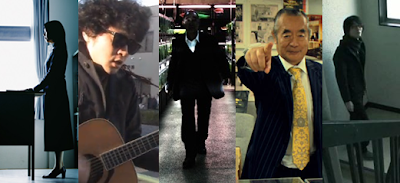
3. The Invention Of Dr. Nakamats (dir. Kaspar Astrup Schröder) - This very entertaining look at world record holder for the greatest number of patents and nationwide celebrity Dr. Nakamats shows its central subject as a combination snake oil salesman and beloved entity. He may never say anything unless it's in his own best interest, but his creativity has at least resulted in one great invention - himself.

4. Live Tape (Raibu tepu, dir. Tetsuaki Matsue) - 74 minutes of wandering minstrel music through the streets of Tokyo - all in one single unedited take. Kenta Maeno strolls the streets tossing off one quickly hummable song after another and before the sun sets on his last song (with an expanded band behind him), he's turned this wonderful idea into something truly special.

5. Different Cities (dir. Kazuhiro Goshima) - Kazuhiro Goshima's hour-long experimental film is a gorgeous walk through the different corridors and corners of a large city via the eyes of several characters. Each seems to be out of sync with their surroundings and have lost the ability to navigate the variety of structures that have been imposed on the city. And yet, it also shows the beauty of some of this architecture through Goshima's lovely framing and interesting choices of angles.


Top 5 DVD Releases


1. House (Criterion Collection) - Wonderfully inventive, almost always perplexing and certainly one of the most entertaining experiences with film I've had.

2. AK 100: 25 Films by Akira Kurosawa (Criterion Collection) - I almost left this incomparable Criterion box set off the list - it seems almost too obvious to included a set that packages 25 of the master's films together - but it felt like karma would catch up to me if I didn't include it. It would simply be wrong. These are, after all, some of the greatest achievements in the history of film.

3. Still Walking (Criterion Collection) - This is a bit of a cheat since Hirokazu Kore-eda's beautiful portrait of a family isn't being released until early 2011, but I had set a precedent by cheating when I put it on my list of Top 5 2009 theatrical releases. So I think I'm entitled. The film is so beautifully put together, relatable by all and gentle in nature that it deserves the honour. I may put it on next year's list too.

4. Oshima's Outlaw Sixties (Criterion/ Eclipse) - I have an odd relationship with Oshima's films...I'm typically left somewhat confused and underwhelmed after an initial viewing, but can't ever quite shake the film from my mind. This usually leads to a second viewing and a second perspective on the film. Eclipse's five film set is no different - challenging films that often reward after giving your brain a workout.

5. Tokyo Sonata (E1 Entertainment) - Kiyoshi Kurosawa's look at the hypocrisy and loneliness of Japan's patriarchal society is a call to reject societal roles that box people into specific behaviours. It's incredibly effective at showing the consequences of these borders by focusing on one family's isolation from each other.


Marc Saint-Cyr's Picks


Top 5 Theatrical/ Festival Releases

1. Confessions of a Dog (Pochi no kokuhaku, dir. Gen Takahashi) - Gen Takahashi's three hour study of the Japanese police system's shadier aspects is very much in the vein of "The Godfather" and "The Battle of Algiers" in how it delivers socio-political content in a greatly enthralling fashion. Shun Sugata's performance as Detective Takeda comprises just one of many actors who give life to a vast ecosystem of fascinating characters. Ambitious in scope, raw with feeling and Shakespearian in its portrayal of tragedy and twisted justice, "Confessions of a Dog" is a grand filmmaking achievement.

2. Live Tape (Raibu tepu, dir. Tetsuaki Matsue) - Notable for consisting of one take, "Live Tape"'s sequence of events serve as a wonderful reminder of the small, serendipitous pleasures that can arise in the moment. Or, hell, maybe it's simply a great movie for Kenta Maeno's marvelous songs and hip sensibility and Tetsuaki Matsue's great idea to simply film him as he walks, talks and strums us through the Musashino district of Tokyo. In any case, it is an unparalleled treat laced with quite a few pleasant surprises.

3. Oh, My Buddha AKA The Shikisoku Generation (Shikisoku zenereishon, dir. TomorowoTaguchi) - Tomorowo Taguchi's second directorial outing is a wonderfully fresh and funny coming-of-age story that left me with a buzz of positivity for days. Stylish and sensitive, it should also be congratulated for giving young newcomer Daichi Watanabe such a juicy first part in his acting career.

4. Autumn Adagio (Fuwaku no adagio, dir. Tsuki Inoue) - Tsuki Inoue's first film warrants comparison to Ingmar Bergman's similarly-titled "Autumn Sonata" - and rightly so. Startlingly mature, exquisitely composed and featuring a mesmerizing performance by Rei Shibakusa, it is a real marvel.

5. Our Brief Eternity (dir. Takuya Fukushima) - A wonderfully refreshing tale that beautifully intertwines intriguing concepts with real, relatable, flawed people. Along with "The Clone Returns Home," Fukushima's film is a sign that science fiction is still alive and well - and something to look out for - in Japan.


Top 5 DVD Releases

1. Oshima's Outlaw Sixties (Criterion/ Eclipse) - This five disc treasure chest gave viewers the long-awaited opportunity to see exactly why Oshima was touted as "the Godard of the East." all five of these films are bleak, insightful and inspiringly creative in their examinations of the lower depths of Japanese society. I am especially grateful for "Sing a Song of Sex" and the joyously bonkers "Three Resurrected Drunkards."

2. Merry Christmas, Mr. Lawrence (Criterion Collection) - What a rewarding year this has been for Oshima fans! I am especially grateful that we all now have the opportunity to see - and own - this fabled cult classic. Now the strange, wonderful quintet of Bowie, Sakamoto, Conti, Kitano and Oshima is here to stay.

3. House (Criterion Collection) - I am so glad that this, strange, demented thing of beauty has been given a second life as a contemporary cult discovery for hordes of new viewers. And now it has its own place in the Criterion Collection! Weird, wacky and beautifully crafted, "House" really needs to be seen to be believed - preferably with generous amounts of friends and beers present.

4. The First Films of Akira Kurosawa (Criterion Collection) - As a long-time Kurosawa fan, I am extremely thankful that these four early efforts from the Emperor are now available in a set separate from the massive 25-film box that was previously released by Criterion. Though I haven't pounced on it yet, I likely will very, very soon - if only to fill that gap in my personal, already considerable Kurosawa collection.

5. Tokyo Sonata (E1 Entertainment) - Though I haven't yet seen this acclaimed work, I trust Kiyoshi Kurosawa will not let me down with his highly acclaimed family drama. Plus, I am always game for some Koji Yakusho, no matter how small the part.


Matthew Hardstaff's Picks


Top 5 Theatrical/ Festival Releases

1. 13 Assassins (Jusan-nin no shikaku, dir. Takashi Miike) - Takashi Miike, with help from writer Daisuke Tengan, proves that he is still able to operate inside even the most popular of genres, twisting them in unimaginable ways, creating one of the best Samurai films this side of the millenium.

2. Cold Fish (Tsumetai nettaigyo, dir. Sion Sono) - Sion Sono creates the first film under the Sushi Typhoon banner that is a serious piece of art, that gets under your skin and stays there for days after. If you liked "Strange Circus", there is right up your alley. Also, Asuka Kurosawa is virtually unrecognizable.

3. House (Hausu, dir. Nobuhiko Obayashi) - Yes the film is over 30 years old, but this year marked the first time it got released theatrically here in North America, so we should celebrate this audacious piece of pop art. Very few directors are able to channel even a tenth of the creativity that Nobuhiko Obayashi puts on display.

4. Live Tape (Raibu tepu, dir. Tetsuaki Matsue) - This low budget musical documentary follows musician Kenta Maeno as he wanders around Kichijoji, Tokyo, guitar in hand, performing a plethora of songs, sometimes alone, sometimes with other people, all in one single take (one mini dv tape incidentally). Its an amazing piece of musical genius that climaxes in a full on band stage performance.

5. Confessions of a Dog (Pochi no kokuhaku, dir. Gen Takahashi) - The Canadian premiere of Gen Takahashi’s 2006 film took place at Shinsedai this year, and it’s a tour de force. Shun Sugata is amazing to watching, and yes, the last 6 minutes are quite spectacular.


Top 5 DVD Releases

1. House (Criterion Collection) - This film is of course listed as my top 5 theatrical releases, but since Criterion blessed us with a DVD and Blu-ray release this year, it gets both. What more can I say, other than it looks fantastic!

2. Female Convict Scorpion: Jailhouse 41 (Eastern Star) - Long out of print, the second, and in my opinion the best film, in the "Female Convict Scorpion" series finally makes it way back onto DVD, Meiko Kaji’s quintessential psychadelic prison film is finally available (again) to all her loyal followers.

3. Sanshiro Sugata (Criterion/ Eclipse) - I could have probably included the entire "First Films of Akira Kurosawa" boxed set, released by Criterion earlier this year, but mostly, its "Sanshiro Sugata", the great directors debut, that most excited me. Its not only a classic martial arts action picture, but also laid the ground work for all martial arts films to follow.

4. Be A Man: Samurai School (Tokyo Shock) - Tak Sakaguchi’s directorial debut is a wild, crazy and hilarious take on the macho, testerone driven world of the Japanese school system, fusing it with the militaristic might of the samurai film, in which mothers send their weak teenage boys to be turned into real men.

5. Musashi Miyamoto series (AnimEigo) - Animeigos release of the 5 part "Musashi Miyamoto" series is the most detailed and possibly accurate depiction of the worlds greatest samurai, and at the hands of director Tomu Uchida, its also a thing of beauty. Musashi doesn’t get any better than this (no shot against Mifune, but these films blow the samurai trilogy out of the water).

Eric Evans' Top Picks


Top 5 Theatrical/ Festival Releases

1. Confessions (Kokuhaku, dir. Tetsuya Nakashima) - Visualist director Tetsuya Nakashima was in danger of becoming a technicolor cliché after his increasingly frenetic and fantastical trifecta of “Kamikaze Girls”, “Memories of Matsuko”, and “Paco and the Magical Picture Book”. While the first two broke ground and delighted with their nontraditional storytelling, the third was a mess of near self-parody. Abandoning the over-the-top art direction and focusing on story were just the trick: “Confession” is a harrowing, intense work that returns Nakashima to the top tier of contemporary Japanese directors and gives Takako Matsu the role of her career.

2. 13 Assassins/ Zebraman 2 (Jusan-nin no shikaku/ Zeburaman: Zebura Shiti no gyakushu, dir. Takashi Miike) - With each new hit, the number of Takashi Miike fans who bitch and moan that he’s no longer in the genre sewer shrinks, and for good reason: he makes great movies. Miike never takes the easy road either narratively or visually, and that inventiveness has made him the latest in a string of former gorehound auteurs (Peter Jackson, Sam Raimi) to break through and dominate the mainstream. “13 Assassins” is the most satisfying jidaigeki in ages.

3. Golden Slumber (Goruden suranba, dir. Yoshihiro Nakamura) - I’m not sure how Yoshihiro Nakamura balances his intricately woven films (“Fish Story”, “Slumber”) with his commercial hits (“Glory of Team Batista”, “Triumphant Return of General Rouge”) but the results are spellbinding. Actor Masato Sakai follows his lead in “Rouge” playing a framed man on the run, and as with “Fish Story” the twists and turns come together in an elegantly constructed film that maintains its intensity for the entire running time. Here’s hoping writer Kotaro Isaka keeps adapting his novels for Nakamura—this is their third such collaboration and they keep getting better.

4. Cast Me If You Can (Wakiyaku monogatari, dir. Atsushi Ogata) - Atsushi Ogata’s “Cast Me If You Can” is ridiculous in all the right ways. It’s absurd without trying too hard, and its biggest laughs are rooted in personalities, not pratfalls. Ogata could improve his pacing but this film was a great surprise, giving Toru Masuoka a role for the ages as “that guy” who always pops up in films and TV shows but never makes enough of an impression to become a star.

5. Insect Detective (Konchu tantei Yoshida Yoshimi, dir. Sakichi Sato) - Sho Aikawa has a great year, starring in both the big-budget sequel to “Zebraman” and this little gem. The deadpan Aikawa sells the absurd as well as any actor alive. It could only have come from Japan, and though uneven was one of 2010’s most quirky and memorable films.


Top 5 DVD Releases

1. Profound Desires of the Gods (Eureka/ Masters of Cinema) - Masters of Cinema/Eureka once again set the bar amazingly high with this gorgeous-looking Blu-ray disc. Shohei Imamura’s film is an audacious, lush experience. The kind thing would have been to release it without a region code (region-free Blu players are far less common than their DVD counterparts), but perhaps a Criterion release is waiting in the wings?

2. Love Exposure/ Kakera / Fish Story (tie) (Third Window Films) - Speaking of region-free DVD players, Third Window Films’ DVD catalog makes one mandatory. Always choosing interesting, challenging and above all entertaining titles, they’re a godsend to every J-film fan. My only complaint is the relative paucity of bonus features on the discs. Some more DVD extras, please!

3. House (Criterion Collection) - The worst-kept secret in Criterion’s release history, “Hausu” is one of those ‘have to be seen to be believed’ films. The Criterion Blu-ray looks great and the extras, including Nobuhiko Obayashi’s experimental “Emotion” and a long-form interview with the director, make it a must-own.

4. The First Films of Akira Kurosawa (Criterion/ Eclipse) - Inexpensive editions of largely unseen but important work from the master. It’s fascinating to see glimpses of the storytelling skill that would define Japanese film for the 20th century in these less grand but no less memorable stories. How about an Eclipse collection of Nagisa Oshima’s late 60s/early 70s work?

5. Ancient Dogoo Girl/ Monster Magnitude 9 / Daimajin TV on DVD collections - The most creative genre work in Japan these days isn’t in cinemas—it’s on late-night TV. Noboru Iguchi’s “Dogoo Girl” series is like Buffy the Vampire Slayer on peyote with humor, and works perfectly without the gore that characterizes his big-screen work. Crafted for an exclusively Japanese audience, it also proves that his wacky monsters and frenetic action aren’t an affectation for Western viewers. “Monster Magnitude 9” is a hoot, a blue collar X-Files that suggests what the original “Ultraman” TV show would have been like if the Science Patrol were underbudgeted meteorologists without Ultraman there to save the day; it also boasts production values that would shame most American shows that cost 10x as much. “Daimajin” is a slight but unabashed celebration of dai-kaiju pleasures. All worth seeking out.

List of nominations for the 34th annual Japanese Academy Prize underwhelms with lack of diversity

by Chris MaGee

Yesterday saw the nominations for the 34th annual Japanese Academy Prize, popularly known as the Japanese Academy Awards, announced at a ceremony in Tokyo. There was one big surprise, but it didn't come from any of the nominees, it came from the way the awards are structured. Normally Japanese awards ceremonies, including the Japanese Academy Prize, announce the winners in advance and then hand out the trophies at a ceremony in the near future. This year the Japanese Academy Prize is going the way of North American and European awards ceremonies and announcing five nominees in each category who will compete during the official ceremony on February 18th. An interesting procedural development indeed, but it doesn't indicate a more daring group of nominees I'm afraid.

Looking over the list of nominees in the major categories you see the same five films being repeated again and again... and again - Sang-il Lee's "Villain", Yoji Yamada's "Younger Brother", Tetsuya Nakashima's "Confessions", Takashi Miike's "13 Assassins", and Izuru Narushima's "A Lone Scalpel". Not to say that these films (at least "Confessions" and "13 Assassins") aren't deserving of their nominations, but a little variety would have been nice. Not to toot our own horn here at the Pow-Wow at all, but just taking a look at our favorite picks of 2010 and all the films we've reviewed this year and it makes us wonder why films like "Golden Slumber", "Wandering Home", "Oh My Buddha!", "Sawako Decides" aren't represented amongst the nominees. It seems like the Academy bowed to some extent to international successes like Shinobu Terajima's astounding performance in Koji Wakamatsu's "Caterpillar", but besides that they stick almost entirely with the big names, even Yoji Yamada whose "Younger Brother" (above), a remake of Kon Ichikawa's 1960 classic, received almost universally bad reviews.

You can check out the major nominations below courtesy of Tokyograph who also have the full list of nominations posted here. There aren't that many surprises amongst those either we're afraid.


Picture of the Year:

Villain (Akunin)
Younger Brother (Otouto)
Confessions (Kokuhaku)
A Lone Scalpel (Kokou no Mesu)
13 Assassins

Animation of the Year:

Colorful
Karigurashi no Arrietty
Eiga Doraemon: Nobita no Ningyo Daikaisen
Meitantei Conan: Tenkuu no Lost Ship
One Piece Film: Strong World

Director of the Year:

Tetsuya Nakashima (Confessions)
Izuru Narushima (A Lone Scalpel)
Takashi Miike (13 Assassins)
Yoji Yamada (Younger Brother)
Sang-il Lee (Villain)

Screenplay of the Year:

Masato Kato (A Lone Scalpel)
Daisuke Tengan (13 Assassins)
Tetsuya Nakashima (Confessions)
Yoji Yamada / Emiko Hiramatsu (Younger Brother)
Shuichi Yoshida / Sang-il Lee (Villain)

Outstanding Performance by an Actor in a Leading Role:

Tsurube Shofukutei (Younger Brother)
Shinichi Tsutsumi (A Lone Scalpel)
Satoshi Tsumabuki (Villain)
Etsushi Toyokawa (Sword of Desperation)
Koji Yakusho (13 Assassins)

Outstanding Performance by an Actress in a Leading Role:

Shinobu Terajima (Caterpillar)
Eri Fukatsu (Villain)
Takako Matsu (Confessions)
Hiroko Yakushimaru (A Good Husband)
Sayuri Yoshinaga (Younger Brother)

Outstanding Performance by an Actor in a Supporting Role:
Renji Ishibashi (A Good Husband)
Akira Emoto (Villain)
Masaki Okada (Villain)
Masaki Okada (Confessions)
Koji Kikkawa (Sword of Desperation)

Outstanding Performance by an Actress in a Supporting Role:

Yu Aoi (Younger Brother)
Kirin Kiki (Villain)
Yoshino Kimura (Confessions)
Yui Natsukawa (A Lone Scalpel)
Hikari Mitsushima (Villain)

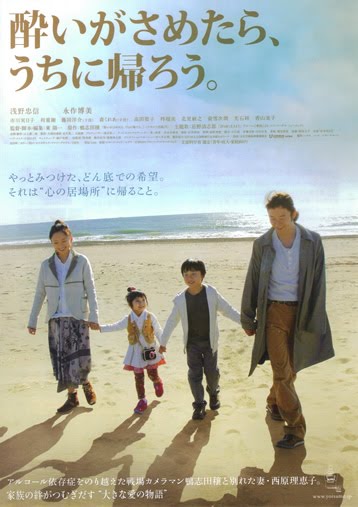
REVIEW: Wandering Home


酔いがさめたら、うちに帰ろう。 (Yoi Ga Sametara, Uchi Ni Kaero)

Released: 2010

Director:
Yoichi Higashi

Starring:
Tadanobu Asano
Hiromi Nagasaku
Yoshiko Kayama
Masako Takada
Mikako Ichikawa

Running time: 118 min.

Reviewed by Chris MaGee


Alcoholism is a tough disease. Not only does it hurt those around the the alcoholic just as much as it hurts him or her, but as a doctor in Yoichi Higashi's latest film "Wandering Home" points out "Alcoholism is the only disease where people don't really feel pity for the sufferer." I'm not sure if this statement is entirely true, but it is true that so many of us who can easily navigate after work drinks or holiday get togethers sometimes have trouble appreciating just how much of a mine field these occasions can be for an alcoholic. "Why can't you just have a couple drinks?", "Do you really need to drink tonight?", "Why do you have to embarrass yourself like this?" These are all questions that alcoholics are asked by those closest to them, but it would be hard to imagine asking someone with Parkinson's Disease, "Why can't you just not have tremors tonight?" Still having grown up in an alcoholic household I know it's not as simple to describe the disease as just a need to be drunk. I think that there's a whole brew of unresolved issues at the heart of every alcoholic and that without looking at those patterns of emotional and mental behaviour there's not hope of ever putting the cork in the bottle permanently. It's this "fearless moral inventory" that Higashi and the cast of "Wandering Home" present so beautifully, and it's what ends up making the film such a great success.

Tsukahara's (Tadanobu Asano) stock and trade is being a writer and photojournalist, but most of his time is spent wandering from bar to bar near his home. The end of each night comes when he passes out cold or is thrown out and from there he heads to the convenience store to grab the beer and gin that will get him through until morning. Tsukahara's mother (Yoshiko Kayama) pleads with him to at least eat something before pouring liquor down his throat, but her words go unheeded; that is until one night when Tsukahara throws up a geyser of blood into the toilet. This has happened before, but not this severely. An ambulance is called as is Tsukahara's ex-wife Yuki (Hiromi Nagasaku). She arrives in surprisingly light spirits and gently jokes with her ex-husband, but it's easy to see that her casualness is a defence built up through many nights like this. Most importantly Yuki and Tsukahara have two young children and Yuki's laissez-faire attitude is there to shield them from the worst of their father's affliction.

Tsukahara heads off to the hospital for his routine patch up, but this time things are different. This time the doctors say his condition has gone past the point of no return - his liver is shot and his brain is actually showing signs of atrophy. It's time to finally stop drinking or die. Tsukahara says he's ready to finally get sober, but Yuki is suspicious. Still she asks a doctor friend to recommend a course of action. Tsukahara goes on medications that will produce severe illness if they are combined with alcohol, but a night out at a local sushi restaurant quickly goes from pickles soaked in sake to beer and then to shochu. The night ends with a very ill and battered Tsukahara. There's no choice but to check himself into a psychiatric hospital for a monitored rehab program, and this is where "Wandering Home" goes from the usual queasy cautionary tale to a deeply empathetic look at one man's struggle with alcoholism.

Director Yoichi Higashi, who is probably best known for his award-winning 1996 film "Village of Dreams", returns to the director's chair after a six year absence to bring the autobiographical novel "Yoi Ga Sametara, Uchi Ni Kaero (I'll Get Home When Sober)" by real life photojournalist and author Yutaka Kamoshida to the screen. Knowing that the trials and tribulations in "Wandering Home" are based on the actual events of Kamoshida's struggle with alcoholism and his relationship with ex-wife and manga artist Rieko Saibara gives Higashi's film that much more punch, but what really brings the film alive for audiences are the performances of its stars. Tadanobu Asano took a crack at playing alcoholic novelist Osamu Dazai in last year's disappointing "Villon's Wife", but here he really nails his character, imbuing Tsukahara with a boyish charm despite the horrors he witnessed as a war photojournalist in Southeast Asia. Higashi helps us to remain empathetic to Tsukahara even while showing him abusing Yuki. This is achieved by clever touches of magic realism that shows Tsukahara's violence without reducing his humanity. Hiromi Nagasaku gives Yuki a remarkable level of complexity. Not only must she be strong as steel in order to cope with her ex-husband's suicidal drinking, but she must remain smiling and gentle for her two young children. Once Tsukahara enters in-patient treatment Higashi offers us a wonderful ensemble cast and gives Asano a chance to do (at least in my opinion) some of the best work of his already impressive career.

"Wandering Home" is the kind of drama that rarely makes its way to Japanese theatres. It's a film that is at the same time emotionally affecting without being weepy and manipulative. It's story of one family's struggle against alcoholism is universal one that will hopefully find acceptance and recognition with audiences both in japan and overseas as well.

Studio Ghibli to bring next film "Kokuriko-Zaka Kara" to theatres for summer 2011

by Chris MaGee

In the increasingly fickle landscape of the Japanese box office there is still one name that brings audiences flocking to theatres - Studio Ghibli. Many industry insiders felt that the Hayao Miyazaki's "Ponyo on a Cliff by the Sea" (along with Yojiro Takita's "Departures") buoyed up the Japanese box office in 2008 and one of the top earners of 2010 has been Studio Ghibli's "The Borrower Arrietty" directed by Hiromasa Yonebayashi. So what's next for Studio Ghibli? Well, this past week we found out.

All this week Anime News Network has been updating its site with news about the new Studio Ghibli film due out in the summer of 2011. Titled "Kokuriko-Zaka Kara" is follows the story of a teenage girl growing up in Yokohama in the early 1960's. With her fisherman father having been lost at sea and her photographer mother frequently away from home on assignment the film's heroine Komatsuzaki finds herself drawn to two of her classmates - a school newspaper reporter and the student council president.

"Kokuriko-Zaka Kara" is based on the popular shoujo manga created by Chizuru Takahashi and Tetsuro Sayama that originally ran in Kodansha's Nakayoshi Magazine in 1980. To bring the manga to the screen none other than Hayao Miyazaki has stepped in to co-write the screenplay with Keiko Niwa, the writer who penned the script for his son Goro's directing debut "Tales from Earthsea". Goro Miyazaki (above right) himself will direct "Kokuriko-Zaka Kara".

Besides the above concept sketch of Komatsuzaki no other images from "Kokuriko-Zaka Kara" have leaked out yet. Follow the link above to Anime News Network for even more details on this still developing story.

Shinya Tsukamoto joins star-studded cast of NHK drama series "Saka no Ue no Kumo"

by Chris MaGee

Major actors in Japan don't tend to adhere to the strict boundaries of movies, television and commercials that talent here in North America does. On my recent trip to Tokyo I saw a plethora of stars in advertisements for everything from McDonalds sandwiches to electric razors. It's this malleability that make the news of the star-studded NHK drama series "Saka no Ue no Kumo" interesting, but not unique... that is unless you count a major director in the cast as well.

"Saka no Ue no Kumo" is based on the epic 8-volume novel by author Ryotaro Shiba that follows the lives of two brothers through the Meiji Era and ultimately to the Russo-Japanese War in 1904. NHK's adaptation of Shiba's novel has been airing since late 2009, but in the episodes airing December 19th and 26th none other than Shinya Tsukamoto (above left) will be joining the cast in the role of Genjiro Akashi alongside actors such as Masahiro Motoki (above center) and Teruyuki Kagawa (above right). Very interesting indeed...

You can check out NHK's official website for "Saka no Ue no Kumo" here, and thanks goes to good friend Keiko Kusakabe at Makotoya Co. Ltd. for the news.

REVIEW: Sword of Desperation


必死剣 鳥刺し (Hisshiken torisashi)

Released: 2010

Director:
Hideyuki Hirayama

Starring:
Etsushi Toyokawa
Chizuru Ikewaki
Megumi Seki
Koji Kikkawa
Fumiyo Kohinata

Running time: 114 min.

Reviewed by Eric Evans


After viewing “Sword of Desperation” you’d be forgiven if you thought all of Shohei Fujisawa’s stories concerned unlucky samurai with secret sword techniques. Hideyuki Hirayama’s film has the unhappy distinction of following Yoji Yamada’s award-winning Fujisawa trilogy (“Twilight Samurai”, “Hidden Blade”, “Love and Honor”) and recalls those films in many ways, not the least of which being a very familiar-feeling protagonist. Of course Fujisawa wrote a variety of tales, but this must have felt like a safe bet—especially for a director like Hirayama, whose most notable previous work (two “Haunted School” pictures, 2003’s unfortunate “Samurai Resurrection”) was not exactly art-house fare. “Sword of Desperation” may have worked reasonably well were it not for the inevitable comparison with Yamada’s movies. It’s a fine film at first glance, but very little here is either new or crafted with such artistry as to surpass what we’ve seen before.

Hirayama bookends the film with two very dramatic (and very different) sequences. The opening is a courtyard concert with all the principals in attendance, introduced one by one. Traditional music and dance lead to an audacious yet calm murder: court swordsman Sanzaemon (Etsushi Toyokawa) gets up, apologizes to, and then stabs the Daimyo’s favorite mistress, the bold and manipulative Renko (Megumi Seki). As she drops to the floor lifeless, Sanzaemon kneels before the head retainer, lays down his sword, and apologizes for the inconvenience. The scene is meant to jar the viewer and it does, setting the stage for all that follows. Also meant to jar is the closing sequence, a bloody sword battle in a stone garden during a downpour. The result here isn’t quite so elegant. Though exciting and well staged, it stretches viewer credulity far beyond the breaking point. (When a human takes such unbelievable abuse, particularly from sword slashes, I expect to see a titanium endoskeleton peeking through the ripped flesh. Though it may be unfair to the director, I half believe Hirayama agreed to make the rest of the film’s talky bits in order to shoot this fight; tonally it has more in common with “Samurai Resurrection” than the film in which it appears.)

The bulk of the film alternates between the “now” of Sanzaemon’s punishment (a year’s confinement and a reduction in his rice stipend, the leniency of which being a hint that something isn’t kosher) and flashbacks to the events preceding the concubine’s murder. At home, locked in a barn for a monastic year, Sanzaemon whittles wood sculptures and considers what he did. Hirayama differentiates these flashbacks with a rather obvious fade to black and white at the end of each—a visual cue more appropriate to TV drama than a feature film of this pedigree. The glimpses into the past reveal that Renko made a habit of overstepping her bounds, using her influence with the Daimyo to alter, then dictate, political policy. A vicious little beast, she demands that loyal workers commit hara kiri for slight offenses and at one point gleefully suggests that the army behead each and every one of the “smelly farmers” who object to a sharp tax hike in a bad year for crops. Seki, perhaps best known for her lead in “Koi wa Go Shichi Go” as an outcast teen, clearly relishes strong woman roles but this is just shy of caricature. Castle staff are delighted and relieved at her murder, robbing Sanzaemon’s actions of any moral weight. The film makes it painfully clear that for the health of the clan, she had to die; only her handmaiden and the foppish and impressionable Daimyo (a petulant Jun Murakami) seem to grieve at her death.

Toyokawa has made many well-regarded films in his decades as an actor, but between his lead role in 2004’s Tange Sazen relaunch “Sazen” and especially his stoic badass role as Ocho in the 20th Century Boys trilogy, he’s become a marquee name. He’s very good in “Sword of Desperation”, but perhaps too cerebral. Despite his size and tough guy demeanor, his Sanzaemon seems thoughtful and introspective yet the story requires him to be nobly naïve enough to fall victim to castle politicking. By the time it occurs to him that all is not what it seems it’s well past too late, and it feels like something of a cheat given how the character has behaved until then. Still, Toyokawa does a man’s job, and Chizuru Ikewaki does her best work to date as his devoted and smitten niece. The rest of the film’s characters are undeveloped enough that the actors involved (among them talented veterans Fumiyo Kohinata and Ittoku Kishibe) aren’t asked to stretch beyond what’s obvious. Sadly, neither is the viewer. In his samurai trilogy, Yamada inserted bits of humor and got nuanced performances from actors not known for such, and in so doing elevated simple genre tales into art. Hirayama manages to assemble a more talented group, but with lesser returns. “Sword of Desperation” doesn’t stand up to scrutiny, but not being a classic doesn’t mean it’s not worth seeing. Unfortunately its similarities to Yamada’s films are such that they can’t be ignored, but with lowered expectations in place it’s a just-better-than-average jidaigeki.

Toho announces sequels to "Kaiji" and "Amalfi: Megami no Hoshu" for 2011... but why?

by Chris MaGee

Why? Why, that's all we want to know! Okay, we know why studios make sequels of films - to make money - but I guess what we really want to know is why such terrible films are making money in Japan right now. Case in point: Toho recently announced their 2011 line-up of projects and what do we find amongst the roster of films? Sequels to two of the worst movies in recent memory, namely Toya Sato's adaption of Nobuyuki Fukumoto's manga "Kaiji" (above) and the shot on location in Italy semi-thriller "Amalfi: Megami no Hoshu" (trailer below). Both these films will be seeing spin-offs or sequels in Japanese theatres next year... but once again we have to ask "Why???" Both original films were terribly bloated and horribly acted with "Kaiji" trying to appeal to manga readers and problem gamblers and "Amalfi" pandering to Japan's ideas of the romantic Italian coastal region.

I would say more about these two sequels, but this news breaks my spirit. Head over to Tokyograph to get whatever release details Toho is doling out. All I can say is that I hope Sarah Brightman shows up in the sequel to "Amalfi" and somehow falls of a beautiful cliff or something. Ugh!

Weekly Trailers


Love Addiction - Nobuteru Uchida (2010)


Nobuteru Uchida takes us into the complex relationships of eight young men and women in "Love Addiction". Working without a set script Nobuteru led his cast in an exercise in improvisation, rolling his camera all the while. The end result ended up taking home the top prize at this year's Tokyo Filmex.


Trees Without Leaves - Kaneto Shindo (1986)

Directing and screenwriting veteran Kaneto Shindo tells the story of a novelist in his late 60's who has isloated himself to write about his childhood in Hiroshima. His childhood and his unusually close relationship with his mother five decades before are related in solemn flashbacks.

REVIEW: Exhalation


Exhalation

Released: 2010

Director:
Edmund Yeo

Starring:
Kiki Sugino
Tomoe Shinohara
Hiroyuki Takashima
Tyler
Yukinobu Miyamoto

Running time: 21 min.


Reviewed by Marc Saint-Cyr


Following his recent short film "The White Flower," Edmund Yeo next shifted his attention to a pair of thematically linked works: "Inhalation" and "Exhalation." The former, shot in Klang, Malaysia, was a means of giving himself a creative boost after the larger, more rigorous production of the Japanese "Exhalation." Thus, Yeo jokingly refers to the two films as his "Chungking Express" and "Ashes of Time." Yet while they bear certain differences, it is also quite clear that they both stem from a distinctive cinematic voice.

"Exhalation" is set shortly after the death of a young man named Yosuke. Naoko (Kiki Sugino) and Sayuri (Tomoe Shinohara) reunite in their small hometown to prepare for the funeral. Naoko had previously decided to set out for Tokyo on her own while Sayuri remained behind to help with her father’s restaurant. Together, the two of them talk about Yosuke and visit the mirror-adorned road in the woods where he died. They go to a stream, where they find squares of paper and a folded crane in the water, and an abandoned building where hidden truths are shared. Impulsively, Naoko decides to go back to Tokyo before the funeral, leaving each of the two women alone in their later waves of grief.

As with "Inhalation," "Exhalation" is centered on characters who are scarred by events from the past that they try to make peace with – or, at least, better understand. In many of Yeo’s films, his characters engage in deep, intimate conversations in quiet public spaces – beaches, residential areas ("The White Flower"), city streets at night ("Kingyo," "Inhalation"). In a similar fashion, Naoko and Sayuri go to different places in the rural town while considering their respective relationships with Yosuke. In Naoko’s case, she must accept that the love he had for her will remain forever unrequited while Sayuri seems to have formed a more complicated connection with him that has been painfully severed.

Yeo and co-writer Maiko Itagaki’s examination of these subjects are given a fittingly poetic treatment by Shin Hayasaka’s cinematography and Yeo’s direction. Most of the film is in high contrast black-and-white, creating striking images that emphasize the natural and urban settings and the actors’ faces. Many times, the ghostly glow of Naoko and Sayuri’s faces arising from the inky depths of their black clothes and hair brings to mind both horror film iconography and Kurosawa’s "The Idiot." The transitions to color are both fitting and eloquent, often lending a counterbalance of warmth and humanity to the cooler monochrome passages.

Through the entire film, Yeo keeps the characters and their emotions at the forefront of his priorities. As the two central women wander from car to woods to derelict building, there is always the weight of intangible things behind their actions and words – their past experiences together, their histories with Yosuke, the lingering presence of Yosuke himself. Yeo, who also served as the film’s editor, brings a keen understanding of composition, pacing and tone to the entire film, giving it the feel of a finely crafted poem about loss and memory – which, in fact, it is.

Thus far, the Malaysian-born, Japan-based Yeo has produced a truly impressive output of short films that demonstrate his remarkable skill with creative and experimental techniques and the seamless marriage of emotional themes with a highly cinematic sensibility. With "Exhalation," which makes its worldwide premiere this week at the Dubai International Film Festival, he reveals more layers of his considerable talent and further proves his worth as a fascinating, noteworthy filmmaker.

Read more by Marc Saint-Cyr at his blog

Ryuichi Honda takes us on a "trip through hell" with Yutaka Takenouchi and Asami Mizukawa

by Chris MaGee

This past week word of a new film by one of Japan's hottest young directors came down via Tokyograph. Ryuichi Honda (above right), who has previously brought us such retro-camp comedies as "Pussycat Great Mission" and the Chiaki Kuriyama-starring "GS Wonderland" will be settling into the director's chair again for yet another comedy titled "Okike no Tanoshii Ryokou: Shinkon Jigoku-hen".

Based on the novel by writer Shiro Maeda "Okike no Tanoshii Ryokou" follows the adventures, or misadventures of Nobu and Saki, a couple of newlyweds who are quickly realizing that marriage is not always roses and rainbows. The two decide to shake up their domestic situation by going on a "trip through hell", a journey that ultimately renews their love for each other.

Stepping into the roles of Nobu and Saki are Yutaka Takenouchi and Asami Mizukawa (pictured above left), while the remainder of the cast is being rounded out by such well known character actors as Kirin Kiki, Yoshiyoshi Arakawa, Ai Hashimoto, Denden, Ryota Yamasato and Akira Emoto. Expect to see "Okike no Tanoshii Ryokou: Shinkon Jigoku-hen" in Japanese theatres by May 2011.

REVIEW: Living Hell: A Japanese Chainsaw Massacre


生地獄 (Iki-jigoku)

Released: 2000

Director:
Shugo Fujii

Starring:
Hirohito Honda
Yoshiko Shiraishi
Rumi
Kazuo Yashiro
Naoko Mori

Running time: 104 min.


Reviewed by Bob Turnbull


You would think a movie with a secondary title of "A Japanese Chainsaw Massacre" would have a chainsaw in it. You might think that, but you would be wrong. That's not to say, though, that Shugo Fujii's low-budget, shot-in-9-days film doesn't share more than a few things with Tobe Hooper's influential mid-70s horror touchstone. First and foremost is the odd pairing of gore and broad humour that are in an about equal mix, but it also includes the particular eating habits of a slightly askew family. Well OK...A very askew family.

The central character of the film is Yasu, a depressed young man bound to a wheelchair who lives with his father and two older siblings. He's not getting a whole lot of support from his family these days (there's even talk of putting him in a home), but things get even worse when some additional relatives come to stay in the household. Yasu's grandmother and a cousin are suddenly without a home, so they will be staying with them for a month or so. With the grandmother possibly in the early stages of dementia and cousin Yuki (who is the same age as Yasu) completely mute, it looks like he'll be getting even less help and sympathy around the house. Yasu feels that something else is amiss though. He gets several blinding headaches and is positive that he heard Yuki speak out loud, but his brother and sister think he's making it all up. The full extent of Yasu's situation is slowly revealed as the movie moves forward and bit by bit we see that it only gets worse and worse. We know this is coming since we're already privy to details that Yasu isn't.

Grandma and Yuki have already killed the residents of a previous house (the opening scenes of the film) and feasted on their remains, so when they begin torturing Yasu we aren't so much surprised as wondering where things will lead and why they haven't gobbled him up yet. The torture begins with a near death walk outside (Yuki almost walks his wheelchair into oncoming traffic) and moves to tooth extraction and darts. Yasu's screams for help (and does he ever scream a lot in this movie...) and pleas to his family are never answered, but he might get some help from a newspaper reporter digging deep into the story of the first murders. This secondary storyline keeps the movie moving forward at a good pace as do the little bits of information we continue to gather. For such a low budget film (and poor DVD presentation), it still actually manages to build some suspense and provide a few genuine scares. Grandma is the best realized of the characters with her chalky white skin, menacing eyes and ability to vanish from the room. The torture, the family backstory and the reporter's investigation all build to a final "family reunion" that is delightfully over-the-top and yet still unsettling. Another impressive point in favour of the film is that it really feels like there's more gore than there actually is. Credit Fujii and his editor for pulling that off.

It's not without it's problems though...Lead actor Hirohito Honda gets a lot of close-ups and truly becomes annoying with his constant screaming. Granted, it's supposed to be a broad role, but several of his scenes just go on far too long. It's actually an issue with other scenes too - not a huge one mind you, but enough to wonder why the editing was clever and successful in some areas (choosing long takes, cutting to sudden appearances of characters, etc.) and not in many others. In the end, however, the film entertains and provides a few chills along with the craziness that transpires towards the end. You won't even really care that there weren't any chainsaws.

Read more from Bob Turnbull at his blog.

Tuesday, December 14, 2010

Get a look at behind-the-scenes stills from Amir Naderi's Tokyo-based "Cut"

by Chris MaGee

When I was in Tokyo last month I was very lucky to meet the folks behind the upcoming Amir Naderi film "Cut". As we originally reported "Cut" tells the story of Shuji (Hidetoshi Nishijima), a professor of films and indie filmmaker in his own right who funds his film projects by taking loans from his brother. The problem is that Shuji's brother is borrowing his money from the yakuza. When Shuji's brother gets squeezed by the mob to pay back his debts Shuji steps forward and takes a job as a human punching bag in underground yakuza-funded fights. It's a very neat concept for a film and meeting Naderi, Nishijima and producers Engin Yenidunya and Eric Nyari only reinforces the dedication to get this totally independent film out to film audiences. As part of that goal Yenidunya and Nyari have been posting a gallery of behind-the-scenes photos taken this summer on the Tokyo set of "Cut". Some great stuff here including a set visit by none other than Kiyoshi Kurosawa!

To get a look at even closer look at moody stills like the one featuring Hidetoshi Nishijima as Shuji above head to the official "Cut" fan page on Facebook here.

The J-Film Pow-Wow news from around the web - Gen Takahashi interview and superb short

by Chris MaGee

The Toronto J-Film Pow-Wow is a group effort. The blog and the events that we're involved in wouldn't be the same... hell, they wouldn't happen if it wasn't for the five of us bringing our different perspectives, talents and film tastes to the blog on a weekly basis. That's why I wanted to bring a couple of posts online by Pow-Wow writers Marc Saint-Cyr and Bob Turnbull to you attention.

During this year's Shinsedai Cinema Festival Marc was asked by festival co-programmer and co-director Jasper Sharp to interview "Confessions of a Dog" director Gen Takahashi (above). With the release of "Confessions of a Dog" coming in the first quarter of 2011 from Third Window Films in the UK Midnight Eye has posted Marc's interview with Takahashi. Gen as he likes to be called, is a fascinating man so make sure to check out Marc's chat with him here.

Meanwhile Bob Turnbull is on the eve of going viral! Bob's blog Eternal Sunshine of the Logical Mind is a visual feast for film lovers with Bob taking special care to post gorgeous stills from the films he reviews. He jokes he does this because he can't write (with is utterly untrue), but now Bob has taken his visual talents to a new level - the short below titled "Any Colour You Like". It brings together clips from various films (including quite a few Japanese films) arranged by colour. It's a dead simple idea that results in a fascinating visual journey. Check it out!

Takashi Miike's "13 Assassins" takes top prizes at 32nd Yokohama Film Festival Awards

by Chris MaGee

Every year I come up against a real conundrum. There's always a film that starts sweeping awards ceremonies or becomes hugely popular with Japanese and international audiences and I'm left to track down promotion stills for blog posts. This happened when Yojiro Takita's "Departures" was being honoured with reward after reward in Japan and eventually won the Oscar for Best Foreign-Language Film, and it also happened when Miwa Nishikawa's "Dear Doctor" was garnering accolades last year. The only problem is that I just don't like to post the same promo images again and again, so I dig to find images we haven't posted before. When a film starts piling trophies on its mantle though it gets tougher and tougher to find fresh visual content.

Anyway, why am I going off on this tangent? Because it looks like this year I'll be having a hard time tracking down fresh promo stills of Takashi Miike's "13 Assassins". The remake of Eiichi Kudo's 1963 chanbara epic starring Koji Yakusho and Yusuke Iseya already snagged Miike a Best Director nod from the Nikkan Sports Film Awards and now "13 Assassins" has gone and swept the top prizes at the 32nd annual Yokohama Film Festival Awards. "13 Assassins" was honoured with awards for Best Picture, Best Director for Miike and Best Screenplay for Daisuke Tengan. To add to that the Yokohama Film Festival Awards named "13 Assassins" as the Best Film of 2010.

You can check out all the winners and the Yokohama Film Festival's Top Ten of 2010 list below (courtesy of Tokyograph). In amongst all the "13 Assassins" love I did want to point out how happy I was to see Hikari Mitsushima get a Best Actress Award for her role in Momoko Ando's "Kakera: A Piece of Our Life" and a Best Newcomer Award for Hiroko Sato for her role in Takashi Ishii's "Night in Nude: Salvation" which also came in at number eight on the Yokohama Film Festival Awards' Top Ten list. Congrats to all!

Best Picture: "13 Assassins"

Best Director: Takashi Miike ("13 Assassins," "Zebraman 2")

Best New Director: Yuya Ishii ("Sawako Decides", "To Walk With You"), Masaaki Taniguchi ("The Girl Who Leapt through Time")

Best Screenplay: Daisuke Tengan ("13 Assassins")

Best Cinematography: Jun Fukumoto ("A Good Husband", "Parade")

Best Actor: Etsushi Toyokawa ("A Good Husband", "Sword of Desperation")

Best Actress: Hikari Mitsushima ("Sawako Decides", "Kakera")

Best Supporting Actor: Renji Ishibashi ("A Good Husband", "Parade," "Strangers in the City" "Outrage," "No Longer Human")

Best Supporting Actress: Yui Natsukawa ("A Lone Scalpel")

Best Newcomer: Osamu Mukai ("BECK," "Hanamizuki: May your love bloom a hundred years"), Hiroko Sato ("Night in Nude: Salvation")

Special Prize: Hiroki Matsukata

The Best Ten list:

1. "13 Assassins"
2. "Confessions"
3. "Villain"
4. "Sawako Decides"
5. "A Good Husband"
6. "Sword of Desperation"
7. "A Lone Scalpel"
8. "Night in Nude: Salvation"
9. "Permanent Nobara"
10. "The Girl Who Leapt through Time"

Yoji Yamada to make homage to "Tokyo Story"

by Chris MaGee

There have been many, many film homages to the work of director Yasujiro Ozu. The films that come to mind immediately are Hou Hsiao-Hsien's "Cafe Lumiere", Hirokazu Koreeda's "Still Walking", Abbas Kiarostami's "Five Dedicated to Ozu" and Doris Dörrie's "Cherry Blossoms". The first half of Dörrie's film, story of a widowed husband who goes from Germany to Tokyo to fulfill his late wife's wish to travel to Japan, plays out like a virtual remake of Ozu's best loved film "Tokyo Story". Now, according to a report posted at Tokyograph one of Japan's most respected filmmakers is gearing up to bring us his own take on Ozu's 1953 masterpiece.

Yoji Yamada (above left), the man behind Shochiku's long-running "Tora-san" series, as well as "The Twilight Samurai" and "The Hidden Blade", has announced that he will be making a film based around the plot of Ozu's "Tokyo Story" involving an elderly couple and their relationship with their daughter-in-law, widowed after her husband and the couple's son dies while fighting overseas. There's no news of a cast or even a title for this project yet, but apparently filming will take place between April and June in Japan with a theatrical release slated for early 2012. Yamada isn't just content with a cinematic homage to "Tokyo Story" though. He is also set to direct a stage adaption of Ozu's film at Tokyo's Mitsukoshi Theater next year.

If find it interesting that Yamada is taking on a tribute to the work of Ozu so shortly after remaking the work of another Japanese film master. At the beginning of this year Yamada directed his own version of Kon Ichikawa's classic 1960 drama "Otouto (Younger Brother)" with Sayuri Yoshinaga, Tsurube Shofukutei and Yu Aoi in the lead roles. That film wasn't met with much praise by critics, so to take on an even loftier film legacy so quickly might be an indication of being very brave or very misguided. I guess we'll have to wait until 2012 to see which ends up being the result.

"High Kick Girl" spin-off "KG" gets full ass-kicking theatrical trailer

by Chris MaGee

It was early last month that we reported that Fuyuhiko Nishi's 2009 martial arts movie "High Kick Girl" was going to be getting a sequel... or a prequel... or a reboot. Well at that point it wasn't clear how "KG", a new film directed by "High Kick Girl" screenwriter Yoshikatsu Kimura, fit in with the original, but it definitely promised some serious martial arts action.

Now over a month later it seems that "KG" still only has a tenuous link to "High Kick Girl", but a new full-length trailer is giving us a bit more of an idea of the film's plot and even more of those amazing martial arts moves. "KG" stars stars Rina Takeda and Haruna Tobimatsu as sisters separated after the murder of their martial arts master father Shoujirou Kurenai (Tatsuya Naka) by an evil organization. Ayaka (Takeda) goes off to study the martial arts of her father, using her skills for good while her sister Natsuki (Tobimatsu) is kidnapped by her father's killers and brainwashed to become an evil assassin. The two sisters reunite not as family, but as enemies who must fight it out for their father's legacy.

Some great action in the trailer below (courtesy of Nippon Cinema) plus it's great to see actor Keisuke Horibe as the evil villain behind Natsuki's kidnapping. But enough of me yapping... Check out the trailer of "KG", set for release in Japan on February 5th, below for yourself.

Japanese Weekend Box Office, December 11th to December 12th


1. Harry Potter and the Deathly Hallows: Part 1 (Warner)
2. Space Battleship Yamato* (Toho)
3. Norwegian Wood* (Toho)
4. The Abacus and the Sword* (Asmik Ace/Shochiku)
5. Robin Hood (Toho Towa)
6. Bleach The Movie: The Hell Verse* (Toho)
7. Sp: The Motion Picture* (Toho)
8. Ghost* (Paramount/Shochiku)
9. Killers (GAGA)
10. Heart Catch Pretty Cure! Fashion And Adventure In Paris!* (Toei)

* Japanese film

Courtesy of Box Office Japan.

Saturday, December 11, 2010

REVIEW: Tetsuo The Bullet Man


Tetsuo The Bullet Man

Released: 2010

Director:
Shinya Tsukamoto

Starring:
Eric Bossick
Akiko Mono
Shinya Tsukamoto
Stephen Sarrazin
Yuko Nakamura

Running time: 79 min.


Reviewed by Chris MaGee


Why is it we feel compelled to kill our monsters? Well, kill may be too strong a word. As obedient, responsible, level-headed members of society we actually hold a morbid love for our monsters - those outsiders that will not or cannot adhere to rules, sense or even sanity. They do what we couldn't ever bring ourselves to do, things we never admit to ourselves we're capable of. Film history is full of monsters - Frankenstein, Dracula, Darth Vader, Leatherface, Hannibal Lecter - but one thing all of these characters have in common is how our love for them has seen them killed on screen. One thing we love to do is guess at what made people into monsters. Studio execs, screenwriters and directors are only happy to oblige this niggling question by dissecting our most beloved monsters in a seemingly endless stream of sequels, prequels, re-boots and remakes. No one seems to be able to adhere to the crucial piece of wisdom that what makes our monsters so compelling and terrifying is not what we know but what we don't know. The reason I bring this up is because one of contemporary Japanese cinema's most fascinating monsters has to be Tetsuo, a man violently morphing into a machine in Shinya Tsukamoto's seminal "Tetsuo" films. Now it looks as though this creation has also gone the way of cinema's greatest monsters and has been explained away in the third installment in Tsukamoto's "Tetsuo" series - "Tetsuo The Bullet Man".

Fans of the series will recognize the basic plot of "Bullet Man" from its predecessor "Tetsuo II: The Body Hammer". In that film Taniguchi, portrayed by Tomorowo Taguchi, is tortured and his son nearly kidnapped. The rage and fear that these events bring out in him cause him to transform into a merciless killing machine. This third film follows this basic almost identically. Anthony (Eric Bossick) is an American businessman living in Tokyo. One day after visiting his father, a bio-geneticist name Ride (Stephen Sarrazin) Anthony's son is killed in a hit and run accident. Anthony's wife Yuriko (Akiko Mono) is devastated by the death of her son and demands that Anthony find the person who murdered him and kill them. Anthony, seemingly in shock, simply does what his father taught him to do as a boy when he felt angry or upset - he recites the old nursery rhyme "Hush Little Baby" (Hush little baby, don't say a word/ Mama's gonna buy you a mockingbird...) A strange reaction no doubt, but a coping mechanism that Ride feels is necessary for his son. When Anthony discovers the person who killed his boy - Shinya Tsukamoto as the infamous Metal Fetishist - his nursery rhyme mantra isn't enough to keep his rage in check and he finds himself transforming into a metallic monster possessed of incredible strength and murderous fury.

Sounds a lot like "Body Hammer", doesn't it? It's shortly after this that "Tetsuo The Bullet Man" follows up on another plot line from that film - that of the father who is involved with the creation of men/ machines - but takes it to whole new levels of complexity. Not to give too much away, Anthony's father was an American scientist involved in a post-war bio-genetics project codenamed Tetsuo in which human tissue was transformed into metal. Ride's wife Mitsue (Yuko Nakamura) was involved in the project as well, but after she died from cancer Ride's research took on much more disturbing developments, developments that would lead to his son Anthony. Tsukamoto reveals all this to us Ride's via journal entries narrated woodenly by longtime Tsukamoto friend and film writer Stephen Sarrazin. It's here that we encounter one of the many problems with "Bullet Man". Back in the late 80's Tsukamoto took friend Tomorowo Taguchi and cast him in the lead role of "Tetsuo The Iron Man". It was a risky move, but Taguchi already had a background as a performer in the world of small theatre and as the frontman for the punk band Bachikaburi. His physicality and frenzied abandon worked perfectly for "Iron Man". Flash forward two decades later and Tsukamoto not only cast his friend Sarrazin in "Bullet Man" but also cast photographer Eric Bossick as the film's lead. Both men do the best they can with what they are given to work with, an English-language script with some truly cringe-worthy dialogue and clumsy exposition. Still they try. Their Japanese co-stars don't fare nearly as well though. Akiko Mono and Yuko Nakamura are doubly damned by poor dialogue written in a language that they don't speak (at least not fluently). Their performances, filled with delivery that sounds like they're chewing a tough piece of meat, end up being the true undoing of "Bullet Man".

Now, many critics have taken a special pleasure in pointing out these shortcomings and dealing out an across the board trashing of "Tetsuo The Bullet Man" and I want to be one critic who says that this kind of treatment isn't entirely fair. Is this third installment of "Tetsuo" a good film? It is true that there is too much wrong with the film to call it a success, but barring the problems outlined above there are moments in "Tetsuo The Bullet Man" that harken back to what made the first two "Tetsuo" films so good. Visually Tsukamoto delivers his usual jarring, surreal imagery. The scenes of Anthony's transformation are totally on par with the two previous films, plus we are treated to yet another teeth gnashing, ear-splitting score by Chu Ishikawa. Tsukamoto himself does a decent job renewing the character of the mysterious "Metal Fetishist", and his teased kiss curl hairdo is a classic touch. Tsukamoto even treats us to a cameo by original "Tetsuo" actor Tomorowo Taguchi as a man obsessively brushing his teeth. But is this really enough to save the film?

In 2002 Shinya Tsukamoto was interviewed by Tom Mes for Midnight Eye. In that interview Tsukamoto spoke about his plans to expand on the Tetsuo mythos and ultimately make an American installment of his "Tetsuo" series, "I want to make 'Tetsuo' in America with a very detailed, American movie feel. I mean that if Tetsuo was a kind of distortion of horror films, then Tetsuo in America will be a distortion of 'Blade Runner' or the 'Alien' series." I think this ambition is the true failure of "Tetsuo The Bullet Man". Fans of Japanese films often come to the films of directors like Takeshi Kitano, Takashi Miike and Shinya Tsukamoto for the simple reason that they are tired of Hollywood films. American film is a more-real-than-real deciphered world where plots often more closely resemble puzzles in that by the conclusion of the film everything must be explained and must fit. Japanese film isn't like that and Tsukamoto's first Tetsuo film, 1989's "Tetsuo The Iron Man" is definitely not like that. "Iron Man" was a hellacious cyberpunk scream crossed with surreal pioneering of such experimental filmmakers as Maya Deren and early David Lynch. This was a film that didn't tell you a polite story, but blew up in youtr hand like a grenade... and adventurous films fans immediately fell in love. "Tetsuo II: The Body Hammer" may have been the first steps towards "Bullet Man", but there was so much in that film and in Tsukamoto's filmography that surprised audiences that it could be forgiven for the sometimes clumsy narrative at its heart. Sadly there is simply too much wrong with "Bullet Man" to call it anything but yet another example of a director giving us too much information about the monster, the mystery, that fascinated audiences. Tetsuo, the man/ metal monster may very well have been killed, but it Tsukamoto follows the route of his films "Snake of June", "Vital" and "Haze" he'll be back on track.

Masaaki Yuasa's "The Tatami Galaxy" honoured with Japan Media Arts Festival prize

by Chris MaGee

A favorite anime films amongst the Pow-Wow crew is Masaaki Yuasa's 2004 animated film "Mind Game". To call that story of life, death and purgatory just an anime film doesn't seem to do it justice. "Mind Game" was one of... well, it still is.... one of the most inventive animated films to come out of Japan in years. It's still a crime that its never gotten a North American DVD release, but that's beside the point.

Since "Mind Game" Yuasa has concentrated most of his efforts into TV work and just this past February we reported on how he was bringing Morimi Tomohiko's novel "Yojohan Shinwa Taikei" to the small screen in a series called "The Tatami Galaxy". The show, broadcast on Fuji TV, chronicled the life of a 3rd year Kyoto University student as he bounces between parallel universes. Now this student's search for love, conflicts with rivals and interactions with a temple god have earned "The Tatami Galaxy" the Animation Grand Prize from the 14th Japan Media Arts Festival. Yuasa had already been honoured with the Animation Grand Prize for "Mind Game".

Check out the trailer for "The Tatami Galaxy" below. You can see for yourself what the Japan Media Arts Festival jury was talking about when they said the series possessed "superb storytelling and visual arts’’. Thanks to Japan Today for this news.

REVIEW: Chameleon


カメレオン (Kamereon)

Released: 2008

Director:
Junji Sakamoto

Starring:
Tatsuya Fujiwara
Asami Mizukawa
Shun Shioya
Kosuke Toyohara
Masato Hagiwara

Running time: 97 min.


Reviewed by Eric Evans


Falling somewhere between lesser Mamet and the modern-day faux-noir of Mel Gibson's "Payback", "Chameleon" concerns a ragtag family of long-con artists: Four not-so-young men, pushing 30 and their luck, who live and work with three retired members of a stage troupe who approach criminality as a return to acting. These callous youths, fresh from their latest wedding con and flush with the success only a paper bag containing \4 million can bring, inadvertently witness a politically motivated kidnapping and become targets themselves. Their leader Goro (Tatsuya Fujiwara, playing a rougher variation on his usual smarter-than-the-next-guy screen persona) immediately grasps the danger they're in and seemingly takes care of it, but when things start to unravel and people start dying, he's pushed further than anyone expects.

Fujiwara's astonishing success at the box office is no fluke. He has star charisma, and sells his intelligence and rage as well as any young actor in Japan. From "Battle Royale" to "Death Note" to "Kaiji", Fujiwara plays the smartest or most intense guy in the room--sometimes both. Like Gibson in "Payback" (a guilty pleasure if ever there was one), Fujiwara can elevate b-movie material just by being there. When his Goro was described in the film as a former Yakuza bodyguard and small-time hood suffering from depression, I guffawed a bit—Fujiwara a bodyguard? But he sold himself well in the film’s fight scenes, which closer resembled later-period Donnie Yen brawls than wirework fantasy or Hollywood one-punch-and-done. Not to say Fujiwara has anything like Yen’s fluidity, but the fights felt messy, painful, and more real than many. As for the tough-guy stuff, Fujiwara conveys it with his eyes. After the tired theatricality of nonstop screaming in such “tough” youth films as “Rookies”, it’s refreshing to see an actor who can play inner burn. Unfortunately “Chameleon” doesn’t establish colorful villains for Fujiwara to rail against, which also weakens it. Give him the J-film equivalent of James Coburn, William Devane and Gregg Henry to overcome and you might have something. Even lesser action/con film “Kurosagi”, a close cousin to “Chameleon”, had Tsutomu Yamazaki and Naoto Takenaka carrying the weight. Put Fujiwara in that film instead of pretty boy Tomohisa Yamashita and you’d have something.

"Chameleon" rewards the viewer with several genuinely good action sequences, but somehow fails to click as a whole. It's a near miss. This is no fault of the cast's, but very clearly a structural and pacing problem. Crime revenge dramas, especially with a con man angle, should grab you and whisk you along at a feverish pace; even slower-paced films of the sort such as "The Spanish Prisoner" have a sort of mesmerism that holds the viewer rapt. "Chameleon" has this only in bits: the wedding con is a slick sequence introducing the players one by one, Goro's meeting with the kidnappers is appropriately edgy, and the film's final 15 minutes are riveting. The problem is the rest of the film lacks the sharp pacing and adrenaline that mark the best heist, con or crime/revenge pictures. It's a scant 97 minutes long (including credits) but feels longer, and in retrospect whole chunks of the film, especially the romantic subplot, could have been cut without any effect on the story. Film noir exercises like this need to go long on con and revenge, with the talky bits in-between kept to a lean minimum. "Chameleon" inverts the ratio, and it's a shame. What does work works very well, but there simply isn't enough of it.