Monday, October 24, 2011

Exclusive report from the 2011 Yamagata International Documentary Film Festival

by Nicholas Vroman

Every two years, the town of Yamagata in the north of Honshu, for one week becomes the focal point for a slew of Japanese and international documentary filmmakers, students, doc fans, volunteers and acolytes to immerse themselves in films, discussion and drinking sessions - all centered around the current state of documentary production. In my opinion, it's the most interesting and important film fest in Japan. I hit the fest only for the last few days, missing the critical mass of the opening weekend, but still walking away with my head buzzing around the current state of documentary filmmaking in Japan - and the world.

Yamagata province is just over the mountains from Fukushima. The earthquake, tsunami and the ongoing nuclear disaster continues to preoccupy the national discourse. The festival programmers quickly pulled together a program, the Great East Japan Earthquake Recovery Support Screening Project. Symposia and a collection of 29 films became the focal point for discussions about how the disaster was mediated, the general quality of these inquiries and a larger look into the function of committed filmmakers in the national dialogue. Endless images of wasted landscapes commanded screens over the opening weekend. Many were earnest, but dull. One in particular, "311" by Mori Tatsuya, Watai Takeharu, Matsubayashi Yoju and Yasuoka Takahara, sparked weeklong conversations about documentary ethics. Naomi Kawase's "3.11 A Sense Of Home Films" had an international who's who of filmmakers weighing in with short meditations on the tragedy. Victor Erice completists, take note! By far the most well-received was Matsubayashi Yoju's "Fukushima:Memories of a Lost Landscape."

This was just the tip of the iceberg from a festival that has huge ambitions, a very let's-put-on-a-show feel and succeeds wildly. Among the sections of the festival are an International Competition (this year's judges included Atom Egoyan and Haile Gerima), New Asian Currents (Takahise Zeze and Mickey Chen were the judges), New Docs Japan (mainly well-meaning, but marginally crafted works) and some special focuses for this year. Islands / I Lands, NOW - Vista de Cuba was a monumental program on Cuban documentary. My Television focused on Japanese TV documentary from the 60s and 70s. A Reunion of Taiwan and Japanese Filmmakers;12 Years Later brought together young filmmakers who came to Yamagata for a program 12 years before and got them back together to see where they are now. Matsue Tetsuaki was part of that bunch. And there was whole lot more in the way of formal programs and events, but much of the action and chat takes place at on of the best watering holes in all of Japan, the Komian Bar, where every night after the final screening, basically everyone gets down to continue the discussion until well into the wee hours.

The festival The festival closed with a screening of "Regarding the Lives of Others," a bit of a hagiography of Tsuchimoto Noriaki, most famous for his series of films on Minamata. but the film channelled a palpable excitement following Noriaki and his generation's invention of committed documentary cinema. Having his longtime cameraman, the generous and slightly cranky Otsu Koshiro on hand for chat and comment only added to the screening.

Again, Yamagata pulled off another amazing festival. Next year, the program is replayed in Tokyo. And in two years, the 13th edition unveils itself. I can hardly wait.

"Vibrator" director Ryuichi Hiroki revisits the 2008 Akihabara Massacre in his new film "River"

by Chris MaGee

On June 8th, 2008 25-year-old Tomohiro Kato drove his van into a crowd in Tokyo's Akihabara district, killing three people and seriously injuring two. He then jumped out of the truck and began randomly stabbing shocked pedestrians. Four were killed and eight were injured. It was found that Kato, the son of a successful businessman, had been dealing with debt and suicidal depression and had apparently snapped, posting threats against those in Akihabara on internet message boards. For his crimes he was convicted to death earlier this year. This incident became known in Japan as The Akihabara Massacre, and now director Ryuichi Hiroki is addressing the horrific event in his new film "River".

Hiroki, who brought us such films as "Vibrator" and "It's Only Talk" has cast actress Misako Renbutsu in "River" as the girlfriend of one of the young men killed in the Akihabara Massacre.
having spiralled into a deep depression after her boyfriend's death she eventually works up the courage to visit Akihabara. It's hear that she becomes involved in the lives of the people in Tokyo's famed "Electric Town". These people include Tomorowo Taguchi, who portrays the recruiter for a maid café, Nahana as a maid hading out flyers on the street and Mami Nakamura as a photographer.

"River" will be getting it's international premiere at this year's Tokyo Filmex, so check back with us here at the J-Film Pow-Wow during our coverage of this annual festival. Thanks to Tokyograph for the news on this.

REVIEW: Vengeance Can Wait

乱暴と待機 (Ranbou to Taiki)

Released: 2010

Director:
Masanori Tominaga

Starring:
Takayuki Yamada
Minami
Eiko Koike
Tadanobu Asano


Running time: 97 min.


Reviewed by Chris MaGee


The ties that bind. What are these ties that hold relationships together? Some relationships are bound by sex, some by finances, and some by desirable social status. There are obligations to friends, family, children. Oh, and of course there is the ideal glue of any relationship -- love. But in the case of Nanase (Minami) and Yamane (Tadanobu Asano) the thing that binds their relationship together is revenge. You see,, the couple live in a poor suburb together as brother and sister, both sleeping in bunk beds. While Yamane lays in the top bunk dreaming of ways to get revenge on his partner, "sister", Nanase lays in the bottom bunk, meekly, even excitedly anticipating her just desserts. What exactly did Nanase do to have her boyfriend... we mean "brother"... declare an oath of vengeance against her? For most of the running time of Masanori Tominaga's black comedy "Vengeance Can Wait" we don't know (and for the purposes of this review I won't reveal the cause). All we do know is that Nanase and Yamane have secrets, and these secrets end up entangling another young couple -- Azusa (Eiko Koike) and Banjo (Takayuki Yamada). This other couple, bound for their own reasons of shaky finances and Azusa's pregnancy, move into the same rundown block of buildings, and we soon learn that they, or at least Azusa and Nanase and Yamane, share in this mysterious past. Soon Azusa is swearing her own vengeance against mousy Nanase while her unemployed husband Banjo becomes romantically involved with her. Quite the complicated mess, but one that is pulled off wonderfully by "The Pavillion Salamandre" and "Pandora's Box" director Tominaga.

Based on a play by playwright and stage director Yukiko Motoya, "Vengeance Can Wait" takes four people and inflates their petty and tragic past to the level of high comedy... or tragedy as the case may be. These two couples are always jockeying around each other, conversely hiding their true feelings and motivations or cruelly taking them out on each other, lampooning the tatemae (facade) and honne (true feelings) dichotomy of Japanese society. Nanase adopts a shrill cheeriness and is always hyper aware of not offending or troubling those around her. She even wears an over-sized track suit and glasses so as not to distract men around her by her obvious beauty. This strategy backfires when it comes to Banjo, who sees past Nanase's pathologically nervous and nerdy exterior and becomes infatuated with the woman beneath. Banjo comes from a household full of veiled hostility. Azusa, pregnant with Banjo's child, works long hours as a bar hostess while he spends his days unemployed, and what's worse, flubbing one job interview after another. These major issues remain unaddressed though, in fact all of Azusa's pent up anger gets vented on Nanase for her past and present transgressions with Azusa's boyfriends. The most convoluted and repressed of the bunch has to be Yamane, though. Working as a deliveryman he spends his off hours isolating himself by taping songs off the radio. Then there is his habit of going running, which is actually a lie. Instead of running he crawls into the attic of his house and spies, Edogawa Rampo-style, on the conflicts between Nanase, Banjo and Azusa.

Director Masanori Tominaga does an admirable job adapting Motoya's play to the screen, coating the cruelties of his characters with quirky humour. He's the right director for this kind of project. First appearing on the scene with his 2006 comedy "The Pavillion Salamandre", he would eventually leaven his zanier tendencies with the Osamu Dazai adaptation "Pandora's Box". "Vengeance Can Wait" is the perfect mix between these two films -- quirky enough for us to forgive the characters of their unpleasantness, but also playing it straight at times to make us squirm a little. Despite scenes of Azusa crashing bicycles through Nanase's plate-glass door and squeezing lemon into Yamane's eyes, and the uncomfortable couplings between Banjo and Nanase "Vengeance Can Wait" is till an easier cinematic ride than the other Yukiko Motoya adaptation we've been treated to in recent years -- 2007's "Funuke Show Me Some Love, You Losers!" directed by Daihachi Yoshida. In that film people's feelings and the ties that bind a family together are snapped, snipped and generally ravaged by its sociopathic anti-heroine. With "Vengeance Can Wait" the very things that would normally tear relationships apart end up being the things that keep them together.

If your sensibilities are too delicate for people behaving badly towards each other you might have a problem with the lives of Nanase, Yamane, Azusa and Banjo; but if you don't mind a screwball comedy with a little mystery and some very sharp fangs then "Vengeance Can Wait" is a perfect entertainment. With perfect comic timing from it's stars and director Tominaga balancing the mood the film is elevated from Jerry Springer-esque incestuous theatre to a clever satire of Japanese manners that can be enjoyed again and again.

Hiroshi Abe heads up cast of Japanese actors playing ancient Romans in "Thermae Romae"

by Chris MaGee

The past few years have seen more and more Japanese films going overseas to shoot on location. This trend was kicked off with Hiroshi Nishitani's 2009 film "Amalfi: Rewards of the Goddess", shot on location along Italy's Amalfi Coast, and has since gone on to include Naoko Ogigami's "Toilet", shot here in Toronto, Takehiko Shinjo's "Paradise Kiss" manga adaptation
sot in part in New York City, and the upcoming Haruka Ayase star vehicle "Hotaru no Hikari " shot in Rome. There is another Japanese production taking place in Rome that is taking the foreign production trend to all new heights though.

According to Tokyograph Toho has gone the extra step of not only having Japanese actors appear in films shot overseas, but now Hiroshi Abe will be starring as an ancient Roman in Hideki Takeuchi's adaptation of Mari Yamazaki's manga "Thermae Romae". In the film Abe (above left) will star as Lucius, an ancient Roman architect of Roman bath houses who travels through time and space to modern day Tokyo. It's here that he gains inspiration from Japanese public baths, and gets involved with Mami, a female manga artist played by Aya Ueto. Joining Abe and Ueto in the film will be Masachika Ichimura (above center) as Emperor Hadrian, and Kazuki Kitamura (above right).

Sound more than a little far fetched? Yeah, it does to us as well, but we'll have to wait until next year when "Thermae Romae" gets released in Japan to see if Toho and Takeuchi can pull this off.

34th Starz Denver Film Festival brings a special programme of Japanese films to Colorado

by Chris MaGee

Earlier this year the programmers of the Starz Denver Film Festival were hard at work putting together a mini programme of Japanese films under the title of "Focus on Japanese Cinema, Art, & Culture". Then, on March 3rd the Great Tohoku Earthquake and Tsunami occurred and suddenly the future of the programme came into question. Due to the resulting tragedy the Denver Film Festival decided to cancel the programme, but now, over six months after the earthquake and tsunami, "Focus on Japanese Cinema, Art, & Culture" is being resurrected for Denver, Colorado movie audiences.

During the 34th Starz Denver Film Festival, running from November 2nd to 13th, classic and contemporary Japanese films ranging from Mamoru Oshii's "Ghost in the Shell" and Shohei Imamura's "Ballad of Narayama" to Koji Fukada’s "Hospitalité" and Minoru Kurimura's "Food and the Maiden" (above) will explore aspects of Japanese film and culture. You can check out the full list of films in "Focus on Japanese Cinema, Art, & Culture" (as well as the rest of the Starz Denver Film Festival" by clicking here.

REVIEW: Stereo Future

Stereo Future

Released: 2001

Director:
Hiroyuki Nakano

Starring:
Masatoshi Nagase
Akiko Mono
Tamaki Ogawa
Kumiko Aso
Naoto Takenaka

Running time: 111 min.


Reviewed by Eric Evans


Like many directors who professionally came of age in the 1980s, Hiroyuki Nakano got his start in music video. That in itself is no indictment: David Fincher, Michel Gondry, and many other directors started with 3- or 4-minute promotional videos and have gone on to do substantial film work. However, in terms of his transition from music video to feature film, Nakano falls in closer to the Russell Mulcahy end of the scale, which is to say he has visual flair on a scene-by-scene basis but little idea of how to connect all the elements into a larger narrative.

And what a rich narrative "Stereo Future" offers. The story follows aspiring actor Keisuke (Masatoshi Nagase) who is just about too old to be an aspiring actor. He lucks into a speaking part in a b-grade jidai geki when the film's leading lady Mika (Kumiko Aso) takes a shine to him at his underwhelming audition. Meanwhile, his ex-girlfriend Eri (Akiko Monou)—still stinging from his wrongheaded accusation of her cheating—has taken a vow of silence. She does translation work for her telejournalist sister Kaoru (Tamaki Ogawa), who is making a TV series about the importance of nature and ecology. It's through this work the two sisters come to meet Danny (Daniel Ezralow), a charming western botanist speaking at a conference in Tokyo. Keisuke's experiences on the set of the film, Eri's encounters with Daniel, Mika's flirtations, and Kaoru's struggle to bring her eco-message to the masses intertwine for the film's two hours. And while there are scenes of genuine warmth, the whole isn't greater than the sum of the parts. This is the sort of multiple-protagonist story Yoshihiro Nakamura ("Fish Story"), Yosuke Fujita ("Fine, Totally Fine") or Kenji Uchida ("A Stranger of Mine") could make sing, but Nakano seems content to amuse here and there while piling gimmick atop gimmick.

For example. Early on we observe the filming of the jidai geki, with particular attention drawn to the petty favoritism of the hack director. He lavishes his star (Naoto Takenaka on hammy autopilot) with praise despite his awfulness and barks insults at the supporting players, most notably Keisuke. (The double implication being that he must boost his star's ego by blaming all bad takes on other cast members and a jealousy stemming from Mika's amorous attention being directed at a lesser light.) The director chooses ridiculous slow motion and circular dolly shots to showcase action sequences, which only serve to illustrate how lame the action is. Yet Nakano uses the same overly showy stylistic tropes to depict a fight sequence outside of the film within a film to the same sad effect. The sequence goes on much longer than it should; a shot that doesn't work for 15 seconds becomes intolerable at 60, and seems to last forever when it should convey movement and violence. This might be termed 'Ryuhei Kitamura disease'—a fascination with a technically accomplished yet thematically pointless type of shot that drags the plot to a standstill so the audience can 'oooh' and 'ahhh' at how clever the director is. Rather than use a style to separate the film within from the greater story, Nakano just thinks it looks neat so he uses it wherever he can make it fit.

The elements that work well work so well that you want everything to gel. Some scenes are simple interludes in which we get a peek inside a character's life. Keisuke learning how to die onscreen from an experienced stuntman and Kaoru and her editor fussing over who handles the controls during post-production both effortlessly convey a realness and humanity with little fuss. Nakano's cast of characters is rich with unmet promise. Danny is in every way a stereotypical gaijin, gregarious and flirty and forward, he dresses with a casual exuberance, he has longish unkempt hair, even a long aquiline nose, yet he manages to be somehow charming in a dead-end role; Kaoru seems to be feeling her way toward a new kind of eco-tainment but her storyline is abandoned shortly after Ren Osugi makes a weird cameo in pancake makeup; Keisuke's criminal friends hint at a rowdy past but only seem to show up for faux-Yakuza comic relief. It's as if Nakano the short filmmaker had multiple films in mind, then decided to combine them into a single longer piece. Some bits fit together well, others less so.

"Stereo Future" is too glossy to be experimental, yet too scrappy for the mainstream. It's another post-Tarantino film that confuses the mashing together of disparate styles with synthesizing multiple techniques to create something new. POV, split-screen, flashbacks, idyllic pastoral interludes, music-video chop edits, video verity interviews… This one has them all, employed in the telling of a story that almost certainly would have been better served by a more restrained approach. Nakano hides some fine performances and a sweet, personal story under a great deal of unnecessary flair. "Stereo Future" hints at something more, but as a whole is frustratingly uneven.

Japanese Weekend Box Office, October 22nd to October 23rd


1. Rise of the Planet of the Apes (Fox)
2. Cowboys and Aliens (Paramount)
3. Love Strikes!* (Toho)
4. My S. O. Has Depression* (Toei)
5. Fast Five (Toho Towa)
6. Hara-Kiri: Death Of A Samurai * (Shochiku)
7. Smuggler* (Warner)
8. Unfair: The Answer* (Toho)
9. Dog x Police: The K-9 Force* (Toho)
10. Captain America: The First Avenger (Paramount)

* Japanese film

Courtesy of Box Office Japan.

Post-apocalyptic anime "Ice" comes to UK DVD

by Chris MaGee

Want to have your eyes dazzled? If you're reading this in the UK then you only have to wait until November 7th for that to happen. It's on that day that Makoto Kobayashi's 2007 futuristic anime feature "Ice" will make its way to UK Region 2 DVD. The film, which was produced by Hiroaki Inoue, the man behind Satoshi Kon's "Perfect Blue", and written by Yasushi Hirano, who penned "Vampire Hunter D" and "Ninja Scroll", takes us into familiar territory for anime films, a post apocalyptic Tokyo, but with a very original spin.

In 2012 the male population of the globe is wiped out in a mysterious plague. Following this catastrophic event a war breaks out, killing billions of the Earth's women. Now there are only 20,000 human females left on the planet, all of them collected into a divided queendom in the ruins of Shinjuku. Half of these 20,000 know that humanity is doomed, while the other half fight against their fate and try to stop the death of humans by utilizing science.

The voice cast for "Ice" employs some of the biggest female celebrities in Japan, namely the girls in idol super group AKB48. You can check out the trailer for "Ice" below, and if you're in the UK pick it up on DVD, courtesy of Cinema Monde, in just a couple weeks. Thanks to Sci-Fi Japan for this news.

REVIEW: Late Autumn

秋日和 (Akibiyori)

Released: 1960

Director:
Yasujiro Ozu

Starring:
Setsuko Hara
Yoko Tsukasa
Mariko Okada
Keiji Sata
Shin Saburi

Running time: 128 min.


Reviewed by Marc Saint-Cyr


The main premise of 1960’s "Late Autumn" is one that Yasujiro Ozu employed many times throughout his career: a parent living comfortably with their twenty-something child expresses concern for their future and reluctantly pushes them to marry. This is the story for "Late Spring" (1949) and "An Autumn Afternoon" (1962), in both cases with Chishu Ryu as a father seeing off his daughter into a new life. However, "Late Autumn" adds an interesting twist: its central characters are a mother and daughter, with the former played by none other than the great Setsuko Hara. As one might expect, the scenario may be familiar, but the feminine dynamic between parent and child is refreshingly different. This, along with other details, shows how varied Ozu’s films can be even though he would focus on similar subjects time and time again.

Hara plays Akiko, an aging woman who, with her daughter Ayako (Yoko Tsukasa), is left in the wake of her husband’s recent death. A trio of friends – Mamiya (Shin Saburi), Taguchi (Nobuo Nakamura) and Hirayama (Ryuji Kita) – fondly recall their still-vital affections for Akiko and shift their attention to marriage prospects for the twenty-four year-old Ayako. They discuss and choose possible suitors for her, the most promising one being a young office worker named Goto (Keiji Sada). Yet on the heels of their stratagems come thoughts of how Akiko will cope all alone, prompting them (the hopeful Hirayama in particular) to consider seeing the widow married as well. In the midst of this, both mother and daughter voice their firm preferences to not marry. Yet the situation becomes more complicated as the three would-be matchmakers’ plans spawn frustrating rumors and Ayako gradually changes her attitude towards Goto.

Here, the familiar Ozu plot of the rush to arrange marriage for a proper-aged young woman emerges once more. Sometimes it can seem overly insistent, particularly to the daughter herself – why should she hurry and find a husband? Isn’t she still young and free to live her own life? But besides being a specific reflection of Japanese culture, this tendency also serves as a sign of concern for the young woman involved – those around her see this as a step she needs to take to move on with her life before it is too late – despite her concerns for the remaining parent. Ozu would illustrate the harmful consequences of doing otherwise more fully in "An Autumn Afternoon," but here the message is made clear enough. "Late Autumn" is carried along not only by the familial relationship, but also by the plots and speculations woven by the three men as they yearn for Akiko and discuss the romantic possibilities for both her and Ayako. This leads to a few disturbances, such as when Ayako expresses her disgust at the idea of her mother remarrying so soon before poor Akiko has even heard about any proposal. The fuss raised by the three meddlers prompts the spirited Yuriko (Mariko Okada), Ayako’s best friend, to reprimand them, clearing the way for a comic sequence in which she surprises the men with her sassy attitude.

That is just one of many moments arranged throughout "Late Autumn" that pleasantly linger on the facets of everyday life. One day, Ayako and Yuriko manage to find some solace from their office jobs by escaping to the roof and, significantly, waving to a newly wed friend on a passing train. The many outings to bars and restaurants, a refreshing hike through the countryside and, most poignant of all, the activities Akiko and Ayako quietly enjoy with one another give the film a nice flow that allows Ozu to develop settings, characters and their relationships with the skill for which he is so loved. Of course, the mostly light-hearted tone gives way to something sadder beneath the surface, mainly originating from Akiko’s lingering fondness for her deceased husband and, of course, the pain of letting Ayako go. This is Ozu in top form, brilliantly melding the joyful and solemn sides of life and tapping into the currents of the present whilst evoking whole lifetimes of memories.

Read more by Marc Saint-Cyr at his blog

Thursday, October 20, 2011

Hollywood remake of "Akira" finally goes forward with Jaume Collet-Serra at the helm

by Chris MaGee

I know what so many of you are saying right now... "Please, say it isn't so!" Well, it is so. After years of false starts and directors like Ruairi Robinson and Albert Hughes leaving or quitting the project, Warner Brothers and Leonardo DiCaprio's Appian Way Productions have announced that production on their live-action adaptation of Katsuhiro Otomo's seminal 1988 sci-fi anime "Akira" will begin at the end of February.

We had hoped that due to the film being delayed so many times that it was an indicator that there just wasn't enough interest on the studio's part, or support on fans part, to see "Akira" get made... or re-made as the case may be. Now Warner Brothers has trimmed the budget down to an estimated $90 million and brought director Jaume Collet-Serra (above) on board to helm. Not heard of 37-year-old Collet-Serra? I have to admit that his name didn't set of bells of recognition either. Checking his IMDb page I can see why. Collet-Serra's previous directorial efforts include the 2005 horror remake "House of Wax" starring Paris Hilton (!), the 2009 horror film US/ Canadian/ German/ French co-produced horror film "Orphan" and the 2010 Liam Neeson thriller "Unknown". Besides that last entry Collet-Serra's filmography doesn't inspire much trust, especially in handling material like "Akira".

I guess we just have to roll over and take what Warner Brothers insists on producing in this case... but we certainly don't have to like it. Thanks to Twitch for bringing this news to us.

Kyoto Experiment 2011 brings Japanese film talent to the avant-garde stage

by Chris MaGee

This past year has seen some truly visionary films come out of Japan. Two that immediately come to mind are Yoshimasa Ishibashi's wild, surreal comedy "Milocrorze: A Love Story" and Koji Fukdada's satire of Japanese xenophobia "Hospitalité". Recently in Kyoto people involved with both of these films took their talents from the big screen and brought them to the stage with Kyoto Experiment 2011, the Kyoto International Performing Arts Festival.

Between September 23rd and October 16th a section of galleries and theatres in central Kyoto played host to a number of playwrights and performance artists. Amongst those were "Milocrorze" director Yoshimasa Ishibashi. As part of the performance art trio Kyupi Kyupi, Ishibashi brought a multi-media event titled "Variables" (above) to the Kyoto Art Theater Shunjuza. Specially commissioned by Kyoto Experiment the performance featured a number of female performers giving a new slant to traditional Japanese art forms. That meant a mash up between Noh theatre and wild costumes and a laser light show.

Also happening at Kyoto Experiemnt 2011 was a production of Oriza Hirata's 20-minute play "Android-Human Theater Sayonara" at the Kyoto Art Center Multi-purpose Hall. The production features actress Bryler Long, one of the star's of Koji Fukada's "Hospitalité", as a young woman facing death. Her only companion is an android who reads poetry to her. The real Twist to "Sayonara" is that the android was actually portrayed by an android, the Gemenoid F, to be precise. You can check out a little of the play in this British news item (below) filmed during an earlier production of the play.

Japanese Weekend Box Office, October 15th to October 16th


1. Rise of the Planet of the Apes (Fox)
2. Love Strikes!* (Toho)
3. Fast Five (Toho Towa)
4. Hara-Kiri: Death of a Samurai* (Shochiku)
5. My S. O. Has Depression* (Toei)
6. Captain America: The First Avenger (Paramount)
7. Unfair: The Answer* (Toho)
8. Dog x Police: The K-9 Force* (Toho)
9. Hayabusa* (Fox)
10. Tantei Wa Bar Ni Iru* (Toei)

* Japanese film

Courtesy of Box Office Japan.

Sunday, October 16, 2011

The Shinsedai Cinema Festival returns in July 2012 at Toronto's Revue Cinema

by Chris MaGee

If you've been checking the J-Film Pow-Wow lately and thought, "Gee, the updates have been a little unpredictable," well, you'd be right. There has been a lot going on behind the scenes here at the blog that has kept me away from regular writing, reviewing and posting, and I apologize. The good news is that this hasn't been due to any big life troubles or anything like that. instead it's been due to hard work on something that I think you'll be very happy to hear.

I'm very happy to officially announce that the 4th annual Shinsedai Cinema Festival will be taking place between July 12th and July 15th of next year. Once again both I and Midnight Eye co-founder and author Jasper Sharp will be bringing the best new and independent film from Japan to Toronto film audiences. The big change is that for our fourth offering the festival will be taking place at Toronto's Revue Cinema, one of the city's premier repertory theatres.

There's obviously still a lot of work to do to get ready for 2012, and it is far to early to start spilling details of next year's festival, but let's just say that this will be an event that fans of Japanese film will not want to miss. During the coming weeks and months make sure to keep checking out newly redesigned website, and also make sure to "Like" us on Facebook and follow us on Twitter. See you all next summer!

Six Questions for... Reiko Ohashi

Thus far in our continuing feature, Six Questions for..., we have limited our survey to some of the bigger names of Japanese indie film. As we continue in the coming weeks and months we will also be speaking with some up-and-coming filmmaking talent, directors we think you should know about and keep an eye on in years to come. One of these is Reiko Ohashi, the 31-year-old Fukuoka-born director of of the 2010 feature "Door to the Sea" (read Marc Saint-Cur's review of the film here). A lyrical drama about a relationship between a university student and a young freeter, "Door to the Sea" was Ohashi's graduating project from the Tokyo University of the Arts Film Program. The program, whose instructors include famed director Kiyoshi Kurosawa, has produced some of the most interesting work in Japan's independent scene. Ohashi was invited to present "Door to the Sea" to German audiences at the 11th annual Nippon Connection Japanese Film Festival this past spring in Frankfurt, where it was honoured with a Special mention Award from the Nippon Visions jury. We were very happy to get a chance to ask Ohashi our bi-weekly survey. CM


1. What movie inspired you to become a film-maker? What was it about the movie that was inspiring?

I think that my starting point is when I was 15 years old, I got this aggressive concept of transience from watching “Typhoon Club” by Shinji Somai and also I felt disturbed by a feeling of a swelling of the particles of the world from watching “August in the Water” by Sogo Ishii. And also I am always inspired by the eloquence of the silent films from 1920 to 1930, and the cruelty of Yasujiro Ozu films.


2. Is there someone you always wanted to work with on a project, but have never had the chance?

Trent Reznor


3. Please finish this statement : If I had not become a film-maker I would probably be a...

Taxi driver


4. Which three people (besides film-makers) have had the biggest influence on you?

Moto Hagio (manga writer)
Beethoven
My uncle, who wanted to be a painter. He died young and never got the chance.


5. Which is your favorite book? Why is it your favorite?

The Bible because it has everything that we need to read: myth, poetry, tragedy, violence, etc.


6. What moment in your career has made you most proud so far?

When an unexpected thing happens in front of camera.


Translation by Chikako Hirao Evans/ Photography by Nicholas Vroman

REVIEW: Godspeed You! Black Emperor

ゴッド・スピード・ユー! BLACK EMPEROR

Released: 1976

Director:
Mitsuo Yanagimachi

Cinematographers:
Taro Akashi
Katsutoshi Iwanaga
Makoto Sugiura
Kimio Tsukamoto
Yoshibumi Yokoyama

Running time: 90 min.


Reviewed by Chris MaGee

The older generation has always looked at the younger generation with a mix of hope and fear. More often than not fear outpaces hope. Their children don't play by their forebears rules. In most cases they aren't even aware of them, or they disagree with them on some fundamental level, or in some cases they don't care enough to acquaint themselves with them. This eternal generation gap has manifested itself in various ways in film. The dark end of this spectrum is a genre of film that is best described as "youth gone wild". Hollywood excelled in these kind of productions during the 1950's with Laslo Benedek's "The Wild Ones", Richard Brooks' "Blackboard Jungle" and Nicholas Ray's "Rebel Without a Cause". It seemed that, at least according to these films, enemy number one during this superficially sunny and oppressively conservative post-war decade wasn't the Russians or domestic communist sympathizers, but our own children. This phenomena wasn't exclusive to the United States though. Japan during the 1950's was also looking aggressively forward, and anyone who wasn't on board with distancing the country from its crippling defeat in the war was a liability. Once again the youth were targeted in film as being one of the greatest dangers to this post-war reconstruction. Films like Takumi Furukawa's "Season of the Sun", Ko Nakahira's "Crazed Fruit" and Yoshishige Yoshida's "Good-for-Nothing" started a whole trend of "zoku" or "tribe" films, where unruly and bored youth rode roughshod over Japanese tradition. These "youth gone wild" films never really went away in notoriously homogeneous Japan. Teens and young adults continued to be portrayed in film as "the nail that sticks up and needs to be hammered down", as the old Japanese proverb goes; but only a handful of filmmakers chose to meet Japan's younger generation on its own terms. One of the most famous and accomplished examples of this is indie director Mitsuo Yanagimachi's debut 1976 documentary "God Speed You! Black Emperor".

Over a two year period Yanagimachi, then working as an assistant director at Toei Studios, assembled a guerrilla crew of cinematographers and set out to chronicle the lives of the teenage members of the Black Emperor, one of Tokyo's bosozoku, or "violent running tribes". These 17 to 20-year-olds make it a mission to tear through the streets of Japan's capital on their motorcycles blasting their horns, declaring their gang name through megaphones, scrawling graffiti on walls and generally misbehaving in the streets of Shinjuku. In our age of metal detectors in high schools and youth packing semi-automatic firearms, the antics of the Black Emperor seem tame, but in 1970's Japan they inspired outrage amongst good Japanese. Instead of taking the moral high ground position on these teens Yanagimachi decided to speak to them, and their -harried parents, individually. The true face of the bike gang is represented by 17-year-old Decko, a boy, who like so many in the gang, take on a lawless pose, but who are at heart just wayward kids who live at home with mom and dad. In Decko's case his parents have been a safety net, someone to come and make bail if he's taken in by the police for trashing a taxi cab (something Decko says he had no part in) or illegal gathering with the other Black Emperors. Scenes shot in Decko's parents' modest apartment don't show the fatigue of dealing with an out of control child... but again, by our present day standards, Decko is hardly a criminal sociopath.

This innocence mixed with antisocial tendencies is really where the electric charge of "God Speed You! Black Emperor" comes in and makes this a film that continues to stand the test of time 35-years after its production. Yanagimachi and his crew of five cinematographers splice together scenes of the Black Emperor members with the same reckless energy that they live their lives. Shave away the drug addiction and nihilism of the punk revolution that was happening in New York and London at around the same time and you have basically the same organic youth revolution -- one deeply suspicious of their parents authority and influence, one drunk on hormones, boredom and seemingly limitless possibility. Like the UK punks the Black Emperor employ the swastika (which was lifted from Asia to begin with) as a means to shock authority figures, and like the filmmakers who captured the US and UK punk phenomena Yanagimachi injects raw power into his film with inky black-and white footage and the latest rock n' roll. The Black Emperor aren't musical revolutionaries though. They are self-admitted "loafers" who, if they even have a social or political agenda at all, make their point by being absolutely non-contributing members of society.

Eventually the story of the Black Emperor gets dark, at least in terms of its members growing up and wishing to leave the gang, and its leader trying to prevent them with volleys of punches and kicks. Something in these boys knows that they can't stay outlaws forever. They probably realize that being penniless forever won't exactly bring them much luck with girls, who are entirely absent from gang life. It feels that if Yanagimachi had showed up a couple of years later he would have missed this explosion of rebellion. Thankfully that wasn't the case, and now we're left with this film that shows us that these kids aren't the enemy of society at all, but just a stage of societal growth. "God Speed You! Black Emperor" is not so much a documentary, but a timeless cinéma vérité drama that shows us a group of children teetering between ruin or the rest of their lives.

Hiromasa Yonebayashi's "The Borrower Arriety" sweeps the 10th Tokyo Anime Awards

by Chris MaGee

While the latest Studio Ghibli production, Goro Miyazaki's "Up on Poppy Hill", hasn't been setting the Japanese box office on fire the way its producers may have liked, another Studio Ghibli film is continuing to amass critical acclaim and awards.

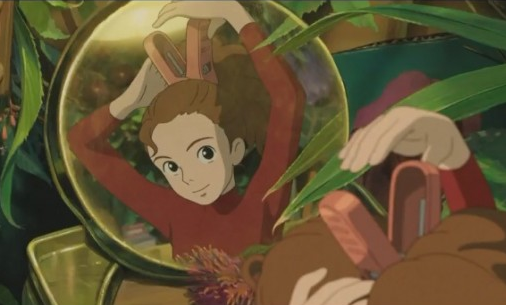
The folks at Tokyo Hive reported this week that Hiromasa Yonebayashi's "The Borrower Arriety" picked up the Animation of the Year Award at the 10th annual Tokyo Anime Awards. The adaptation of Mary Norton's classic children's novel "The Borrowers" tells the story of a tiny family living under the floorboards of a manor house. The family's daughter, Arriety, forms a friendship with a human boy living in the manor.

Besides winning the top honour of the awards, which is held in conjunction with the Tokyo International Anime Fair, "The Borrower Arriety" also took home trophies for Best Director for Yonebayashi, Best Art Direction for Yoji Takeshige and Noboru Yoshida, Best Music for Cécile Corbel and Best Domestic Feature Film. For a full list of this year's winners head to the Tokyo Anime Awards website here; and congratulations to Yonebayashi-san and Studio Ghibli.

REVIEW: Sympathy for the Underdog

博徒外人部隊 (Bakuto gaijin butai)

Released: 1971

Director:
Kinji Fukasaku

Starring: Koji Tsuruta
Noboru Ando
Kenji Imai
Akiko Kudo
Kenjiro Morokado

Running time: 93 min.


Reviewed by Marc Saint-Cyr


Right from its opening moments in which Koji Tsuruta’s yakuza Gunji walks out of prison after a tough ten-year stretch inside, it is clear that "Sympathy for the Underdog" (also known as "Gamblers in Okinawa") is going to be classic Kinji Fukasaku. Throughout the 1960s and ‘70s, the director made the crime genre his specialty, in the process turning out some of its most exhilarating and brutal products. With admirable skill, he made the most of its more alluring qualities – tough guys, gun battles and elaborate plots – while taking care to include the issues of power, corruption and morality that give these kinds of films such depth. "Sympathy" is no exception, with its central group of smalltime crooks making for some of the director’s most tragic antiheroes.

Following his release, Gunji, almost always seen with shades fixed on his face, is joined by the last few loyal members of his disbanded criminal empire, all of whom trapped in lives ultimately less satisfying than what they’d imagined. When assessing his options for going back into business, Gunji is daunted: Daitokai, the company that sparked the gang war that landed him in jail, has effectively taken over the waterfront operations his clan used to control. Yet one last glimmer of hope exists for him and his men in the form of Okinawa. Gunji believes that his little gang can make a fresh start in the sunny island territory, and at first they make some progress in muscling their way in among the other yakuza already operating there. But soon they begin to lose their footing, and the odds against them continue to mount as they suffer casualties and learn of the Daitokai clan’s plan to move in on their newfound turf.

"Sympathy" has a storyline that is inherently melancholic, and Fukasaku certainly makes the most of it. Gunji is clearly the titular underdog, and right away he has a difficult if not impossible goal before him. When he and his companions first arrive in Okinawa, they think they have come to an untouched land of promise, their hopes reflected in the upbeat music and excited smiles on their faces. They assess the main areas to take control of, which include the harbor, drinking establishment and prostitution rackets and a whiskey deal between one of the gangs and the Americans. Yet the early triumphs are soon overshadowed by the hornet’s nest of greed and violence that is stirred up, and Gunji’s group is eventually confronted by the harsh futility of their goals. Never that impressive or mighty to start with, the forlorn crooks become more and more pitiful as they retreat to sad bars, brothels and, eventually, an isolated resort with a pool and golf course. Fukasaku’s film is sure to remind some viewers of the similarly themed Takeshi Kitano-directed "Sonatine" (1993), as in both films, once-proud yakuza are beaten down by a changed world and, in fleeing to an idyllic paradise, only find themselves more alone with the bitter taste of their failures. This theme is reiterated in "Sympathy" when Gunji spends time with a prostitute who reminds him of the woman he left when he got sent to prison. At one point, as they lie together, they listen to a song about workers moving away from Okinawa to make money. Both the irony and the message are clearly communicated: the search for something better is simply part of a cruel and common cycle that never really ends.

"Sympathy"’s tragedy is illustrated through Fukasaku’s patented approach to screen violence, which bursts forth in all of its fast and nasty glory. In one sequence, the director patiently cranks up the tension as Gunji’s group quietly stares down a gang of thugs across a bar before a fierce gun battle finally erupts. Cleverly planned ambushes and daring surprise attacks are frequent occurrences, in many cases acting as telling showcases for the cunning, audacity and nobility (or lack thereof) possessed by the various colorful characters.

As demonstrated by the many dealings with foreigners and big companies that the yakuza gangs take part in within "Sympathy for the Underdog," Gunji and his touchingly loyal companions are more than a little out of their league in the new world they re-launch themselves into. Their solidarity, boldness and, yes, underdog status inspire viewers to root for them and their courageous plight even though they are all but bound to face a bloody and spectacular downfall. At least with Fukasaku at the helm, they will get the epic treatment they deserve.

Read more by Marc Saint-Cyr at his blog

Sion Sono's "Love Exposure" finally makes its way to Region 1 DVD via Olive Films

by Chris MaGee

We know that there are a lot of you out there who have seen and loved Sion Sono's 4-hour Catholic guilt, upskirt, martial arts, romance, castration, "Female Convict Scorpion" homage "Love Exposure". We also know that many of you with region free DVD players have already picked up this cult classic on DVD through the fine folks at UK-based distributor Third Window Films. There are a few of you out there in North America who just have a simple region 1 coded player, and for all of you there has been a "Love Exposure"-shaped hole in your DVD collection. Well, no longer.

There's a new DVD distributor on the block, Olive Films. Based in Illinois the mandate of this new company is to bring the best of foreign and art house films to the North American market. Although Olive Films has just started out they have already added "Love Exposure" to their catalogue and it is currently available to order. Plus, it has quite the snazzy-looking box art! If you are indeed one of those unfortunates with a region 1 locked DVD player then make sure to check out this new release!

Thanks to Twitch for the heads up on this.

Weekly Trailers


Moteki (Love Strikes!) - Hitoshi Ohne (2011)


Mirai Moriyama plays a salaryman who one day goes from being a flop with women to being sought after by not one, or two or even three but four women at the same time! It must be "moteki", an unexplained period of popularity, but how will he cope?


Electric Dragon 80,000V - Sogo Ishii (2001)

Sogo Ishii, the man who brought Japanese punk to the screen in "Crazy Thunder Road" and "Burst City" pits Tadanobu Asano against Masatoshi Nagase in this ultimate battle between the primitive reptilian brain and super-charged technology.

REVIEW: XX Beautiful Beast

XX 美しき獣 (XX: Utsukushiki kemono)

Released:
1995

Director:
Toshiharu Ikeda

Starring:
Kaori Shimamura
Takanori Kikuchi
Hakuryu
Dan Li
Takeshi Yamato

Running time: 85 min.

Reviewed by Bob Turnbull


Bordering on a "pinku-eiga" film, Toshiharu Ikeda's "Beautiful Beast" certainly qualifies full entry into the genre if you were to only regard its general overview: in the course of seeking to kill the yakuza leaders responsible for her younger sister's death, a beautiful woman with a gun will encounter - while naked - much pleasure and pain along the way. A clue as to why it doesn't fit the style can be found in the film's full title "XX Beautiful Beast" - not quite willing to go to the full extent of a triple X, it still wants to make you think it will titillate and walk some dangerous ground. What it ends up being is a low rent, soft core attempt at exploitation that, in its unwillingness to go very far with either sex or violence, becomes the worst form of exploitation - not only does it not have a point, it fails to even entertain.

While that is perhaps a bit of a harsh assessment (and certainly doesn't take into account some of Ikeda's directorial flair), perhaps two examples can help explain. The first is an early sex scene between our heroine Ran (also known as The Black Orchid) and Fujinami. She's just assassinated the head of one of the yakuza families and is escaping the throngs of baddies chasing her. He finds her just outside his bar injured and bracing herself for the onslaught. He shelters her, nurses her wound and covers for her when they come knocking on his door. In thanks, she offers herself to him in a rather direct manner by stating (while moving his hand down between her legs) "I feel so hot". What follows is a dull, soft focus, slow motion 5 minute love scene (with the requisite cheesy music) filled with Ran's moaning but never allowing her a grand finale climax. It's meant to set up the relationship between the two of them and kick off the big conflict of the film - does Fujinami side with her or should he show loyalty to his former yakuza buddies. Though it does establishes all of that somewhat, it does so without building any foundation for their relationship and therefore leaves you with no feeling as to where Fujinami's allegiance will fall.

Another example is a torture scene later in the film. Ran has been captured by one of the remaining yakuza leaders and her naked body has been strung up by her wrists over water. While she is bathed in more of that soft focus, bright lighting, he whips her and then begins a form of acupuncture - emphasis on "puncture" - with a sharp metal object. Though she grimaces throughout, there is little blood, no tension and not a great deal of fear for the character. In fact, the lead up to the scene is poorly handled in that it seems that she simply turns herself over to him because he is threatening to kill Fujinami. It dilutes her strength and resolve while providing nothing more than an opportunity to show Ran's naked body in a submissive state. To be fair, she does turn the tables, but in a wholly contrived and silly way that could not have been planned out. And once again, it's all rather dull - in execution as well as from a story perspective.

The Black Orchid is half-Japanese and half-Chinese, but the yakuza only speak of her as Chinese. Unfortunately, the story never makes any further use of this particular aspect of Ran's heritage and that's a shame because there is little else to define her character. Short of her grimacing during sex or torture, she's mostly expressionless and with little of interest to say outside the sad tale of her sister. Instead of making her quietly determined, she's simply not very interesting. Fujinami is probably the most fleshed out character in the story since he's given more time to show emotion, reflect on his past experiences and wrestle internally with his choice between Ran and his loyal longtime yakuza friend. Given the machinations of the plot, though, there is never a tense moment on screen where he has to face that decision. It's either made for him or he makes it so fast as to remove any of the struggle he has faced considering how to handle things. It leaves the story and film rather limp, which is probably the worst thing you can say about an exploitation film.

Read more from Bob Turnbull at his blog.

Thursday, October 13, 2011

Tetsuya Nakashima to go larger-than-life with upcoming "Shingeki no Kyojin"

by Chris MaGee

With his 2010 film "Confessions" it looked like director Tetsuya Nakashima was making moves away from over-the-top fare such as "Kamikaze Girls" and "Paco and the Magical Picture Book" and towards serious drama... or at least that's what we thought. Now news comes via Anime News Network that Nakashima is working on a film that is truly larger than life.

According to the post the official website for Itako City in Ibaraki Prefecture put out an open call for 80 extras, "healthy male and female [...] to play people fleeing in panic from 'giants' who suddenly appear in a peaceful shopping district." This call for extras is connected to Nakashima's live-action adaptation of Hajime Isayama's manga "Shingeki no Kyojin (Attack of the Giants)". This project was verified by an e-newsletter from Kodansha's Comic Plus magazine to their subscribers. Apparently Nakashima's "Shingeki no Kyojin " will be hitting Japanese theatres in the fall of 2013.

Hajime Isayama's original manga (image above) debuted in the pages of Kodansha's Bessatsu Shōnen Magazine in 2009. It takes place in a future world in which humans have built huge walls to keep out a race of man-eating giants. The question is do these walls protect the human race or have they imprisoned them? Given that Nakashima has been known to go grandiose with the style and emotional content of his films this project makes a whole lot of sense. More on this as it comes out.

"Kichiku" director Kazuyoshi Kumakiri gets ready to disturb us again with "My Man"

by Chris MaGee

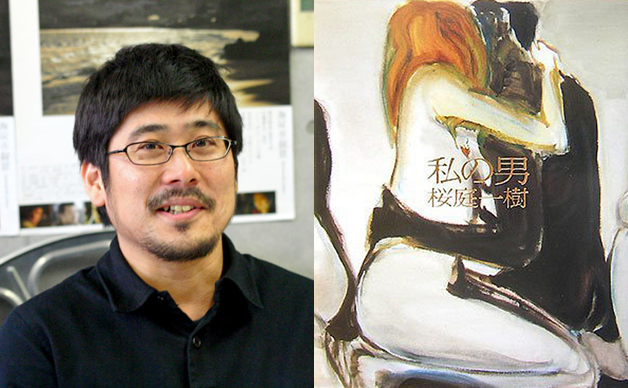
Many of us first encountered director Kazuyoshi Kumakiri (above left) with his 1997 feature debut "Kichiku: Banquet of the Beasts". That film was the searing portrait of the dissolution of a far left Japanese terrorist cell in the 1970's, and it featured some of the most stomach-churning violence seen onscreen in the past 20 years. Since "Kichiku" Kumakiri has moved on from extreme violence and branched out into films involving a variety of subjects -- near future sci-fi with "Freesia: Icy Tears", baseball with "Green Mind Metal Bats" and domestic drama with "Non-ko". Now it looks that Kumakiri will be returning to disturbing subject matter with his next project.

Kumakiri (along with producers Yoshihiro Nagata and Toshikazu Nishigaya) just picked up one of seven awards at the 2012 Asian Project Market at the 16th Busan International Film Festival for his latest project titled "My Man" (above right). Based on the 2008 Naoki Prize-winning novel "Watashi no Otoko (My Man)" written by Kazuki Sakuraba the film will tell the story of an incestuous relationship between a daughter and her adopted father. Sakuraba's novel is told in a series of flashbacks as the daughter, who was adopted when she was nine-years-old just after she survived the 1993 Hokkaido Earthquake, prepares for her wedding. Not extreme violence as in the case of "Kichiku", but very tough and controversial material nonetheless. With this win at the APM we'll hopefully see this new film by Kumakiri within the next year or so. More details as they develop.

12th annual Tokyo Filmex full line-up includes Tsukamoto, Toyoda and much more

by Chris MaGee

Very soon Tokyo will be in the midst of the galas and famous green carpet's of the 24th annual Tokyo International Film Festival. Japan's capital has another major film festival though. That's Tokyo Filmex, which this year is enjoying its 12th offering between November 19ths and 27th at Tokyo's Yurakucho Asahi Hall. We've already reported on how Filmex would be bringing us a full retrospective of the films of director Shinji Somai, but now the festival has announced their full 2012 line-up, and there are (once again) a great batch of films from Japan on tap.

Japanese entries into official competition at Filmex will include the documentary "No-Man's Zone" about the displacement of hundreds of thousands of people in the Fukushima area after the disaster at the Fukushima Dai-Ichi nuclear accident this past March. Joining "No-Man's Zone" will be the blackly comic crime film "Tokyo Playboy Club" by Yosuke Okuda. As many of you will remember, 24-year-old Okuda has already made a name for himself in Japan's indie film scene with his "Hot as Hell" series. "Tokyo Playboy Club" is his debut major budget feature and stars Nao Omori, Ken Mitsuishi and Asami Usuda.

There are even more Japanese titles in the Special Screenings section of Filmex. These include Japanese premiere's of Shinya Tsukamoto's superb psychological drama "Kotoko", Toshiaki Toyoda's art house protest film "Monsters Club" (above) and "River" , the latest film from "Vibrator" and "It's Only Talk" director Ryuichi Hiroki. Also in the Special Screenings programme will be the Japanese premiere of Amir Naderi's shot in Tokyo drama "Cut". Naderi will also be serving as the jury head at this year's Tokyo Filmex.

Along with the aforementioned Shinji Somai retrospective Tokyo Filmex, in conjunction with Shochiku, will be holding a programme of films by Golden Age director Yuzo Kawashima. These include 1952's "Our Doctor, Our Chief", 1954's "Between Yesterday and Tomorrow", 1955's "Burden of Love" and 1956's Suzaki Paradise: Red Light".

You can check out all of what the 12th Tokyo Filmex will have on hand by visiting their website here. You can also check here at The J-Film Pow-Wow during the festival as we will be there to provide news and reviews.

Kenji Uchida follows up "After School" with screwball comedy "Kagi Dorobou no Method"

by Chris MaGee

Director Kenji Uchida was just about to fall into "whatever happened to?" territory. Uchida had an international festival hit with his 2008 detective film "After School", but since then had fallen off the radar. Now word comes from Tokyograph that Uchida is in production on his follow-up to "After School".

Titled “Kagi Dorobou no Method", the film is a screwball comedy about two men switching identities. One is Sakurai, played by Masato Sakai (above center), a suicidal out of work actor; the other is Kondo, played by Teruyuki Kagawa (above left), a successful businessman. The two men cross paths in a public bath where Kondo slips, falls and loses his memory. Sakurai decides to not only swap possessions with Kondo in the bath locker room, but also to swap identities with him. While Sakurai gains money and success he also discovers that Kondo was in deep trouble with the yakuza. Meanwhile Kondo wakes up in the hospital and starts his life, or should we say Sakurai's life, fresh. This includes a romance with a woman named Kanae, played by Ryoko Hirosue (above right).

Uchida just started principal photography on “Kagi Dorobou no Method" this week. Shooting is set to wrap next month and the film is scheduled for a Japanese theatrical release in the fall of 2012.

"Premonition" director Norio Tsuruta returns with new horror "POV ~Norowareta Film~”

by Chris MaGee

Director and screenwriter Norio Tsuruta never got to be as well known during the J-Horror boom as such filmmakers as Hideo Nakata or Kiyoshi Kurosawa, but he should have been. Tsuruta was there at the beginning of the genre, writing scripts and directing episodes of both "Scary True Stories" and "Haunted School", two series that forged the J-Horror aesthetic in the early 90's. He was also responsible for the under-appreciated horror gem "Premonition". Even though the J-Horror boom has officially busted Tsuruta is continuing to scare audiences.

Tokyograph reported this week that Tsuruta is currently putting the finishing touches on a new film titled “POV ~Norowareta Film~”. Taking a page from fellow horror director Koji Shiraishi and his mockumentary "Shirome", Tsuruta has cast teen actresses Mirai Shida and Haruna Kawaguchi as themselves. The two girls will apparently encounter otherworldly happenings during a guest spot on a panel TV show. During films of the program a ghostly video cuts into the broadcast and the girls get caught up in discovering its source. Their investigation takes them to a haunted high school.

Die hard Japanese horror fans will have to wait until February 18th to get chilled by "POV ~Norowareta Film~”. That's when it is scheduled to open in Japanese theatres; but until then check out the spooky trailer below.

Japanese Weekend Box Office, October 8th to October 9th


1. Rise of the Planet of the Apes (Fox)
2. Love Strikes!* (Toho)
3. Fast Five (Toho Towa)
4. My S. O. Has Depression* (Toei)
5. Unfair: The Answer* (Toho)
6. Dog x Police: The K-9 Force* (Toho)
7. Hayabusa* (Fox)
8. Before Sunrise* (Kadokawa)
9. Tantei Wa Bar Ni Iru* (Toei)
10. Spy Kids: All the Time in the World (Shochiku/ Asmik Ace)

* Japanese film

Courtesy of Box Office Japan.

Sunday, October 9, 2011

REVIEW: Samurai Vendetta

薄桜記 (Hakuoki)

Released: 1959

Director:
Kazuo Mori

Starring:
Raizo Ichikawa
Shintaro Katsu
Chitose Maki
Ryosuke Kagawa
Reiko Fujiwara

Running time: 109 min.


Reviewed by Matthew Hardstaff


The tale of the 47 Ronin has been depicted in plays, films and television, and is even currently being retread by Hollywood with Keanu Reeves in the lead role. There is no shortage of material detailing the exploits of the ronin and their sacrifice, the tale being one of the most recognized in Japanese culture. "Samurai Vendetta" scribes Daisuke Ito and Kosuke Gomi decided to take a notably different approach with their film by using the 47 Ronin merely as a backdrop to tell a story that unfolds on the fringes of the assassination.

Tange Tanzen (Raizo Ichikawa) and Yasubei Nakayama (Shintaro Katsu) are students at opposing sword schools. When Nakayama is duelling a group of samurai, Tanzen, the honourable samurai that he is, informs Nakayama the cord tying his kimono is not of sufficient strength to endure the rigours of battle and will most surely come lose, hindering his ability to fence. Unbeknownst to Tanzen, the men Nakayama faces are those of Tanzens school. After a fierce display of swordsmanship, Nakayama is expelled from his school so that the rival school will not hold a grudge, and Tanzen is also expelled as an act of good faith, along with his involvement with the Nakayama at the duel. But the two samurai’s crossing paths do not end there. They soon find themselves embroiled in either the service of Lord Kira, the soon to be assassinated court official, or the ronin who want to see him dead, as well as becoming embroiled in a love triangle with Chiharu (Chitose Maki), the daughter of one of the officials plotting to kill Kira. Their fates are doomed to be intertwined, although tension builds as it becomes unclear if Nakayama and Tanzen will find themselves on the same or opposing sides of the assassination.

"Samurai Vendetta" features two heavyweights of the chanbara genre, and the script does a terrific job of creating a complex web of political intrigue that the two wounded souls must traverse. Katsu’s character Yasubei Nakayama was one of the real 47 ronin involved in the killing Lord Kira, who eventually adopted the name Yasubei Horibe. Raizo Ichikawa’s character Tange Tenzen is entirely fictional, although he shares a lot in common with another fictional character Tange Sazen, a character writer Daisuke Ito directed silent films about in the 1920’s starring Denjiro Okochi, and continued writing about for decades to come. Seems Ito was very conscious about the tale he was weaving. Because the tale of the 47 Ronin is the backdrop, and much of the politics that led up the assassination is either depicted or talked about here, it is assumed that you as the viewer know the history, and if you don’t, you will unfortunately be lost. Lucky for you, if you have the Animeigo DVD (or the internet for that matter), they provide you with a warning and notes so you can familiarize yourself.

"Samurai Vendetta" has some flourishes of great chanbara action thanks to the keen eye of Kazuo Mori, notably the final duel in the snow that uses the great fencing skills of Shintaro Katsu and the lesser skills of Raizo Ichikawa, and a duel on a bridge between Tange Tenzen and a group of samurai out for blood. The final duel must have inspired Chang Cheh and his One Armed Swordsman (or the character of Tange Sazen perhaps provided the inspiration), which isn’t really a stretch since Shaw brothers borrowed heavily from Japanese chanbara films. On a cinematic level, there is a very similar feel in the finale to that of John Woo’s "The Killer". The duel on a bridge features Tenzen partaking in the duel and then recounting it after the fact in a great theatrical display as he tries to determine who the men he killed were. There’s also a lot of exposition, political melodrama and intrigue that will either keep you enrapt or bore you to death, depending on your tastes. If you’re looking for a chanbara film jammed full of swordplay and bloody mayhem, this is not that film. But if you’re looking for a chanbara film with a fine balance of swordplay and political intrigue, this is that film. It leaves you guessing right to the bitter end how the paths of Nakayama and Tenzen will finally cross and in. Whilst it’s inevitable that Nakayama survives to perform the assassination of Lord Kira, the fate of Tenzen and their love interest Chiharu is not so easily defined, and writers Ito and Gomi exploit that to maximum effect.

Read more by Matthew Hardstaff at his blog.

London gets ready for a cinematic and aural extravaganza with Zipangu Fest launch

by Chris MaGee

While Toronto is gearing up for the 15th annual Reel Asian International Film Festival and Tokyo is getting ready for the 24th Tokyo International Film Festival our friends in London are preparing for one of the city's most exciting film events on its calendar. That would be the 2nd annual Zipnagu Fest, running at the Institute of Contemporary Arts between November 18th through the 24th.

Recently Zipangu Fest programmer and director Jasper Sharp announced that this second offering of the festival will be kicking off with a cinematic and aural extravaganza on Novemebr 18th. That night Zipangu audiences will be able to catch the UK premiere of Neil Cantwell and Tim Grabham's engrossing and gorgeous documentary "KanZeOn: The Magical Potential of Sound". This film, which traces the work of three Japanese musicians who mix the ancient and the modern in their work, was a huge hit at this year's Shinsedai Cinema Festival where it received its world premiere. Those attending this UK launch will get to enjoy a lot more than just the film though.

As part of the Zipangu Fest launch "KanZeOn" will be followed by a party with a whole crew of musical guests. Those include Buddhist priest and beat-boxing DJ Ta2Mi (featured in "KanZeOn"), and DJs KidKanEvil, Laurent Fintoni, Shi_Ne_Ko_Sei and Amoeba.AV. Really a night that should not be missed!

You can get more details on this year's Zipangu Fest at its official website here as well as at its Facebook page here.

A sequel to "Funky Forest" to premiere at Hawaii International Film Festival? Kind of...

by Chris MaGee

The response to Katsuhito Ishii's "return to form" film "Smuggler" has been a bit underwhelming. Bland characters and some pretty grisly violence hasn't captured the imaginations of fans of such Ishii cult hits as "The Taste of Tea" and "Funky Forest: The First Contact". Fans of the latter film shouldn't despair too much though. According to Twitch one of the key acting and directing talents of "Funky Forest" returning to its hilarious and surreal territory.

Shunichiro Miki, who not only starred in "Funky Forest" (as well as Katsuhito Ishii's 2008 Hiroshi Shimizu remake "My Darling of the Mountains"), but who also shared directing and writing duties with Ishii and Hajime Ishimine has apparently been squirreling away his own money to make a very loose sequel to "Funky Forest" titled "The Warped Forest".

The film will be enjoying its international premiere at the 31st Hawaii International Film Festival, and it will bombarding the audience with images and scenarios from Miki's dream journal. That includes wood nymphs, a giant shop girl and a laser gun that shoots... well... watch the trailer below to see. We wish that Ishii had been involved, but we should count our blessings that this is coming our way regardless.

"Dead Leaves" director Hiroyuki Imaishi establishes own animation studio named Trigger

by Chris MaGee

Animation director Hiroyuki Imaishi has been responsible for some of the zaniest anime of the past decade. All you have to do is check out his intergalactic, robotic Bonnie and Clyde film "Dead Leaves" or his NTV fallen angel adventure "Panty & Stocking with Garterbelt" to see what we mean. Imaishi isn't as prolific as, say, big names like Mamoru Oshii or the folks at Studio Ghibli, but some news arrived online during the past week that promises a lot more from this 38-year-old talent.

According to a post at Anime News Network Imaishi has joined forces with animator Masahiko Ohtsuka and producer Kazuya Masumoto to create a new animation studio dubbed Trigger. Imaishi announced the creation of the studio with the above illustration on the studio's website.

While there are no projects announced for the studio yet (it was only established on August 22nd), but the good news for animators is that Trigger is hiring. Follow the link above to the Anime News Network story for details if you are under 25, have a driver's license, good communications skills and possess a good working knowledge of Mircrosoft Excel and Adobe Photoshop... and we can only assume amazing animation skills.

REVIEW: The Frightful Era of Kurama Tengu

鞍馬天狗 恐怖時代 (Kurama Tengu: Kyōfu Jidai)

Released: 1928

Director:
Teppei Yamaguchi

Starring
Kanjuro Arashi
Reizaburo Yamamoto
Takasaburo Nakamura
Tokusho Arashi
Kunie Gomi

Running time: 38 min.


Reviewed by Chris MaGee


The men in power have had that power slowly wrenched from their hands, and the city is in shambles. Where there was once order there is now chaos. Justice has been replaced by lawlessness. Gangs and criminals prey on the innocent. Who will come to save the people? One man comes forward to don black robes and a mask to fight for those who can't. Who is this man? You'd be forgiven if you said Batman. With that kind of introduction who else could you expect? Well, if you were a young moviegoer in 1920's Japan you'd be thinking of another hero, one named Kurama Tengu. This hero, based on a character created by novelist Jiro Osaragi, fought for the common people (especially children) during the late 19th century, one of the most tumultuous times in Japanese history. He was also the template for a number of later Japanese superheroes such as Moonlight Mask and Seven Colour Mask. Through the mid 20's and 30's actor Kanjuro Arashi became synonymous with this black-masked samurai, portraying him in a series of features and shorts. One of those, 1928's "The Frightful Era of Kurama Tengu" is not only packed to bursting with Edo Era action, but it also shows us how the big screen has been filled with superheroes long before folks like Tim Burton, Sam Raimi and Christopher Nolan tried their hand at the genre.

In 1865 Japan is a nation divided. Some, namely the government run Shinsengumi police force, are loyal to the dying Tokugawa Shogunate who have ruled Japan through a strict 260-year policy of isolation from the rest of the globe. Others are loyal to the Emperor and to a new age of modernization for the country. Between 1853 through to 1867 the streets of the old capital of Kyoto, and other major Japanese cities, have become a literal battleground of ideologies. Everyday citizens find themselves in the midst of historic unrest, and more than a few criminals take advantage of the political and military in-fighting to take what they want from whomever they can take it from. It's in this world that we meet Kurama Tengu, a samurai who cares for orphaned children and who dresses himself head to toe in black in order to protect ordinary citizens from these turbulent times. In the case of "The Frightful Era of Kurama Tengu" our hero pledges his help when a local in is ransacked by bandits. As he pursues them through the back streets of Kyoto and Edo he comes across a cast of dasterdly villains and tempestuous women. There is Choshichi of Hayabusa (Shoroku Onoe), a man loyal to the Shinsengumi who wants only to take down Kurama Tengu. He slinks around corners following our hero with two goofy samurai in tow providing comic relief throughout the film. The one problem is that Choshichi is following the wrong Kurama Tengu. It turns out there is an evil double of Kurama Tengu roaming the streets and it's him, not our hero, who is being pursued. The real Kurama Tengu must deal with Okane (Kunie Gomi), a shady woman who at first accuses Kurama Tengu of stealing her purse, and then falls in love with him and then begins her own pursuit. The only problem is that Choshichi has his own designs on Okane.

There's enough plot-wise going on in "The Frightful Era of Kurama Tengu" to confuse the average viewer. Not everyone is going to know the ins and outs of late 19th-century Japanese history, plus all the double and triple crosses are enough for a 3-hour epic. The only thing is that director Teppei Yamaguchi, who directed a number of Kurama Tengu films starring Kanjuro Arashi , crams all of this into a 38-minute film! Add to the villains, damsels and assorted samurai a gang of child street acrobats and an underwater swim/ chase sequence and the mind begins to boggle a little. When you consider, though, that "The Frightful Era of Kurama Tengu" served the same purpose in Japanese pop culture as such classic Hollywood serials like "Buck Rogers" and "The Lone Ranger" things begin to make a little more overall sense. Also, given the fact that we have now become accustomed to our childhood heroes from Marvel and DC Comic battling it out for justice onscreen, there's something about this silent film, despite the samurai trappings, that feels very familiar. Swap out Old Edo and the katana for Gotham City and you'll see what I mean.

Not only are there narrative tropes and characters in "The Frightful Era of Kurama Tengu" that would not look out of place in a present day superhero blockbuster, but the film also provides on of the earliest examples of onscreen horror in Japanese cinema. As part of the many plots and sub-plots that screenwriter Fujio Kimura packed into "The Frightful Era" he decided to inject some actual frights in the middle of the action. In the midst for his search for the bandits who are terrorizing Edo, Kurama Tengu is picked up by two men and taken by palanquin to a haunted house, one that comes complete with worn tatami, torn shoji screens, black cats and a female ghost whose black hair trails down from the ceiling. None of this would look at all out of place in the contemporary J-Horror films of Hideo Nakata or Kiyoshi Kurosawa. It's remarkable to see that these filmmakers in no way invented this frightful iconography, but instead have simply adapted it from age old Japanese ghost stories and folk tales. As to its relevance in a historical action story... It certainly is a stretch, but screenwriter Kimura and director Yamaguchi justify this horrific interlude by having the gang of bandits, led by Kurama Tengu's evil double, hiding out in this evil abode.

"The Frightful Era of Kurama Tengu" is an object lesson for anyone who bemoans the sorry state of the film industry. It's true we live in a time when movies seems to feature endless variations of popular comic book heroes. Flashy fight scenes, stereotypical character types and open endings that lead to one sequel after another are all cobbled together in a semblance of storytelling, but Teppei Yamaguchi's silent classic shows us that this is nothing new. Batman (or Spiderman or The X-Men) or Kurama Tengu -- movies have always been peopled with larger-than-life heroes, ones who are designed to entertain, and for Japanese film fans you can't find a better example than the "The Frightful Era of Kurama Tengu". Although not easy to find (the film is available on a DVD released by Tokyo-based company Digital Meme) this is a film worth digging to take a look at.